Nishijin-Ori Silk Road Trade: 2026 Kimono Textile Guide
The Intersection of Global Trade and Japanese Tradition
The allure of the traditional Japanese kimono lies not merely in its elegant silhouette, but in the intricate threads that tell a profound story of global connection. As of 2026, as sustainable, historically conscious fashion and textile preservation reach new heights of global interest, collectors, artisans, and historians are looking back at the ancient trade routes that fundamentally shaped Japan's sartorial heritage. At the very heart of this cross-cultural exchange is Nishijin-ori, the premier brocade weaving tradition of Kyoto. While the kimono is universally recognized as a symbol of Japanese culture, its most luxurious textiles are the direct descendants of historical imports, Silk Road exchanges, and maritime trade with the Asian mainland.
Understanding the lineage of these textiles is essential for any serious collector or enthusiast navigating the 2026 vintage and artisan kimono market. By examining the historical imports that influenced Nishijin-ori, we can better appreciate the motifs, dyes, and weaving structures that define high-end Japanese garments today.
The Historical Silk Road and the Birth of Nishijin-Ori
The Silk Road was not merely a conduit for raw goods; it was a vast network of cultural and technological exchange. According to the Metropolitan Museum of Art's Heilbrunn Timeline of Art History, the transmission of silk weaving techniques from China and Central Asia profoundly impacted the Japanese archipelago. During the Nara (710–794) and Heian (794–1185) periods, Japanese envoys to Tang Dynasty China brought back advanced draw-loom technologies, complex brocade structures, and exotic motifs that were previously unknown in Japan.
The specific legacy of Nishijin-ori is deeply tied to the Onin War (1467–1477), a devastating civil conflict that destroyed much of Kyoto. The weavers of the Otoneri guild fled to the port city of Sakai, where they were exposed to Ming Dynasty Chinese textile imports and advanced weaving techniques. Upon returning to the ruins of the 'western camp' (nishijin) in Kyoto, they integrated these foreign methodologies with indigenous practices, giving birth to the Nishijin-ori tradition. The Kyoto National Museum houses extensive collections of these early imported textiles, showcasing the seamless blend of continental influences and Japanese aesthetic refinement that continues to inspire 2026 artisans.
The Impact of Historical Dye Imports on Modern Colorways
Beyond weaving structures, the vibrant palette of the kimono relies heavily on historical botanical imports. The rich reds of benibana (safflower) and the deep blues of ai (indigo) were cultivated and refined using techniques that traveled along maritime trade routes. In 2026, there is a massive resurgence in natural dyeing (shokubutsu zome) among Kyoto artisans, driven by a demand for eco-friendly, historically accurate colorways.
Modern Nishijin weavers are reviving ancient mordanting techniques imported from the Asian continent to ensure color fastness without relying on synthetic chemicals. For instance, the use of alum and iron-rich mud—techniques adapted from historical Chinese and Korean dye houses—allows 2026 artisans to achieve the subtle, multi-tonal gradients (bokashi) that define luxury kimono textiles. Collectors seeking authentic, naturally dyed pieces in today's market should look for the specific certification marks provided by the Nishijin Textile Industrial Association, which now includes strict verifications for natural dye usage.
Key Imported Motifs and Weaving Techniques in 2026
The visual language of the kimono is heavily populated by motifs that originated far beyond Japan's borders. Recognizing these patterns is crucial for dating vintage pieces and understanding the cultural weight of newly commissioned garments. Below is a breakdown of the most prominent historically imported motifs and their applications in the 2026 kimono market.
| Motif Name | Origin & Trade Route | Historical Era of Import | 2026 Nishijin-Ori Application |
|---|---|---|---|
| Karakusa (Arabesque) | Hellenistic/Persian via Silk Road | Nara / Heian Period | Formal Maru & Fukuro Obi |
| Shippo (Interlocking Circles) | Indian/Buddhist via China | Muromachi Period | Tomesode & Tsukesage Kimono |
| Botan (Peony) | Tang Dynasty China | Heian Period | Furisode & Bridal Uchikake |
| Kiri (Paulownia) | Chinese Imperial Heraldry | Kamakura Period | Formal Menswear & Haori |
The Evolution of the Karakusa Pattern
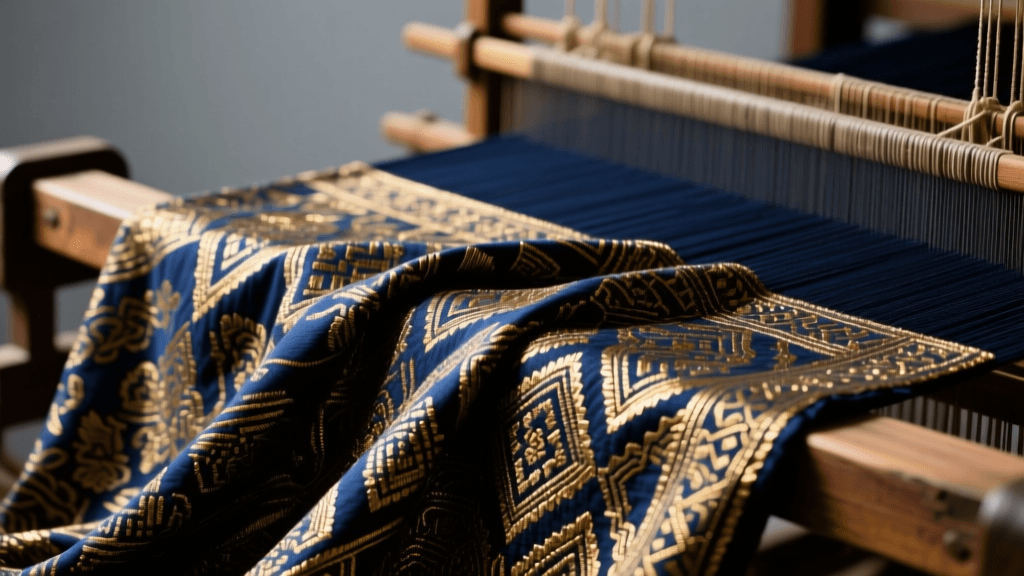
The karakusa pattern, characterized by its scrolling, interlacing vines, is perhaps the most famous example of Silk Road influence. Originating in Hellenistic art and traveling through Persia and India before reaching China and Japan, it symbolizes eternity and infinite prosperity. In 2026, Nishijin artisans are utilizing advanced, computer-assisted Jacquard looms alongside traditional hand-drawn harnesses to recreate the exact geometric precision of 8th-century Persian imports, catering to a niche market of high-end international collectors.
Sourcing and Commissioning Nishijin-Ori in 2026
The market for historically influenced Nishijin-ori textiles has evolved significantly. As of early 2026, the global luxury textile market has seen a renewed appreciation for slow fashion and artisanal heritage. However, sourcing authentic pieces requires knowledge, patience, and a substantial budget.
Vintage Market Pricing and Authentication
For collectors hunting for vintage Meiji or Taisho-era Nishijin obi featuring rare imported motifs, the 2026 auction and specialty dealer market is highly competitive. A well-preserved, hand-woven Fukuro obi with complex Persian-inspired karakusa and real gold leaf (kinpaku) typically ranges from ¥450,000 to ¥850,000, depending on the condition of the metallic threads. Authentication is paramount; buyers should insist on the original shosho (certificate of authenticity) or purchase exclusively from dealers affiliated with the Kyoto Antique Textile Preservation Society.
Commissioning New Artisan Pieces
For those looking to commission a new Nishijin-ori piece that honors these historical trade routes, the process in 2026 is a blend of ancient custom and modern logistics. Commissioning a bespoke obi directly from a master weaver in Kyoto's Kamigyō ward requires a lead time of 8 to 14 months. Due to the rising costs of premium raw silk—much of which is now sourced from specialized, climate-resilient sericulture farms in Brazil and China to supplement domestic Omi silk—the starting price for a fully custom, hand-finished brocade obi is approximately ¥1,200,000. Clients are often invited to consult with the isho-ka (pattern designer) to integrate specific historical motifs that reflect their personal heritage or aesthetic preferences.
Preservation and Archival Care for Brocades
Textiles woven with imported metallic threads and complex brocade structures require meticulous care. The heavy, multi-layered nature of Nishijin-ori makes it susceptible to permanent creasing and metallic thread oxidation if stored improperly. In 2026, textile conservation standards have advanced, offering collectors better tools to preserve these historical artifacts.
- Climate Control: The ideal environment for storing silk brocades is a consistent 20°C (68°F) with a relative humidity (RH) of 50-55%. Modern collectors are increasingly using smart-hygrometers inside their storage chests to monitor fluctuations via smartphone apps.
- Archival Wrapping: Never store Nishijin-ori in plastic, which traps moisture and accelerates the degradation of metallic threads. Instead, wrap the garment in acid-free, unbleached washi paper or specialized archival cotton muslin.
- Paulownia Wood Chests (Kiri Tansu): Traditional Japanese paulownia wood chests remain the gold standard in 2026. The wood naturally expands in high humidity to seal out moisture and contracts in dry conditions to allow the textile to breathe. Ensure the chest is untreated with modern synthetic varnishes, which can off-gas and damage silk dyes.
- Mushiboshi (Airing Out): Continue the traditional practice of mushiboshi (airing out garments) during the dry, crisp weeks of late autumn. Unfold the textiles in a shaded, well-ventilated room for a few hours to release trapped moisture and reset the fibers.
'The preservation of Nishijin-ori is not just about maintaining a physical object; it is about safeguarding the memory of the ancient trade routes that brought these techniques to our shores. Every thread is a map of historical exchange.' — Curator of Textiles, Victoria and Albert Museum (Asian Collections Department)
Conclusion: Wearing the History of Global Exchange
The story of the kimono is inherently a global one. The magnificent Nishijin-ori textiles that grace the shoulders of collectors and practitioners today are the living legacy of the Silk Road, maritime trade winds, and centuries of cross-cultural curiosity. As we navigate the 2026 landscape of traditional garments, understanding the historical imports that shaped these weaving techniques enriches our appreciation of the art form. Whether you are sourcing a vintage masterpiece, commissioning a modern interpretation of a Tang Dynasty motif, or carefully preserving a family heirloom, you are participating in the ongoing, vibrant history of global textile trade.