Hanfu Fabric Drape and Comfort Analysis: 2026 Guide
Introduction to Hanfu Textile Dynamics in 2026
As the global appreciation for traditional Asian garments continues to evolve, the wearing of Hanfu has transitioned from occasional ceremonial use to a sophisticated component of daily wardrobes. In 2026, the Xin Zhongshi (New Chinese Style) movement has reached new heights, blending historical silhouettes with modern lifestyle demands. However, the true essence of Hanfu lies not just in its cut, but in its textile physics. The way a garment moves, folds, and breathes is entirely dictated by fabric texture, drape, and comfort properties.
For enthusiasts and newcomers alike, understanding the interplay between traditional materials and contemporary weaving technologies is crucial. Whether you are investing in a heavy winter Aoqun or a lightweight summer Beizi, the fabric you choose will determine both the historical accuracy of the silhouette and your physical comfort. This comprehensive analysis explores the drape coefficients, thermal regulation, and tactile experiences of the most prominent Hanfu fabrics available in the 2026 market.
The Science of Drape: How Hanfu Fabrics Move
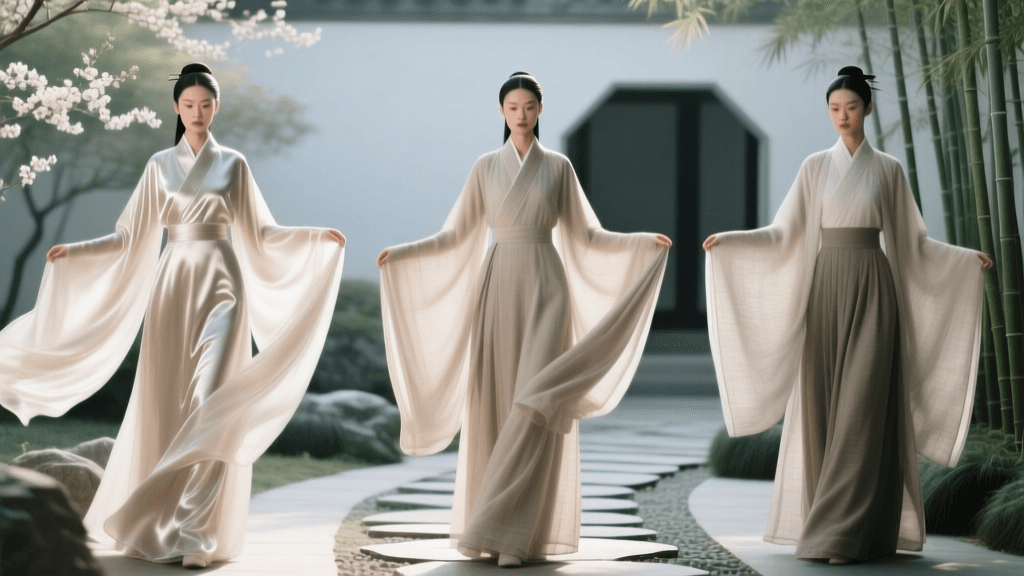
In textile engineering, "drape" refers to the ability of a fabric to fold and fall under its own weight. It is quantitatively measured using the drape coefficient, which calculates the ratio of the draped area to the undraped area of a fabric sample. A higher drape coefficient indicates a fluid, clinging fabric, while a lower coefficient signifies a stiff, structured material. In the context of Hanfu, drape is the invisible force that brings static patterns to life.
Consider the Mamianqun (horse-face skirt), a staple of Ming Dynasty styling that remains immensely popular in 2026. The structural integrity of its flat front and back panels requires a fabric with moderate shear stiffness to hold the sharp, knife-pleated side panels. Conversely, the flowing sleeves of a Tang Dynasty-style Dashan require a high drape coefficient to achieve that ethereal, cascading effect. Modern textile mills have refined their finishing processes, allowing for precise control over these drape characteristics, giving consumers more tailored options than ever before.
Silk and Charmeuse: The Fluid Standard
Mulberry silk remains the undisputed gold standard for luxury Hanfu. In 2026, advancements in sand-washing and enzymatic finishing have produced silk charmeuse and heavy silk crepes that offer a sumptuous, fluid drape while resisting the aggressive wrinkling that plagued earlier generations of silk garments. A 30-momme heavy silk crepe possesses a magnificent, weighty drape that pulls the fabric downward, creating elegant, elongated folds that are perfect for formal outerwear and winter skirts. According to historical textile analyses preserved by institutions like the Metropolitan Museum of Art, the fluidity of silk was historically reserved for the elite, and modern weaving techniques have finally democratized this luxurious movement without sacrificing the fabric's natural luster.
Ramie and Linen: Structured Elegance
For historical purists and those navigating humid summer climates, ramie (Zhubu) and linen offer a completely different aesthetic and functional profile. Ramie, one of the oldest textile fibers used in China, possesses a naturally low drape coefficient. It does not cling; instead, it stands away from the body, creating architectural, structured silhouettes. This stiffness is ideal for Song Dynasty Beizi (open-front jackets) where a crisp, clean line is desired. The Food and Agriculture Organization of the United Nations highlights ramie's exceptional tensile strength and natural luster, which actually increases when wet, making it a highly durable choice for garments that require frequent washing.
Modern Cellulosics: Tencel and Cupro Blends
The year 2026 has seen a massive surge in the use of regenerated cellulosic fibers like Lyocell (Tencel) and Cupro in the Hanfu market. These fabrics are engineered from wood pulp and cotton linter, respectively, offering a drape that closely mimics heavy silk but at a fraction of the cost and with superior durability. Cupro, often used as a premium lining or a standalone fabric for Xin Zhongshi office wear, possesses a high moisture regain and a silky, fluid drape. As noted by the Textile Exchange, these cellulosic fibers represent a critical step forward in sustainable fashion, providing the elegant movement required for traditional garments while adhering to modern environmental standards.
Comfort Analysis: Breathability, Weight, and Skin Feel
While drape dictates the visual poetry of Hanfu, comfort dictates its wearability. The comfort of a garment is primarily governed by its thermal conductivity, moisture vapor transmission rate (MVTR), and tactile surface friction.
Moisture Regain and Breathability: Natural fibers excel in humid conditions due to their high moisture regain—the ability to absorb water vapor from the skin. Silk absorbs roughly 11% of its weight in moisture without feeling damp, while ramie and linen can absorb between 12% and 16%. This makes them exceptionally cooling in the summer. In contrast, cheap polyester blends (often found in low-tier costume Hanfu) have a moisture regain of less than 0.5%, trapping heat and sweat against the skin, leading to severe discomfort during outdoor 2026 Hanfu festivals.
Thermal Regulation: For winter Hanfu, the focus shifts to insulation. Wool blends and heavy, napped silks trap air within their fibers, creating a microclimate of warmth. The 2026 market has introduced innovative quilted linings using sustainable kapok fiber, which provides the thermal insulation of down but with a much lighter weight, ensuring that winter Aoqun remain comfortable without feeling overly burdensome.
Tactile Skin Feel: The "hand" or skin feel of a fabric is crucial, especially for inner garments like the Zhongyi (middle clothing). Cupro and high-grade bamboo viscose are currently the top choices for inner layers in 2026 due to their incredibly low surface friction and hypoallergenic properties, preventing the chafing that can occur with heavily embroidered or stiff outer collars.
2026 Hanfu Fabric Comparison Chart
To assist in your garment selection, the following table outlines the primary physical characteristics of the most common Hanfu fabrics available this year.
| Fabric Type | Relative Drape Coefficient | Breathability Rating | Typical Weight (g/m²) | Ideal Hanfu Garment |
|---|---|---|---|---|
| Heavy Silk Crepe (30mm) | High (Fluid, weighty) | Excellent | 130 - 150 | Mamianqun, Winter Ao |
| Silk Chiffon / Organza | Low to Medium (Airy, stiff) | Excellent | 15 - 30 | Summer Pibo, Overlay Sleeves |
| Ramie (Zhubu) | Low (Structured, crisp) | Superior | 100 - 140 | Song Dynasty Beizi, Summer Ruqun |
| Tencel / Lyocell Blend | High (Soft, flowing) | Very Good | 120 - 160 | Daily Xin Zhongshi, Modern Qun |
| Cupro (Bemberg) | Very High (Silky, clinging) | Excellent | 80 - 110 | Zhongyi (Inner wear), Linings |
Practical Styling: Matching Fabric to Silhouette
Understanding fabric physics allows for better styling decisions. If you are aiming for a Wei-Jin dynasty aesthetic, characterized by wide, flowing sleeves and a relaxed, unrestrained silhouette, you must choose fabrics with a high drape coefficient like silk charmeuse or heavy Tencel. These fabrics will pool elegantly around the wrists and cascade down the back, capturing the romantic, scholarly essence of the era.
Conversely, if you are styling a Ming Dynasty silhouette, which relies on volume, structure, and distinct geometric lines, ramie, linen, and heavy cotton-sateen blends are your best allies. The natural stiffness of these fabrics ensures that the pleats of a Mamianqun remain sharp and the collar of a Pipa-sleeved Ao stands proudly away from the neck. Using a highly fluid fabric like chiffon for a Ming-style skirt will result in collapsed pleats and a loss of the garment's intended architectural grandeur.
Furthermore, the 2026 trend of layering requires careful consideration of fabric weight and friction. When layering a sheer organza Shan over a solid silk top, ensure the underlying fabric has a smooth finish to prevent the layers from catching and bunching. Utilizing a Cupro-lined outer garment can drastically reduce static cling, a common issue in dry winter months, ensuring your layers move independently and gracefully.
Conclusion
The beauty of Hanfu is inextricably linked to the textiles from which it is crafted. As we navigate the fashion landscape of 2026, the fusion of ancient weaving traditions with modern, sustainable cellulosics offers an unprecedented variety of choices for the wearer. By understanding the science of drape and the metrics of comfort, you can move beyond mere visual aesthetics and select garments that not only honor the historical silhouettes of Asian traditions but also provide superior physical comfort for modern life. Whether you prefer the structured elegance of summer ramie or the fluid luxury of heavy silk, choosing the right fabric is the first step toward mastering the art of Hanfu.