Traditional Chinese Wedding Attire: Qun Kwa & Xiu He Fu Guide
The Renaissance of Chinese Bridal Fashion
For decades, the Western white wedding gown dominated the global bridal landscape, including in Asia. However, a profound cultural renaissance has swept through modern Chinese weddings, with brides increasingly embracing traditional ceremonial attire. This revival is not merely a fashion trend; it is a reclamation of heritage, craftsmanship, and ancestral symbolism. According to the UNESCO Intangible Cultural Heritage archives, Chinese sericulture and silk craftsmanship have been foundational to global textile history, and these ancient techniques are now being resurrected in contemporary bridal wear.
Choosing the right traditional Chinese wedding dress requires navigating a complex landscape of regional variations, historical accuracy, and modern tailoring. Whether you are drawn to the structured opulence of the Cantonese Qun Kwa, the romantic silhouette of the Xiu He Fu, or the historical purity of Ming-style Hanfu, understanding the nuances of each garment is essential. This comprehensive guide provides actionable advice on measurements, sourcing, costs, and timelines to ensure your ceremonial attire is nothing short of perfect.
Decoding the Big Three: Qun Kwa, Xiu He Fu, and Hanfu
Qun Kwa (裙褂): The Cantonese Masterpiece
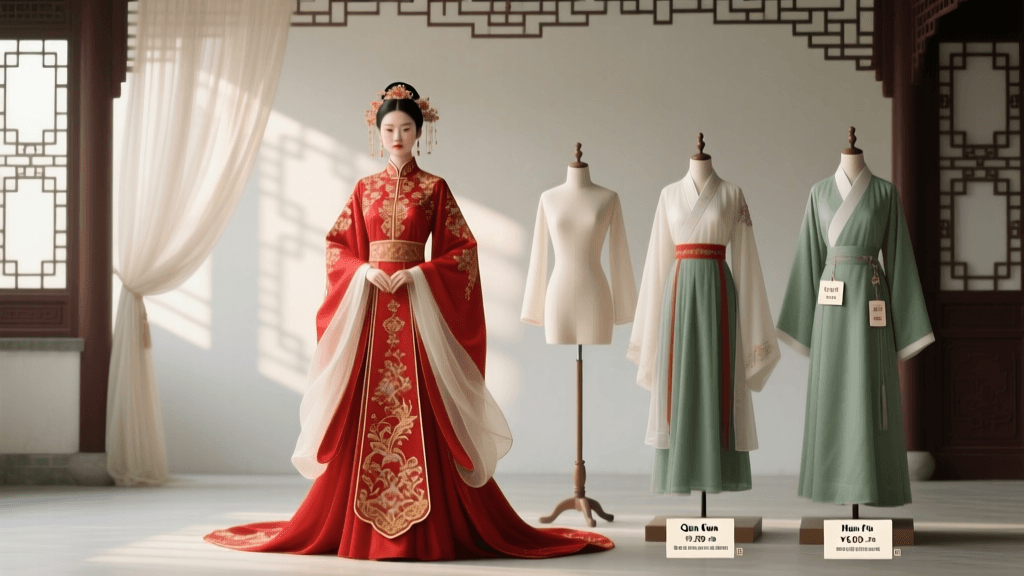
The Qun Kwa (also known as Kwa or Longfeng Kwa) is the pinnacle of traditional Cantonese bridal wear, originating from the Guangdong region. It is a two-piece ensemble consisting of a tailored jacket (Kwa) and a pleated or A-line skirt (Qun). The defining feature of the Qun Kwa is its dense, intricate embroidery, traditionally executed with real gold and silver threads wrapped around silk cores.
The Metropolitan Museum of Art notes that the motifs found on Qing dynasty garments—such as dragons, phoenixes, bats, and pomegranates—carry deep cosmological and auspicious meanings. On a Qun Kwa, the dragon and phoenix represent the balance of yin and yang, while bats symbolize good fortune. The value and formality of a Qun Kwa are determined by its embroidery density, categorized into five distinct tiers:
- Xiao Wu Fu (Small Five Density): 50% embroidery coverage. The base red silk is highly visible. Best for brides on a budget or for secondary ceremonies.
- Zhong Wu Fu (Medium Five Density): 70% coverage. A popular mid-range choice balancing cost and visual impact.
- Da Wu Fu (Large Five Density): 85% coverage. The red base is barely visible, offering a rich, metallic sheen.
- Gua Huang (Jacket Emperor): 95-100% coverage. The gold and silver threads completely obscure the red silk base. This is the most prestigious and expensive tier, often reserved for royalty or ultra-luxury weddings.
Actionable Advice: When inspecting a Qun Kwa for purchase, check the reverse side of the fabric. High-quality hand-embroidered Kwa will have a relatively neat back with minimal loose threads, whereas machine-made or poor-quality hand-embroidered pieces will look messy and bulky. Expect to pay between $2,000 and $15,000+ for a bespoke, hand-embroidered piece, with a lead time of 6 to 12 months.
Xiu He Fu (秀禾服): The Modern Classic
Despite its traditional appearance, the Xiu He Fu is a relatively modern invention. It gained popularity in the early 2000s after actress Xiu He wore a similar garment in a period drama. Unlike the structured, boxy fit of the Qun Kwa, the Xiu He Fu features a softer, more forgiving silhouette. It typically consists of a Mandarin-collared jacket with wide, flared sleeves and a voluminous A-line or pleated skirt.
The embroidery on a Xiu He Fu is generally less dense than a Qun Kwa and often incorporates a wider variety of motifs, including peonies (wealth and honor), lotus flowers (purity), and butterflies (everlasting love). Because it is less rigid, the Xiu He Fu is highly favored by brides who prioritize comfort, ease of movement, and a flattering fit that accommodates various body types.
Actionable Advice: The Xiu He Fu is ideal for the tea ceremony and outdoor photo shoots due to its flowing skirt and comfortable sleeves. Off-the-rack and made-to-measure options are widely available, with prices ranging from $300 to $1,500. Lead times are typically 1 to 3 months, making it a great option for brides with shorter engagement timelines.
Ming-Style Hanfu (明制汉服): The Historical Purist
For brides deeply invested in historical accuracy and the broader Hanfu revival movement, Ming-style ceremonial Hanfu is the garment of choice. As documented by the Victoria and Albert Museum's Asian collections, Ming dynasty textiles were renowned for their rich colors, complex weaves, and structural elegance. The bridal ensemble usually consists of an Ao (a lined, cross-collared or round-collared jacket) and a Mamianqun (horse-face skirt), characterized by its flat front and back panels with pleated sides.
The color palette for Ming-style Hanfu extends beyond pure red, often incorporating deep blues, emerald greens, and rich golds. The silhouette is dignified and modest, requiring precise tailoring to ensure the collar sits flat against the neck and the sleeves drape elegantly.
Actionable Advice: Hanfu requires exact shoulder and waist measurements, as the garments rely on the body's natural structure rather than darts or modern seaming. Budget $500 to $3,000 for a high-quality silk Damask or brocade set. Sourcing from specialized Hanfu studios (often based in Hangzhou or Chengdu) requires a lead time of 2 to 4 months, factoring in international shipping and potential customs delays.
Comparison Chart: Choosing Your Ceremonial Garment
| Garment | Origin & Era | Silhouette & Fit | Price Range (Buy) | Lead Time | Best For |
|---|---|---|---|---|---|
| Qun Kwa | Cantonese / Qing | Structured, boxy, tailored | $2,000 - $15,000+ | 6 - 12 Months | Formal tea ceremonies, luxury weddings, heirloom preservation |
| Xiu He Fu | Modern / 2000s | Soft, A-line, forgiving | $300 - $1,500 | 1 - 3 Months | Outdoor shoots, comfort-focused brides, budget-conscious buyers |
| Ming Hanfu | Central Plains / Ming | Dignified, modest, layered | $500 - $3,000 | 2 - 4 Months | Historical purists, Hanfu enthusiasts, themed weddings |
Practical Guide: Sourcing, Tailoring, and Timelines
Securing the perfect traditional Chinese wedding dress requires meticulous planning. Unlike Western gowns, which often rely on corsetry and extensive alterations, traditional Chinese garments are cut using flat-pattern drafting. This means the initial measurements must be exceptionally accurate.
Essential Measurements
When visiting a tailor or submitting an online order form, ensure you provide the following specific measurements, taken while wearing the exact undergarments and shapewear you intend to wear on the wedding day:
- Shoulder Width: Measured from the edge of one shoulder bone to the other across the back. Crucial for the structured fit of the Qun Kwa and the collar drape of the Hanfu.
- Bust, Waist, and Hips: Measured at the fullest points. For the Xiu He Fu, the natural waist is most critical as the skirt sits higher than Western waistlines.
- Sleeve Length: Measured from the shoulder edge down to the wrist bone. Traditional sleeves often extend past the wrist; specify if you prefer a modern cropped sleeve or a traditional long drape.
- Hollow-to-Hem: Measured from the base of the neck (hollow) to the desired hemline. You must wear your exact wedding shoes (e.g., 3-inch red silk heels) during this measurement to prevent tripping over the heavy, embroidered skirts.
Renting vs. Buying
Given the high cost of authentic Qun Kwa, renting is a popular and practical alternative. Rental packages in major Asian cities or specialized Western boutiques typically range from $200 to $800 for a 3-day period. If renting, inspect the garment for missing beads, frayed gold threads, and ensure the lining is intact. If purchasing, consider the garment an heirloom. A genuine hand-embroidered Gua Huang can appreciate in value and is often passed down to daughters or daughters-in-law.
Accessorizing the Traditional Bride
The garment is only half of the ceremonial equation. Traditional Chinese bridal accessories are heavily symbolic and serve to complete the auspicious silhouette.
Hair and Headpieces
For Qun Kwa and Xiu He Fu, the hair is typically styled in a sleek, low bun or a traditional updo, adorned with a gold and silver hairpin set or a beaded veil. Brides wearing Ming-style Hanfu often opt for a Phoenix Crown (Fengguan) or a delicate Diangzai (gold leaf and pearl hairpin) set. Ensure your hairstylist has experience with heavy traditional headpieces, as they require specialized pinning techniques to remain secure throughout the day.
Jewelry: The Dragon and Phoenix Bangles
Gold is the metal of choice for Chinese weddings, symbolizing wealth and prosperity. The most iconic accessory is the Dragon and Phoenix bangle (Longfeng Zhuo), traditionally gifted by the groom's parents during the betrothal ceremony. Brides often stack multiple bangles on their wrists. Actionable tip: Purchase bangles with a hinged clasp or adjustable opening if you are concerned about swelling in your hands and wrists on the wedding day.
Footwear
Traditional red silk shoes, often embroidered with peonies or double-happiness characters, are standard. However, for modern weddings, many brides opt for custom-dyed red leather heels or red velvet flats. Ensure the shoes have a non-slip sole, as the heavy silk skirts and smooth floors of banquet halls can be a slipping hazard.
Conclusion
Selecting traditional Chinese wedding attire is a deeply personal journey that bridges the gap between ancestral reverence and modern bridal aesthetics. Whether you choose the unparalleled luxury of a hand-embroidered Qun Kwa, the romantic ease of a Xiu He Fu, or the historical majesty of Ming Hanfu, the key to success lies in early planning, precise tailoring, and a deep appreciation for the craftsmanship involved. By understanding the specific measurements, timelines, and cultural motifs associated with each garment, you ensure that your bridal look is not only visually stunning but profoundly meaningful.