Silk Kimono & Hanbok Archival Preservation Guide 2026
Preserving Heritage: The 2026 Standard for Silk Kimonos and Hanboks
Asian traditional garments, particularly the Japanese kimono and the Korean hanbok, represent centuries of intricate craftsmanship, cultural heritage, and textile artistry. Woven from delicate protein fibers like silk and embellished with metallic threads or natural dyes, these garments require meticulous care to survive for future generations. As we navigate the environmental realities of 2026, the methods for preserving these priceless textiles have evolved significantly. What was once considered adequate storage in a family heirloom chest is now recognized by textile conservators as a potential hazard to delicate silk protein structures.
Whether you are a collector of Taisho-era kimonos, a custodian of a Joseon-dynasty hanbok, or simply looking to protect a modern ceremonial silk garment, understanding the current museum-grade standards is essential. This comprehensive guide covers the latest 2026 protocols for mold remediation, archival storage, and professional restoration of Asian heritage garments.
The 2026 Climate Challenge for Protein Fibers
Silk is a protein fiber, making it highly susceptible to environmental fluctuations. In 2026, shifting global climate patterns have resulted in more pronounced indoor humidity spikes, even in climate-controlled homes. When relative humidity (RH) exceeds 65% for prolonged periods, silk becomes a prime breeding ground for microscopic mold spores. Conversely, when RH drops below 40%, the silk fibers become brittle, leading to "crease-line shattering"—a phenomenon where the fabric literally splits along historical fold lines.
Traditional Japanese tansu (wooden chests) and Korean bandaji were designed for the climates of their respective historical eras. While beautiful, the cedar and paulownia woods used in these chests can off-gas acidic vapors over time, which accelerates the degradation of natural dyes and weakens silk fibers. According to the American Institute for Conservation (AIC) Wiki on Textiles, modern preservation requires isolating heritage garments from raw wood and creating a stable, buffered microclimate within the storage environment.
Step-by-Step Mold Remediation for Vintage Silk
Discovering mold on a vintage silk kimono or a brightly colored hanbok chima (skirt) is a conservator's worst nightmare. However, if caught early, surface mold can be safely remediated without damaging the delicate fibers or bleeding the natural dyes. Never use water, commercial stain removers, or harsh chemicals on heritage silk.
Materials Required
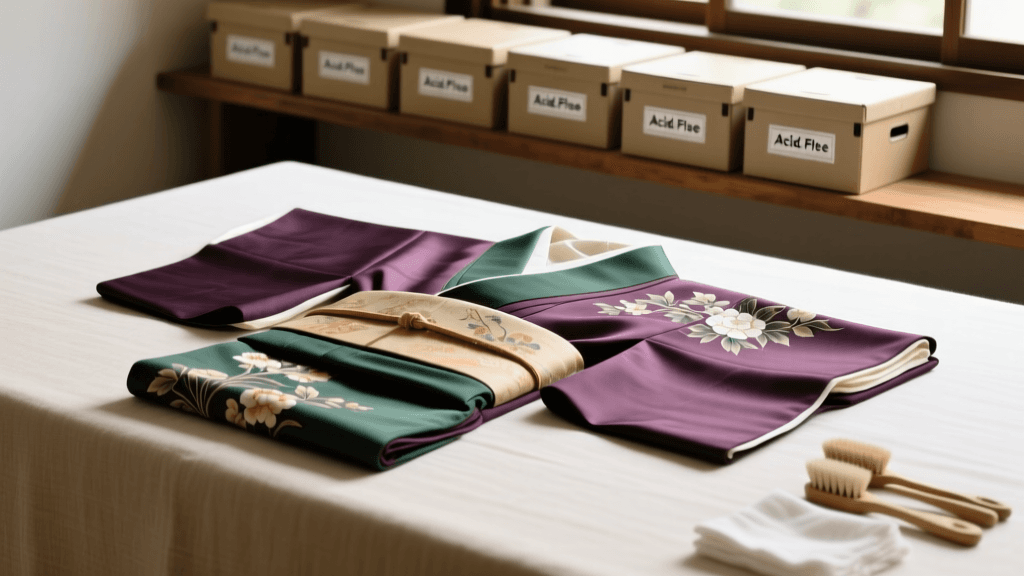
- HEPA-filtered vacuum with a micro-attachment and variable suction control
- Soft, natural-hair hake brushes (goat or squirrel hair)
- Unbuffered, acid-free archival tissue paper
- Nitrile gloves and an N95 respirator mask
- A well-ventilated, low-humidity isolation room (ideally below 45% RH)
The Remediation Process
- Isolation and Assessment: Immediately isolate the garment in a low-humidity room to halt active spore growth. Do not attempt to brush the mold while it is damp or active, as this will grind the hyphae deeper into the silk weave.
- Desiccation: Allow the garment to rest in the dry environment for 48 to 72 hours. This desiccates the mold, turning it into a dormant, powdery state that is easier to remove.
- Surface Removal: Wearing your respirator and gloves, lay the garment flat on a clean, archival surface. Using the hake brush, gently flick the surface mold off the fabric. Always brush in the direction of the silk weave to avoid snagging metallic threads or embroidered motifs.
- HEPA Vacuuming: Place a piece of flexible plastic screening over the vacuum nozzle to prevent direct suction from pulling the fragile silk. Hover the nozzle just above the brushed areas to capture the airborne spores.
- Refolding: Once cleared, refold the garment using fresh, unbuffered acid-free tissue to pad the folds, preventing future crease-line stress.
Conservator's Note: If the mold has caused permanent staining or if the silk feels "crunchy" and degraded, stop the DIY process immediately. The structural integrity of the protein may be compromised, requiring professional consolidation.
Archival Storage: Beyond the Traditional Tansu
While displaying an antique kimono on a specialized ikko (wooden kimono hanger) is beautiful, long-term hanging is strictly forbidden in modern conservation. The weight of the garment, combined with gravity, causes irreversible stress on the shoulder seams and warp threads. The 2026 standard dictates flat storage for all heritage Asian garments.
When selecting storage enclosures, conservators now rely on custom-fabricated, acid-free corrugated polypropylene boxes. These boxes are inert, waterproof, and provide a physical barrier against dust, light, and pests. Inside the box, the garment must be padded with unbuffered tissue paper. It is crucial to use unbuffered tissue (pH 7.0) for silk and wool; buffered tissue contains calcium carbonate, which is excellent for cotton and linen but can cause chemical reactions that yellow protein fibers over time.
2026 Storage Material Comparison Chart
Upgrading your storage materials is the most cost-effective way to ensure your garments survive the century. Below is a comparison of traditional methods versus current archival standards.
| Material / Method | Traditional / Historical Use | 2026 Archival Standard | Best Application |
|---|---|---|---|
| Storage Enclosure | Cedar / Paulownia Wood Chests | Corrugated Polypropylene Archival Boxes | All silk kimonos, hanboks, and obis |
| Interleaving Paper | Rice Paper or Newsprint | Unbuffered Acid-Free Tissue (pH 7.0) | Padding folds in protein fibers (silk/wool) |
| Pest Deterrent | Camphor or Naphthalene Mothballs | Archival Silver Microchamber Paper & Traps | Preventing insect damage without chemical off-gassing |
| Garment Covers | Plastic Dry-Cleaning Bags | Unbleached, Washed Cotton Muslin | Breathable protection for short-term transport |
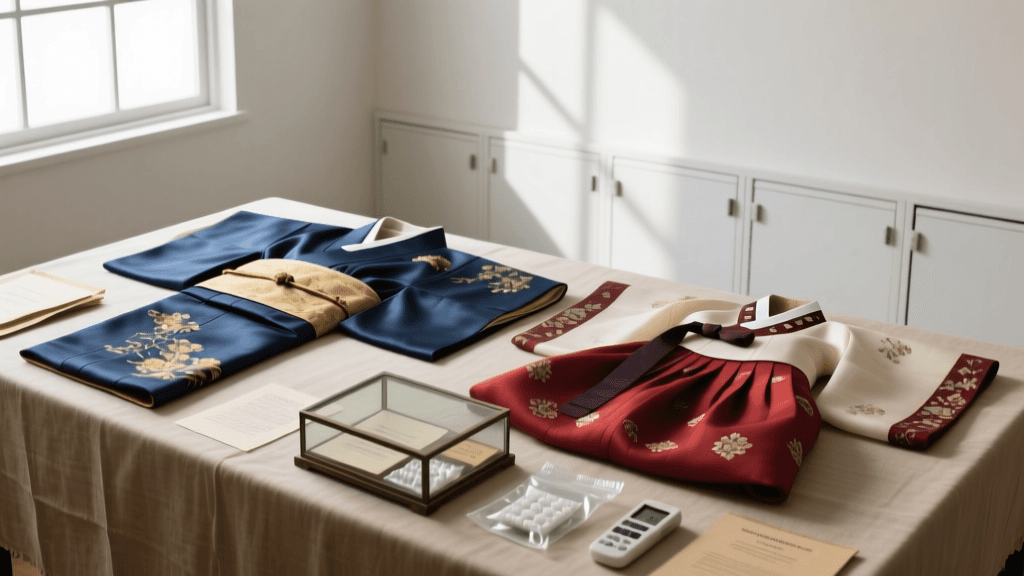
| Humidity Control | Silica Gel Packets (Non-indicating) | Conditioned Silica Gel Cassettes (45-50% RH) | Maintaining stable microclimates in storage boxes |
Display and Lighting Standards
If you choose to display your hanbok or kimono temporarily, lighting is a critical factor. Natural dyes used in traditional Asian textiles—such as indigo, safflower (benibana), and gromwell (shikon)—are notoriously fugitive, meaning they fade rapidly when exposed to ultraviolet (UV) and high-intensity visible light. The Victoria and Albert Museum's guidelines on caring for textiles emphasize that light damage is cumulative and irreversible.
In 2026, the recommended maximum illuminance for displayed heritage silk is 50 lux. Furthermore, all light sources must be UV-filtered, emitting zero ultraviolet radiation (below 75 microwatts per lumen). Modern museum-grade LED framing projectors are now the standard for private collectors, as they allow for precise beam control and emit virtually no radiant heat, which could otherwise desiccate the silk fibers during a long-term exhibition.
Professional Restoration Costs in 2026
There are times when DIY care is insufficient. If a vintage kimono suffers from shattered silk, shattered metallic threads, or severe dye bleeding, it must be entrusted to a certified textile conservator. The field of Asian textile conservation has seen a surge in specialized practitioners utilizing both traditional Japanese kake-tsugi (invisible re-weaving) techniques and modern synthetic consolidants.
As of 2026, the cost of professional conservation reflects the highly specialized labor involved. Below is a general pricing guide for private collectors:
- Condition Report and Assessment: $150 - $300. A comprehensive document detailing the garment's structural integrity, dye stability, and recommended treatment plan.
- Surface Cleaning and Humidification: $400 - $800. Safe removal of particulate soil and gentle relaxing of severe creases using specialized humidity chambers.
- Crease-Line Stabilization: $600 - $1,200. Applying sheer silk crepeline overlays to support shattered areas along historical fold lines.
- Full Archival Re-housing: $250 - $500. Custom fabrication of polypropylene boxes and specialized internal mounting supports.
While these costs may seem steep, they are a necessary investment for garments that hold significant monetary, historical, or familial value. Always ensure your conservator is a member of a recognized national or international conservation body and adheres to the principle of reversibility in all treatments.
Conclusion
Preserving a silk kimono or a ceremonial hanbok is an act of cultural stewardship. By moving away from outdated storage methods and embracing the 2026 standards of archival microclimates, unbuffered tissue padding, and strict light management, collectors can ensure these breathtaking examples of Asian textile heritage remain vibrant and intact. Whether you are actively remediating a minor mold outbreak or preparing a family heirloom for long-term archival storage, the key to success lies in patience, the right materials, and a deep respect for the delicate protein fibers that carry the history of their makers.