Vintage Silk Kimono & Hanbok Stain Removal Guide 2026
The Evolution of Asian Silk Garment Preservation in 2026
Preserving vintage Asian silk garments, particularly the intricate kimono of Japan and the vibrant hanbok of Korea, requires a delicate balance between historical reverence and modern conservation science. As we navigate 2026, the landscape of textile preservation has shifted dramatically away from harsh chemical solvents and toward bio-engineered, non-destructive enzymatic cleaners and smart micro-climate monitoring. For collectors, curators, and inheritors of these cultural treasures, understanding the current museum-grade protocols is essential to prevent the irreversible shattering of weighted silks and the fading of natural dyes. This comprehensive guide outlines the most current, scientifically backed methods for cleaning, restoring, and storing these invaluable pieces of Asian cultural heritage.
The Science of Silk Degradation in Vintage Garments
Before attempting any stain removal or storage, it is crucial to understand why vintage silk deteriorates. Many early 20th-century kimono and hanbok fabrics were 'weighted' using metallic salts, primarily tin chloride, to increase the drape and luster of the silk. Over decades, these salts catalyze an oxidative degradation process that causes the silk fibers to become brittle and eventually shatter along fold lines. Furthermore, the natural dyes used in traditional Asian garments—such as indigo, safflower (benibana), and gardenia yellow—are highly fugitive. They react poorly to alkaline environments and prolonged exposure to ultraviolet light. According to the Smithsonian Museum Conservation Institute, maintaining a stable environment is the single most effective way to slow this chemical breakdown, emphasizing that prevention is always superior to intervention.
2026 Protocols for Enzymatic Stain Removal
When dealing with organic stains—such as sweat, sebum, or food residues—on vintage silk, the 2026 conservation standard strictly forbids the use of commercial dry-cleaning perc (tetrachloroethylene) or alkaline detergents. Instead, professional conservators now rely on targeted enzymatic spot treatments. Protease enzymes are utilized to break down protein-based stains without agitating the delicate fibroin core of the silk thread. These bio-catalysts work at a molecular level, lifting the stain from the fiber without the need for aggressive mechanical rubbing, which can cause permanent fuzzing or pilling of the silk surface.
To apply an enzymatic cleaner safely, conservators use a micro-suction table or a localized blotting technique. A dilute solution of a museum-grade, pH-neutral (pH 7.0) enzymatic cleaner is applied using a fine-tipped glass dropper. The stain is allowed to dwell for exactly three to five minutes at room temperature (68°F). Blotting is then performed using unbleached, lint-free cotton swabs, working from the outer edge of the stain inward to prevent tide-line formation. It is imperative to test any solution on an inconspicuous area, such as the inner lining of the kimono or the underside of the hanbok chima (skirt), to ensure the natural dyes do not bleed. The Victoria and Albert Museum's textile care guidelines strongly advise against home washing of historical silks, recommending that any wet cleaning be performed only by certified textile conservators.
Special Considerations for Hanbok Goreum and Kimono Obi
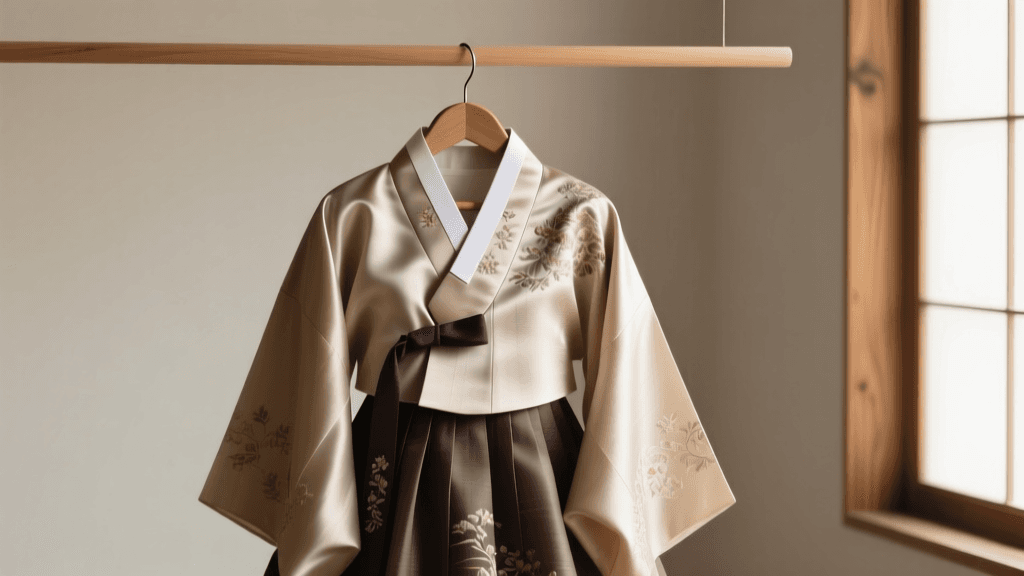
Asian traditional garments feature highly structured components that require specialized preservation approaches. The hanbok's goreum (the long, flowing ribbon ties) are often made of heavily sized silk or ramie, which can crack if folded sharply. In 2026, the recommended practice is to roll the goreum loosely around an acid-free tissue core rather than folding them flat. Similarly, the Japanese obi (sash) often contains metallic threads (kinran) and stiff brocade weaves that are prone to creasing. Obi should never be hung, as the weight of the metallic threads will distort the warp yarns over time. Instead, they must be padded with unbuffered acid-free tissue paper and stored flat in archival boxes to distribute the weight evenly across the textile.
Archival Storage Solutions and Micro-Climate Control
Proper storage is the cornerstone of garment preservation. The physical materials surrounding the textile must be chemically inert. In 2026, the market offers advanced archival storage solutions that cater specifically to the dimensions of unfolded kimono and hanbok. Below is a comparison of the most effective storage materials currently utilized by museum professionals and serious private collectors.
| Material | Best Use Case | 2026 Estimated Cost | Archival Rating |
|---|---|---|---|
| Unbuffered Acid-Free Tissue | Stuffing sleeves, padding folds | $25 per 100 sheets | Excellent |
| Unbleached Cotton Muslin | Wrapping complete garments | $18 per yard | Very Good |
| Archival Coroplast Boxes | Long-term flat storage | $85 per box | Excellent |
| Cedar Wood Blocks | Pest deterrent (outside box) | $12 per block | Poor (Direct Contact) |
Beyond the physical enclosures, the ambient environment must be rigorously controlled. The ideal storage climate for vintage Asian silk is a temperature of 65°F to 68°F (18°C to 20°C) with a relative humidity (RH) strictly maintained between 45% and 55%. Fluctuations in RH cause the silk fibers to expand and contract, accelerating mechanical fatigue. Modern collectors utilize Wi-Fi-enabled smart hygrometers, such as the latest 2026 models from Govee or SensorPush, which send real-time push alerts to a smartphone if the humidity deviates by more than 2% from the target range.
Integrated Pest Management (IPM) for Silk Textiles
Webbing clothes moths and carpet beetles pose a catastrophic threat to protein-based fibers like silk. In 2026, the use of chemical mothballs (naphthalene or paradichlorobenzene) is entirely obsolete and strongly condemned by conservation professionals due to their toxic off-gassing, which accelerates silk degradation and poses severe health risks to humans. Instead, modern preservation relies on Integrated Pest Management (IPM). IPM focuses on environmental controls and physical barriers. Garments are inspected under UV light to detect early signs of insect activity, such as frass or casings. If an infestation is suspected, the gold standard treatment is anoxic deprivation or deep freezing. The garment is sealed in a polyethylene bag with an oxygen scavenger, or carefully frozen at -20°C for 72 hours to kill all life stages of the pest. Following treatment, the storage area is cleaned using HEPA-filtered vacuums, and pheromone traps are deployed to monitor for future insect activity without introducing harmful chemicals into the archival space.
Step-by-Step Archival Storage Workflow
To properly store a vintage kimono or hanbok at home, follow this meticulous workflow:
- Step 1: Inspection and Surface Cleaning. Lay the garment flat on a clean, padded surface. Use a soft-bristled conservation brush to gently sweep away surface dust. Inspect all seams and folds for signs of stress or pest activity.
- Step 2: Padding the Folds. Crumple sheets of unbuffered acid-free tissue paper into soft 'sausages' and place them inside every fold, sleeve, and collar. This prevents hard creases from forming, which can lead to fiber shattering over time.
- Step 3: Wrapping. Wrap the entire padded garment in a layer of pre-washed, unbleached cotton muslin. The muslin acts as a breathable barrier against dust and light while allowing the silk to acclimatize to minor environmental shifts.
- Step 4: Boxing and Placement. Place the wrapped garment into an archival-grade Coroplast or acid-free cardboard box. Store the box in a dark, interior closet away from exterior walls, plumbing, and direct sunlight to ensure the most stable temperature and humidity levels.
Conclusion and Professional Resources
The preservation of vintage Asian silk garments is an ongoing commitment to cultural stewardship. By adopting the 2026 standards for enzymatic stain removal, smart micro-climate monitoring, and rigorous archival storage, collectors can ensure that these magnificent kimono and hanbok survive for future generations. If a garment requires extensive stabilization, tear repair, or complex stain removal, it is vital to consult a professional. The American Institute for Conservation (AIC) provides a comprehensive directory of certified textile conservators who specialize in Asian historical garments, ensuring your treasures receive the expert care they deserve.