Preserving Vintage Silk Kimonos and Hanboks in 2026
The Delicate Nature of Asian Silk Garments
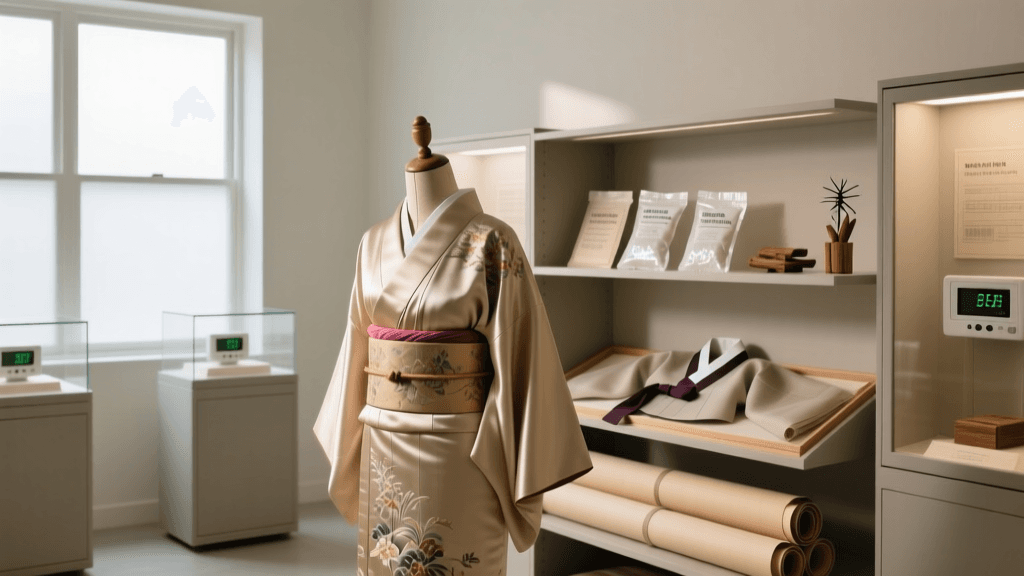
Vintage Asian silk garments, particularly Japanese kimonos and Korean hanboks, are masterpieces of textile artistry. However, the very protein that gives silk its luxurious drape and brilliant sheen—fibroin—is highly susceptible to environmental degradation. As we navigate 2026, the consensus among textile conservators is that proactive, non-invasive preservation is far superior to reactive restoration. Whether you have inherited a Meiji-era kimono or a mid-century silk chima and jeogori set, understanding the modern science of textile preservation is essential to ensuring these garments survive for future generations.
Unlike synthetic fibers introduced in the late 20th century, natural silk is hygroscopic, meaning it readily absorbs and releases moisture from the surrounding air. This characteristic makes it incredibly vulnerable to fluctuating humidity, which can cause the fibers to swell, weaken, and eventually shatter. Furthermore, the dyes used in traditional Asian garments, often derived from natural botanical and mineral sources, are highly fugitive and prone to fading when exposed to ultraviolet (UV) light and airborne pollutants.
Pre-Storage Cleaning: The 2026 Conservation Standard
Before any vintage silk garment is placed into long-term storage, it must be impeccably clean. Invisible residues, such as human sebum, sweat, and microscopic food particles, act as magnets for pests and accelerate the oxidation of silk fibers, leading to permanent brown staining. In 2026, the conservation community strongly advises against traditional dry cleaning for antique silks. The harsh chemical solvents used in standard commercial dry cleaning can strip the silk of its natural sericin coating, leaving the fibers brittle and dull.
Instead, seek out a conservator who specializes in professional wet cleaning or liquid carbon dioxide (CO2) cleaning. Liquid CO2 cleaning has become the gold standard by 2026 for delicate heritage textiles. It uses pressurized carbon dioxide in a liquid state to gently lift soils without the aggressive mechanical action or harsh chemical residues associated with perc (perchloroethylene) dry cleaning. If a garment is structurally sound but only requires surface dusting, use a museum-grade micro-vacuum with a HEPA filter and a low-suction screen to gently remove particulate matter without stressing the seams.
Proper Folding Techniques for Kimonos and Hanboks
How you fold a traditional garment dictates its structural longevity. Creases act as stress points where fibers will eventually snap. The Japanese kimono is uniquely designed to be folded flat along specific seam lines, a method known as tatami-gami. When folding a kimono, always align the seams perfectly to avoid creating diagonal stress wrinkles. To prevent sharp creases from becoming permanent weak points, conservators recommend inserting rolled, acid-free tissue paper into the folds. This creates a soft, rounded edge rather than a hard, crushed crease.
Korean hanboks present a different challenge due to their voluminous, curved construction. The chima (skirt) is heavily gathered at the waistband, and the jeogori (jacket) features curved sleeves and delicate ribbon ties (goreum). Never fold a hanbok flat like a kimono. Instead, the chima should be loosely rolled around a core of acid-free tissue or an archival-grade polyethylene tube to maintain the integrity of the gathers. The jeogori should be lightly stuffed with unbuffered acid-free tissue to support its three-dimensional shape and prevent the delicate collar (kit) from being crushed.
Archival Storage Materials: What to Use and Avoid
The materials that come into direct contact with your vintage silks must be chemically inert. According to guidelines published by the Victoria and Albert Museum, textiles should only be stored in materials that pass the Oddy test, ensuring they do not off-gas harmful volatile organic compounds (VOCs). In 2026, collectors have a wide array of specialized archival enclosures available, but choosing the wrong material can be catastrophic.
| Storage Material | pH Level | Breathability | Best Use Case | 2026 Cost Estimate |
|---|---|---|---|---|
| Unbuffered Acid-Free Tissue | 7.0 (Neutral) | High | Direct contact with silk, stuffing sleeves, padding folds | $15 - $25 per 100 sheets |
| Archival Coroplast Boxes | Inert | Low | Long-term outer storage, pest barrier, light blocking | $45 - $85 per box |
| Washed Unbleached Muslin | Neutral | High | Dust covers, wrapping rolled garments | $10 - $15 per yard |
| Polyethylene Plastic Bags | Inert | None | Short-term transit only (Never for long-term storage) | $1 - $3 per bag |
| PVC / Standard Cardboard | Acidic (4.0-5.0) | Variable | NEVER USE (Causes rapid silk degradation and yellowing) | N/A |
Avoid using wooden chests or cedar boxes directly against the silk. While cedar is traditionally associated with garment storage, the aromatic oils that repel moths are highly acidic and will stain and degrade silk proteins over time. If you must use a wooden heirloom chest, line it completely with a barrier film like Marvelseal, and place the garments inside sealed Coroplast boxes within the chest.
Smart Climate Control for Textile Preservation
The ideal environment for storing vintage silk is a stable 65°F to 68°F (18°C to 20°C) with a relative humidity (RH) of 45% to 55%. Fluctuations are more damaging than a slightly imperfect but stable baseline. In 2026, smart home integration has revolutionized private textile preservation. Wi-Fi-enabled hygrometers, such as the latest Govee or SensorPush models, allow collectors to monitor micro-climates inside specific closets or storage boxes in real-time.
These devices send instant push notifications to your smartphone if the humidity spikes above 60% (which invites mold) or drops below 40% (which dries out and shatters the silk). For localized humidity control within archival boxes, conservators recommend using conditioned silica gel cassettes rather than electronic dehumidifiers, which can create rapid, damaging drops in moisture levels if they malfunction.
Non-Toxic Pest Prevention Strategies
The webbing clothes moth (Tineola bisselliella) and the carpet beetle are the primary biological threats to silk. Historically, collectors relied on camphor, naphthalene (mothballs), or paradichlorobenzene. Today, these are recognized as highly toxic to humans and chemically destructive to silk dyes and fibers. The Canadian Conservation Institute strongly advocates for integrated pest management (IPM) over chemical fumigation.
In 2026, the most effective non-toxic defense involves a multi-tiered approach:
- Pheromone Traps: Place species-specific pheromone sticky traps in the corners of your storage room. These traps lure and capture male moths, disrupting the breeding cycle and serving as an early warning system for infestations.
- Freeze Treatment: If you suspect a newly acquired vintage kimono harbors moth eggs, seal it in a polyethylene bag and place it in a standard chest freezer at -4°F (-20°C) for 72 hours. Thaw it slowly at room temperature before opening the bag to prevent condensation from forming on the silk.
- Essential Oil Barriers: While essential oils like lavender and cedarwood should never touch the textile directly, placing sachets of these oils in the outer room can act as a mild deterrent, provided the sachets are housed in breathable cotton and kept at least two feet away from the storage enclosures.
Displaying vs. Storing: Mitigating Light Damage
While storing garments in the dark is the safest option, many collectors wish to display their pieces. Light damage to silk is cumulative and irreversible. Ultraviolet (UV) radiation breaks down the polymer chains of the fibroin, leading to a phenomenon known as 'silk shatter,' where the fabric literally crumbles to the touch. If you must display a vintage kimono or hanbok, it should never be hung by its shoulders, as the weight of the heavy silk and metallic embroidery will distort the weave and tear the seams.
Instead, use a custom-built, angled display board padded with polyester batting and covered in washed cotton muslin. The garment should be stitched to the mount using fine, undyed silk threads that can be easily snipped later without damaging the original fabric. Any acrylic glazing used to frame or cover the display must be museum-grade, UV-filtering acrylic, such as Optium Museum Acrylic, which blocks 99% of UV rays and features an anti-static coating that prevents dust from clinging to the textile surface.
When to Seek Professional Restoration
Despite the best preventative care, vintage garments may suffer from structural failures, such as shattered silk at the hem, split underarm seams, or localized dye bleeding. Do not attempt to repair these issues with commercial iron-on fusibles, standard sewing thread, or fabric glues. These modern adhesives and synthetic threads are stronger than the degraded antique silk and will cut through the fragile fibers under tension.
True textile restoration in 2026 relies on the technique of crepeline overlay or localized re-weaving using historically accurate, naturally dyed silk threads. Always consult a certified textile conservator affiliated with a recognized body, such as the American Institute for Conservation (AIC) or the equivalent national heritage organization in your country. They can perform microscopic fiber analysis to determine the exact degradation state of the silk and formulate a bespoke stabilization plan, ensuring your kimono or hanbok remains a vibrant, tangible link to Asian cultural history for decades to come.