Styling the Japanese Haori Jacket with Modern Tailoring in 2026
The Neo-Heritage Movement: Redefining the Haori in 2026
As we navigate the global fashion landscape of 2026, the industry has decisively pivoted away from transient micro-trends and fast fashion, embracing what cultural critics and stylists are calling the "Neo-Heritage" movement. At the forefront of this sartorial shift is the Japanese haori—a traditional hip- or thigh-length kimono-style jacket. Once reserved strictly for formal ceremonies or worn exclusively over a kimono, the haori has been reclaimed by modern wardrobes as a versatile, statement-making layering piece. Mixing traditional Asian garments with contemporary tailoring is no longer viewed as costume play; rather, it is a sophisticated expression of global citizenship, an appreciation for artisanal craftsmanship, and a commitment to sustainable, investment-grade dressing.
According to historical archives documented by the Metropolitan Museum of Art, the haori originated as a practical outer layer worn by samurai and later evolved into a highly decorative garment for both men and women during the Edo period. Today, in 2026, contemporary stylists leverage the haori's unique architectural silhouette to add depth, texture, and cultural resonance to modern outfits. Whether you are navigating a creative corporate environment or exploring elevated weekend streetwear, integrating a haori into your rotation requires an understanding of proportion, fabric behavior, and modern styling mechanics.
Understanding the Haori Silhouette and Proportions
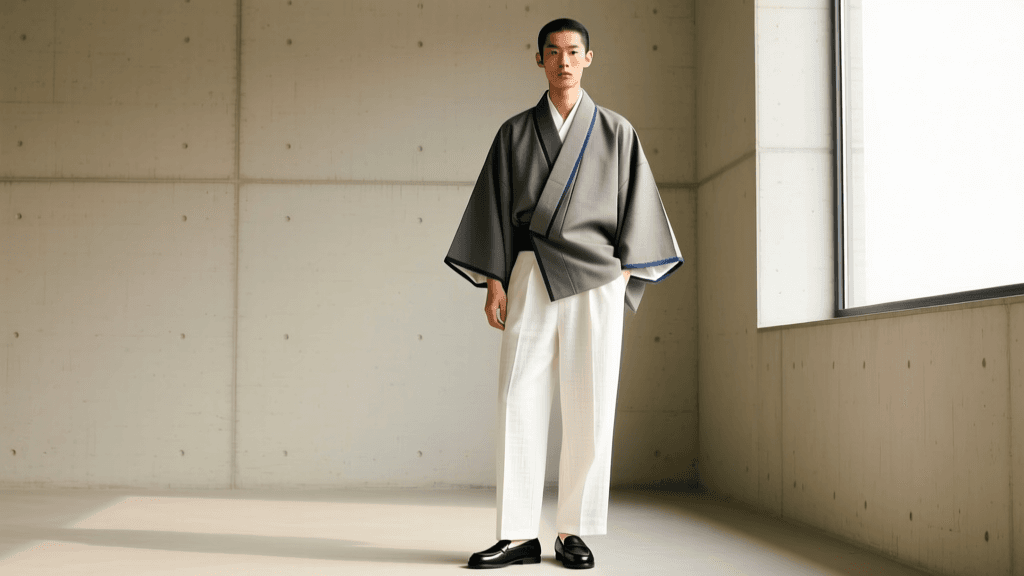
Unlike Western blazers or overcoats, the haori lacks a structured shoulder, lapels, and front closures. It features a straight, T-shaped construction with open, flowing sleeves (sode) and a collar (eri) that folds back to reveal the neck and the garment's inner lining. This structural openness is precisely what makes it a masterclass in modern layering.
The Drop-Shoulder Advantage
The extended, dropped shoulder seam of the haori creates a relaxed, draped effect that contrasts beautifully with the sharp, structured lines of modern Western tailoring. In 2026, where "quiet luxury" relies heavily on the interplay of relaxed silhouettes and premium textiles, the haori provides an effortless drape that softens rigid office wear. The garment is traditionally held together at the chest by a haori himo (a braided silk tie), but in modern styling, it is frequently left completely open to showcase the layers beneath, functioning similarly to a longline cardigan or an unstructured duster coat.
Look 1: The Creative Office (Smart-Casual Integration)
Integrating traditional Asian pieces into a professional environment requires a careful balance of muted tones and precise tailoring. For the 2026 modern office, the goal is to replace the standard wool blazer with a mid-weight silk or wool-blend haori.
- The Base Layer: Opt for a fine-gauge merino wool turtleneck in charcoal, navy, or deep olive. The high neck provides a clean, vertical line that anchors the open collar of the haori.
- The Trousers: Choose high-waisted, wide-leg pleated trousers in a heavy wool crepe. The volume of the trousers mirrors the flowing nature of the haori's sleeves, creating a cohesive, architectural silhouette.
- The Haori: Select a vintage silk haori with a subtle, tonal jacquard pattern (known as rinzu). Avoid overly bright, contrasting brocades for the office; instead, look for deep indigos, slate greys, or muted burgundies where the pattern is only visible when the light catches the fabric.
- Footwear: Finish with structured leather loafers or minimalist derby shoes. Avoid laces that are too bulky, which can disrupt the clean hemline of the trousers.
This combination respects the formality of a corporate setting while introducing an element of intellectual, globally-minded design that stands out in a sea of standard suits.
Look 2: Elevated Weekend Streetwear
Streetwear in 2026 has matured, moving away from heavy logos and leaning into utilitarian craftsmanship and heritage textiles. The cotton sashiko or boro haori is the ultimate statement piece for this aesthetic.
Mastering Textural Contrast
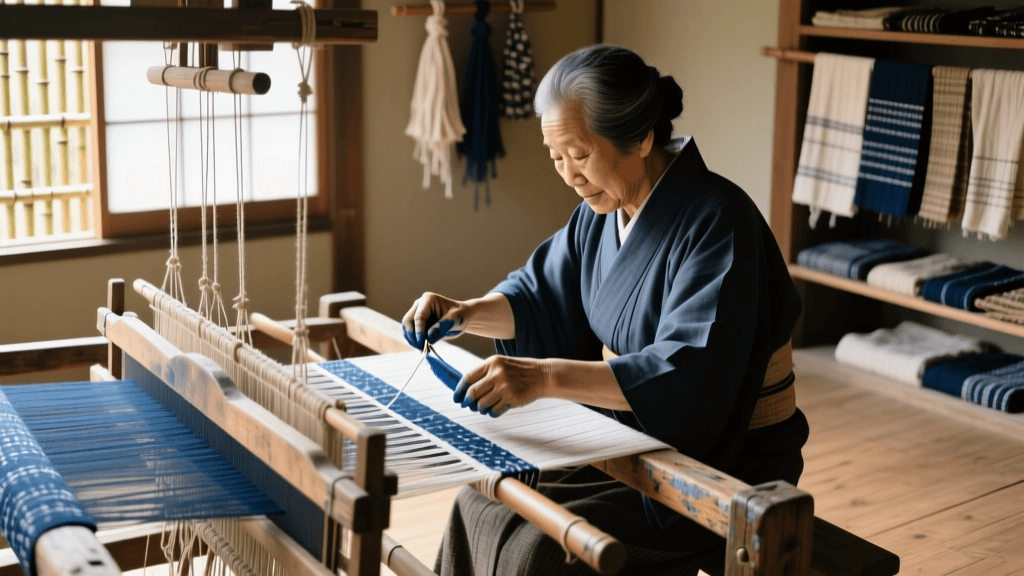
Sashiko (functional embroidery) and boro (patchwork mending) were born from necessity in rural Japan, but today they are highly sought after by collectors and fashion archivists. A heavy cotton haori featuring geometric sashiko stitching provides incredible texture.
- The Base: A heavyweight, boxy-fit cotton t-shirt in off-white or washed black. The thick cotton holds its shape and prevents the outfit from looking flimsy under the heavy jacket.
- The Bottoms: Straight-leg or slightly relaxed selvedge denim. A raw, dark indigo denim provides a striking canvas that complements the intricate stitching of the haori. Cuff the denim slightly to showcase your footwear.
- The Haori: A mid-thigh length cotton haori in deep indigo or black. The stiffness of the cotton provides a more structured, jacket-like appearance compared to silk.
- Footwear: Chunky, retro-inspired sneakers or rugged leather engineer boots. The visual weight of the boots grounds the flowing sleeves of the haori.
Look 3: Evening Minimalist Elegance
For evening events, gallery openings, or upscale dinners, the haori can serve as a breathtaking alternative to the traditional evening shawl or tailored overcoat. The Smithsonian National Museum of Asian Art frequently highlights the exquisite dyeing and weaving techniques of Japanese formal wear, such as yuzen dyeing and gold-leaf application, which translate beautifully into modern evening wear.
Pair a richly embroidered, floor-grazing or mid-calf length silk haori over a sleek, monochromatic slip dress or a sharply tailored, single-button tuxedo suit. The key to evening styling is contrast: if the haori is heavily ornate, the underlying garments must be severely minimalist. Let the traditional garment act as the sole focal point of your ensemble. Keep jewelry to an absolute minimum—perhaps a single, sculptural metal cuff or understated drop earrings—to avoid competing with the intricate textile work of the jacket.
Sourcing Authentic Haori in 2026
The market for traditional Asian garments has evolved significantly. In 2026, conscious consumers are prioritizing vintage and deadstock pieces to support circular fashion economies. You do not need to fly to Kyoto to source authentic pieces, though visiting markets like the Toji Temple Flea Market remains a bucket-list experience for textile lovers.
Online, specialized archival vintage dealers and curated platforms now offer authenticated, professionally cleaned vintage haori. When shopping, pay close attention to the condition of the silk lining and the integrity of the shoulder seams. Prices in 2026 for authentic, high-quality vintage silk haori generally range from $150 to $450, while rare, artisanal sashiko cotton pieces or contemporary commissions from living artisans can easily exceed $1,200.
Fabric Comparison Guide for Modern Styling
Choosing the right fabric is critical for ensuring your haori integrates seamlessly with your existing wardrobe. Below is a comprehensive guide to the most common haori textiles and their modern applications.
| Fabric Type | Drape & Structure | Best Modern Pairing | 2026 Price Range (USD) | Care Level |
|---|---|---|---|---|
| Silk (Vintage Rinzu) | Fluid, delicate, lightweight | Minimalist wool trousers, evening wear | $150 - $450 | High (Specialist dry clean only) |
| Cotton (Sashiko/Boro) | Heavy, textured, structured | Streetwear, raw denim, heavy tees | $300 - $1,200+ | Low/Medium (Cold hand wash) |
| Linen Blend | Crisp, breathable, matte | Summer tailoring, relaxed linen trousers | $180 - $400 | Medium (Gentle machine wash) |
| Wool/Cashmere | Warm, structured, modern | Winter office wear, turtlenecks | $400 - $900 | Medium (Professional dry clean) |
Garment Care and Archival Storage
Investing in traditional Asian garments requires a commitment to proper maintenance. The construction of a haori, particularly the delicate silk inner linings and the hand-stitched seams, demands specialized care. Conservation experts at the Victoria and Albert Museum emphasize that improper storage and cleaning are the primary causes of degradation in historical silk textiles.
Modern Cleaning Protocols
Never attempt to machine wash a silk haori. In 2026, seek out eco-friendly, heritage-textile specialists who use liquid silicone or specialized wet-cleaning technologies that do not strip the natural proteins from the silk fibers. For cotton sashiko pieces, spot cleaning or gentle hand washing in cold water with a pH-neutral detergent is usually sufficient. Always air dry flat, away from direct sunlight, to prevent the indigo dyes from fading or the fabric from warping.
Storage Solutions
Wire hangers are the enemy of the haori. The weight of the garment, particularly heavy cotton or lined silk, will distort the shoulder seams over time. Instead, use wide, padded wooden hangers to support the drop-shoulder construction. For long-term storage, avoid plastic garment bags, which trap moisture and cause yellowing. Wrap the haori in unbleached, acid-free cotton muslin or traditional tatou paper, and store it in a cool, dark, climate-controlled environment. Including natural cedar blocks or paulownia wood chips in your storage drawer will naturally repel moths and absorb excess humidity without introducing harsh chemical odors into the delicate fibers.
Conclusion: A Bridge Between Eras
Mixing traditional Asian pieces with modern wardrobes is an exercise in respect, proportion, and personal expression. The Japanese haori is not merely a trend; it is a garment with centuries of history, carrying the weight of artisanal techniques that are increasingly rare in our modern world. By thoughtfully integrating a haori into your 2026 rotation—whether draped over a sharp turtleneck for the office or layered over heavyweight denim for the weekend—you participate in a global dialogue that honors the past while firmly defining the future of sustainable, meaningful fashion.