Suzhou Silk Embroidery: Techniques, Costs & Garment Care
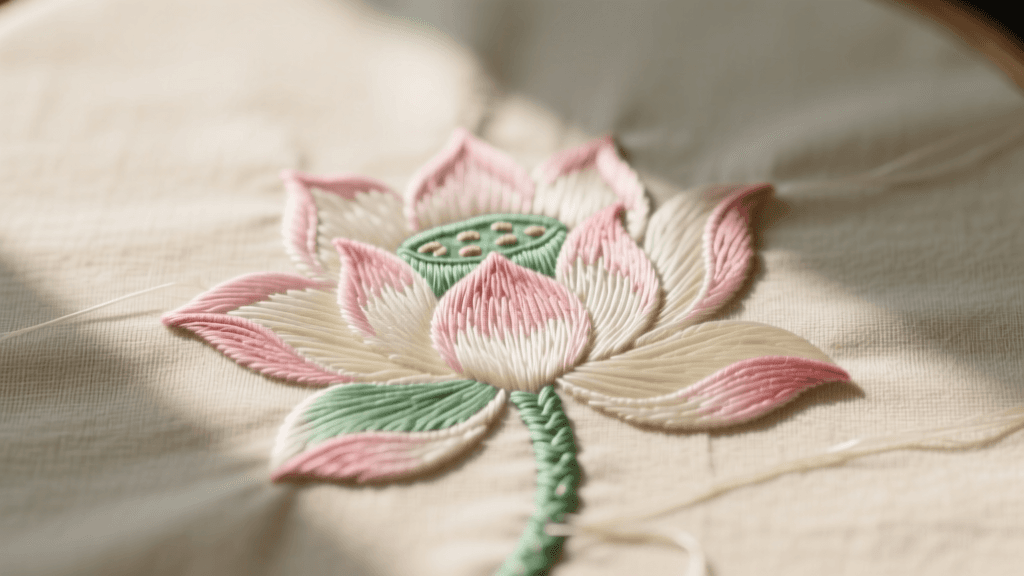
The Legacy of Su Xiu (Suzhou Embroidery)
Suzhou embroidery, universally revered as Su Xiu, is a cornerstone of Chinese textile arts and a defining element of traditional Asian fashion. Originating in the water-town region of Suzhou, Jiangsu Province, this meticulous craft boasts a continuous history spanning over 2,000 years. Characterized by its delicate patterns, elegant colors, and astonishingly fine needlework, Su Xiu is not merely a method of fabric decoration; it is a profound cultural expression. The foundational skills of this art form are deeply intertwined with the region's historic mastery of sericulture. In fact, the broader regional practices of silk production and craftsmanship have been formally recognized by the UNESCO Intangible Cultural Heritage list, underscoring the global significance of these ancient techniques.
Today, Su Xiu remains highly sought after for embellishing premium traditional garments, including the Hanfu Ma Mian Qun (horse-face skirt), the Ming-style Ao Qun, and the modern silk Qipao. For collectors, historians, and enthusiasts of Asian traditions, understanding the technical nuances, market realities, and conservation requirements of Su Xiu is essential.
The needle dances not merely to cover fabric, but to breathe life into the very essence of nature, capturing the dew on a lotus and the breath of a koi.
— Traditional Su Xiu Artisan Proverb
Core Techniques and Silk Thread Preparation
The magic of Su Xiu lies in the preparation of the silk thread and the mastery of the stitch. Artisans use premium mulberry silk, prized for its tensile strength and luminous sheen. The most astonishing technical feat in Su Xiu is the thread-splitting process, known as Pi Si. A single strand of silk thread can be meticulously split by hand into multiple finer filaments. While a standard embroidery might use a half or quarter strand, master artisans working on photorealistic or highly detailed motifs will split a single thread into 1/16th, 1/32nd, or even 1/48th of its original thickness.
Essential Stitches and Needlework
Su Xiu encompasses over 40 distinct stitch types, each serving a specific textural purpose:
- Ping Xiu (Flat Stitch): Used for large, smooth areas like water or sky. The stitches are laid parallel, creating a seamless, satin-like finish that reflects light uniformly.
- Luan Xiu (Random/Layered Stitch): Essential for rendering organic textures. Stitches are layered in varying directions and lengths to mimic the soft petals of a peony or the intricate fur of a cat.
- Da Zi Xiu (Seed Stitch): Utilizes tiny, knotted stitches to create raised, granular textures, often used for flower stamens or the scales of a dragon.
To handle the microscopic 1/48th silk threads, artisans use custom-forged, ultra-fine needles (often size 12 to 15 micro-needles) that are virtually invisible to the naked eye, ensuring the puncture holes in the base silk remain imperceptible.
The Pinnacle: Double-Sided Embroidery (Shuangmian Xiu)
The zenith of Su Xiu mastery is Shuangmian Xiu, or double-sided embroidery. In this technique, the artisan stitches on a single layer of translucent silk gauze, ensuring that all knots and thread ends are woven invisibly into the weft of the fabric. The result is a flawless image on both the obverse and reverse sides. The most advanced iteration, Shuangmian San Yi Xiu, features entirely different patterns and color palettes on each side—for example, a serene white cat on the front and a fierce tiger on the back, stitched on the exact same plane of silk.
Practical Guide: Commissioning and Purchasing Su Xiu Garments
Whether you are commissioning a bespoke Qipao for a wedding or investing in a traditional Hanfu jacket, navigating the Su Xiu market requires specific knowledge. The price and timeline vary drastically based on the density of the stitches, the complexity of the motif, and the pedigree of the artisan.
Cost and Timing Breakdown
When budgeting for authentic, hand-embroidered silk garments, consider the following market tiers:
- Machine-Embroidered (Industrial Suzhou): $150 – $400. Produced via computerized multi-head machines. While visually appealing from a distance, the threads lack the luminous split-silk gradient, and the backing often features heavy stabilizers. Timeline: 2 to 4 weeks.
- Hand-Embroidered (Apprentice/Standard Artisan): $800 – $2,500. Features genuine hand-stitched motifs (like plum blossoms or bamboo) on the collar, cuffs, or hem. Uses 1/4 or 1/8 split silk threads. Timeline: 2 to 4 months.
- Master Artisan (Complex Motifs & Shuangmian Xiu): $5,000 – $15,000+. Reserved for museum-quality pieces, bridal Kwa, or full-coverage bespoke Qipaos. Utilizes 1/32nd split threads and advanced shading techniques. Timeline: 6 to 18 months.
Actionable Advice for Bespoke Commissions
If commissioning a custom garment, always request a stitch density test swatch before the artisan begins the main garment. This 10x10 cm sample allows you to verify the colorfastness of the dyed silk threads and the tension of the embroidery. Furthermore, ensure your tailor takes measurements while you are wearing the exact undergarments and footwear you plan to use, as the weight of heavy Su Xiu embroidery (which can add up to 300 grams to a hemline) alters the drape and hollow-to-hem measurement of the silk.
Comparison Chart: The Four Major Chinese Embroidery Styles
To truly appreciate Su Xiu, one must understand its place among the Four Major Embroideries of China. Each style reflects the distinct geography, climate, and cultural ethos of its region.
| Style | Origin Region | Key Characteristics | Signature Motifs |
|---|---|---|---|
| Su Xiu | Suzhou, Jiangsu | Delicate, elegant, ultra-fine split silk threads, subtle water-tone color gradients. | Koi fish, peonies, water-town landscapes, cats. |
| Shu Xiu | Sichuan Province | Soft, satin-based, tight and even stitches, often uses a specialized halo-stitching technique. | Giant pandas, carp, lotus flowers, bamboo. |
| Xiang Xiu | Hunan Province | Bold, vibrant colors, realistic shading influenced by Western painting, often blends wool and silk. | Fierce tigers, lions, dramatic mountain sceneries. |
| Yue Xiu | Guangdong (Canton) | Vibrant, highly textured, extensive use of gold and silver thread couching (Pan Jin Xiu). | Dragons, phoenixes, lychees, auspicious clouds. |
Garment Application: Hanfu and Qipao
The application of Su Xiu in traditional garments is highly codified, balancing aesthetic beauty with structural integrity.
Hanfu and the Ma Mian Qun
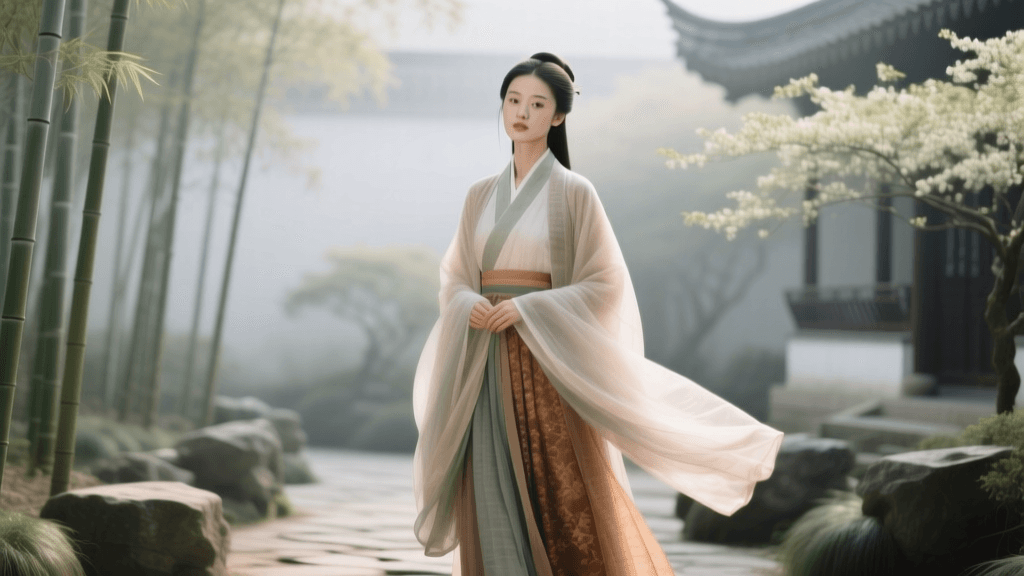
In the revival of Hanfu, the Ma Mian Qun (horse-face skirt) is a primary canvas for Su Xiu. Artisans typically apply heavy embroidery to the Qun Men (the flat, overlapping front and back panels) and the side pleats. Because the pleats are dynamic, artisans use a technique called Zhe Xiu (pleat embroidery), where the motif is designed to reveal itself only when the wearer walks and the pleats fan out. Ming-style Pi Ling (cloud shoulders) also heavily feature Su Xiu, utilizing metallic thread couching to outline the intricate floral vines.
The Shanghai-Style Qipao
For the modern Qipao, Su Xiu is often employed in an asymmetrical cascade, originating from the Mandarin collar and flowing diagonally across the bodice down to the left hip. This placement elongates the silhouette. When working with the stretch-silk brocades popular in modern Qipao making, the embroiderer must use a specialized, dissolvable water-soluble stabilizer backing to prevent the heavy silk threads from puckering the lightweight, bias-cut fabric.
Caring for Silk Embroidered Garments
Preserving Su Xiu requires strict adherence to textile conservation principles. According to the conservation guidelines outlined by institutions like The Metropolitan Museum of Art, Asian silk textiles are highly susceptible to photo-degradation, humidity fluctuations, and protein-based pests. Improper care can lead to irreversible thread snapping, dye bleeding, and silk shattering.
Cleaning Protocols
- Never Machine Wash: The agitation will destroy the split-silk filaments and cause the metallic threads to tarnish and bleed.
- Professional Dry Cleaning: Seek out a specialist who handles museum-quality textiles. Ensure they use a mild, silk-safe hydrocarbon solvent rather than harsh Perc (perchloroethylene), which can strip the natural sericin coating from the silk threads.
- Spot Cleaning: For minor surface dust, use a soft, natural-bristle makeup brush. For localized stains, consult a conservator; do not apply water, as Su Xiu dyes (especially traditional plant-based ones) are notoriously water-soluble.
Step-by-Step Storage and Display
To ensure your embroidered garments survive for generations, implement the following storage protocol:
- Hanger Selection: Never use wire or bare wooden hangers. The weight of the embroidery will distort the silk. Use wide, padded hangers wrapped in unbleached, acid-free cotton muslin.
- Tissue Buffering: Stuff the sleeves and bodice with acid-free, unbuffered tissue paper to prevent hard creases. Creases in embroidered silk can lead to micro-fractures in the threads over time.
- Pest Prevention: Avoid chemical mothballs (naphthalene), which will yellow the silk and degrade the embroidery threads. Instead, use natural cedar blocks or dried lavender sachets placed in the storage box, ensuring they do not directly touch the fabric.
- Climate Control: Store the garment in a breathable, acid-free archival box in a climate-controlled environment. Maintain a relative humidity (RH) of 45% to 55% and a stable temperature around 65°F (18°C). High humidity promotes mold, while low humidity makes the silk brittle.
Conclusion
Suzhou silk embroidery is far more than a decorative afterthought; it is a rigorous, time-honored discipline that elevates traditional Asian garments into the realm of fine art. From the microscopic splitting of mulberry silk threads to the precise placement of motifs on a Ma Mian Qun or Qipao, Su Xiu represents the pinnacle of textile craftsmanship. By understanding the technical nuances, investing in authentic artisan work, and adhering to strict conservation practices, collectors and wearers alike can ensure that these breathtaking masterpieces of Asian tradition continue to grace the world with their unparalleled elegance.