Seasonal Hanfu Guide: Fabrics and Layering for China's Climates
Introduction: Adapting Hanfu to China's Diverse Climates
Traditional Chinese clothing, collectively known as Hanfu, is often mistakenly viewed as a static, monolithic wardrobe. In reality, Hanfu represents a highly sophisticated, climate-responsive sartorial system that evolved over three millennia. China’s vast geography encompasses everything from the subarctic freezes of Harbin in the northeast to the tropical humidity of Hainan in the south. To wear Hanfu authentically and comfortably today, one must understand the historical principles of seasonal layering, textile weights, and regional adaptations.
The foundation of this adaptive system lies in the mastery of natural fibers. As documented by the Metropolitan Museum of Art, the Chinese mastery of sericulture and silk weaving allowed for the creation of textiles ranging from heavy, insulated brocades to gossamer-thin gauzes. Furthermore, the UNESCO Intangible Cultural Heritage registry highlights the deep cultural and practical significance of these textile crafts, which were historically tailored to meet the exact meteorological demands of the seasons. This guide provides actionable, practical advice on selecting the right Hanfu styles, fabric weights, and layering techniques for every season.
Spring: Transitioning with Breathable Blends
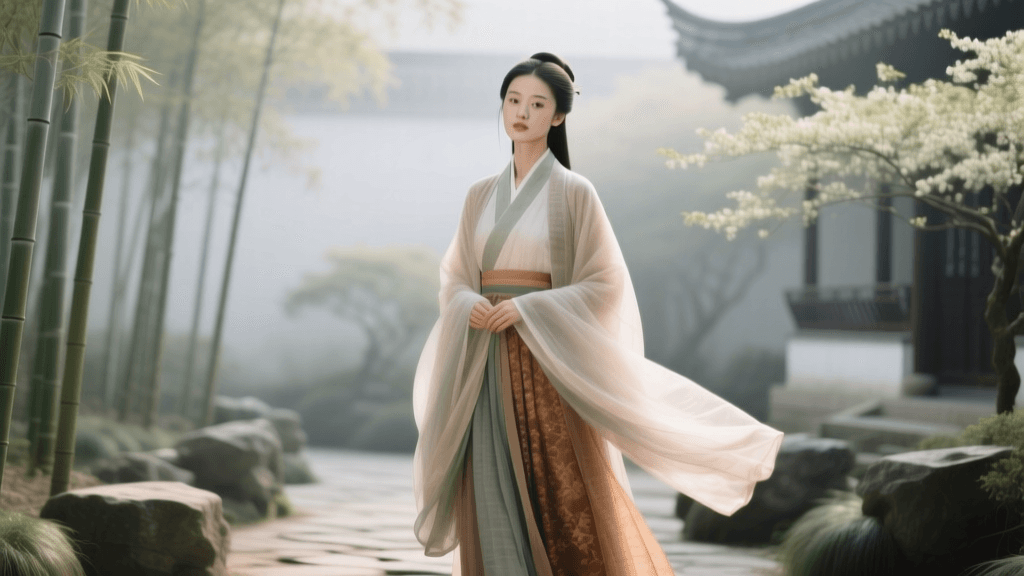
Spring in regions like Jiangnan (encompassing Shanghai, Suzhou, and Hangzhou) is characterized by damp chilliness that gradually gives way to mild warmth. The key to spring Hanfu is versatile layering that can be adjusted as temperatures fluctuate throughout the day.
Recommended Styles and Fabrics
The quintessential spring outfit is the Ruqun (a cross-collar upper garment paired with a high-waisted skirt). For the base layer, known as the Zhongyi (inner garment), opt for a 120 GSM (grams per square meter) cotton or cotton-linen blend. This provides a breathable barrier against the skin while offering light insulation.
For the outer Ru (shirt), select a medium-weight silk, specifically in the 16 to 19 momme (mm) range. Silk is a natural temperature regulator, keeping the wearer warm in the morning chill and cool in the afternoon sun. Crepe de chine or medium-weight satin are excellent choices. A spring Ruqun set typically costs between $60 and $120 USD, depending on the intricacy of the embroidery and the purity of the silk.
Summer: Beating the Humidity in the South
Summers in the Lingnan region (Guangzhou, Shenzhen) and the Yangtze River basin are notoriously hot and humid. Historical records show that ancient Chinese developed specialized open-weave textiles specifically to combat this oppressive heat.
Lightweight Silks and Open Weaves
The most historically accurate and practical summer fabric is Xia Bu (summer cloth), a meticulously woven ramie textile. Ramie is highly absorbent, dries quickly, and possesses natural antibacterial properties, making it superior to cotton for high humidity. If ramie is difficult to source, lightweight linen (around 150-180 GSM) or ultra-light silk (8 to 12 momme) are excellent alternatives.
Structurally, summer Hanfu favors the Beizi (an open-front, long-sleeved coat) worn over a Moxiong (tube top) and Songku (wide-leg, pleated trousers). The Beizi allows for maximum airflow, while the wide trousers prevent fabric from clinging to the skin. For formal summer events, look for garments made from Luo (gauze) or Juan (thin, stiff silk), which feature leno weaves that create microscopic ventilation holes. Expect to pay $40 to $80 USD for high-quality ramie or linen sets, while genuine silk gauze garments can exceed $150 USD.
Autumn: The Art of Elegant Layering
Autumn in northern plains like Beijing brings crisp, dry air and significant temperature drops between day and night. This season is ideal for showcasing the structural elegance and rich textures of Ming Dynasty-inspired Hanfu.
Mid-Weight Textiles and Structured Silhouettes
The Aoqun (a lined or padded jacket paired with a skirt) is the definitive autumn ensemble. The most iconic skirt for this season is the Mamianqun (horse-face skirt), characterized by its flat front and back panels with heavily pleated sides. For autumn, choose a Mamianqun made from jacquard weave, cotton sateen, or light brocade (approximately 250-300 GSM). These fabrics hold the stiff, architectural pleats beautifully and provide necessary wind resistance.
The upper Ao (jacket) should feature a stand-up collar (often fastened with metal or jade buttons) and be fully lined with a smooth, anti-static material like Bemberg cupro or lightweight silk. This lining prevents the jacket from clinging to the base layers. A well-constructed autumn Aoqun set, featuring woven metallic threads and proper lining, generally ranges from $90 to $200 USD.
Winter: Insulation and Historical Outerwear
Winters in Dongbei (Northeast China) and the northern steppes are brutal, with temperatures frequently plunging below freezing. Traditional Hanfu addresses this through strategic padding, windproof outer layers, and the use of animal-derived insulators.
Padded Garments and Fur Accents
The ultimate winter survival garment in the Hanfu wardrobe is the Doupeng (a hooded, sleeveless cloak). Historically lined with wool, quilted cotton, or even fur, the Doupeng drapes over the entire body, trapping heat effectively. Modern practitioners can find Doupeng cloaks lined with thick fleece or quilted with high-loft synthetic batting for ethical and practical reasons.
Beneath the cloak, wear a padded Ao (jacket). Look for garments that utilize traditional quilting techniques, where the outer shell (often heavy brocade or velvet) is stitched directly to an inner layer of cotton batting. To protect the extremities, winter Hanfu accessories include Wotou (fur-lined hoods or ear muffs) and thick, embroidered cotton shoes. A heavy winter Doupeng and padded jacket set is an investment, typically costing between $150 and $300 USD due to the volume of fabric and complex quilting required.
Comprehensive Seasonal Hanfu Fabric & Layering Chart
The following table serves as a quick-reference guide for building your seasonal Hanfu wardrobe, detailing the appropriate base layers, main garments, and fabric weights.
| Season | Climate Region | Base Layer (Zhongyi) | Main Garment Style | Outer Layer / Cloak | Ideal Fabric & Weight | Est. Cost (USD) |
|---|---|---|---|---|---|---|
| Spring | Jiangnan (Mild, Damp) | 120 GSM Cotton/Linen | Ruqun (Cross-collar) | Light Pibo (Shawl) | 16-19 mm Silk Crepe | $60 - $120 |
| Summer | Lingnan (Hot, Humid) | Silk Camisole / Tube top | Beizi & Songku (Trousers) | None (Avoid layers) | Ramie (Xia Bu) or 8 mm Gauze | $40 - $150 |
| Autumn | Beijing (Crisp, Windy) | Long-sleeve Cotton Zhongyi | Aoqun (Lined Jacket) | Half-sleeve Beixin (Vest) | 250 GSM Jacquard / Light Brocade | $90 - $200 |
| Winter | Dongbei (Freezing, Dry) | Thermal Fleece Inner | Padded Ao (Quilted Jacket) | Doupeng (Hooded Cloak) | Heavy Brocade, Velvet, Cotton Batting | $150 - $300+ |
Practical Buying Guide: Measurements, Sizing, and Care
Purchasing Hanfu, especially from overseas vendors or direct from Chinese e-commerce platforms like Taobao, requires precise measurements. Unlike modern Western clothing, Hanfu relies heavily on flat-cutting techniques, meaning the fit is dictated by garment length and width rather than tailored darts.
- Chest/Bust Measurement: Measure around the fullest part of your chest. For cross-collar garments (Jiaoling), add 10-15 cm to your actual measurement to ensure the collar lays flat and does not gape open.
- Skirt Length: Measure from your natural waist (or where you intend to tie the high-waisted skirt) down to the ankle bone. Hanfu skirts should ideally hover 2-3 cm above the ground to prevent the hem from dragging and collecting dirt.
- Sleeve Length: Traditional Hanfu sleeves often extend past the fingertips. Measure from the base of your neck, over the shoulder, and down to your desired sleeve length (often to the knuckles or floor for formal ceremonial wear).
Textile Care and Maintenance
Proper care ensures the longevity of your seasonal garments. Silk (especially lightweight summer gauze and spring crepe) must be hand-washed in cold water using a pH-neutral detergent or specialized silk wash. Never wring silk; instead, roll it in a clean towel to absorb excess moisture and lay it flat to dry away from direct sunlight, which degrades the protein fibers.
Ramie and linen summer garments can withstand gentle machine washing, but they must be removed immediately and line-dried to prevent deep-set wrinkles. Autumn brocades and winter padded garments should be dry-cleaned or spot-cleaned to preserve the structural integrity of the woven metallic threads and the internal cotton batting.
Conclusion
Wearing Hanfu is not merely an act of historical reenactment; it is an engagement with a deeply practical, climate-aware philosophy of dress. By selecting the appropriate textile weights—from the breathable ramie of summer to the insulated brocades of winter—and utilizing the traditional layering system, modern enthusiasts can enjoy the elegance of Hanfu comfortably year-round. Understanding these seasonal nuances bridges the gap between ancient craftsmanship and contemporary wearability, ensuring that the legacy of Chinese textile arts continues to thrive in every climate.