Hakama and Samue: Traditional Japanese Martial Arts and Tea Attire
The Intersection of Budo and Sado: More Than Just Clothing
Japanese traditional arts are deeply intertwined with the garments worn during their practice. Two disciplines that seemingly exist on opposite ends of the physical spectrum—the explosive, dynamic world of Budo (martial arts like Aikido and Kendo) and the serene, meticulously quiet realm of Sado (the Way of Tea)—actually share a profound sartorial philosophy. Both require practitioners to don specific traditional uniforms that serve not merely as clothing, but as tools for mental conditioning, respect, and physical alignment. In this comprehensive guide, we explore the two most prominent garments that bridge the dojo and the tearoom: the hakama and the samue. Whether you are a martial artist seeking the perfect pleated trousers or a tea practitioner looking for functional yet respectful workwear, understanding the nuances of these garments is essential for authentic practice.
The Hakama: Pleats of Virtue and Discipline
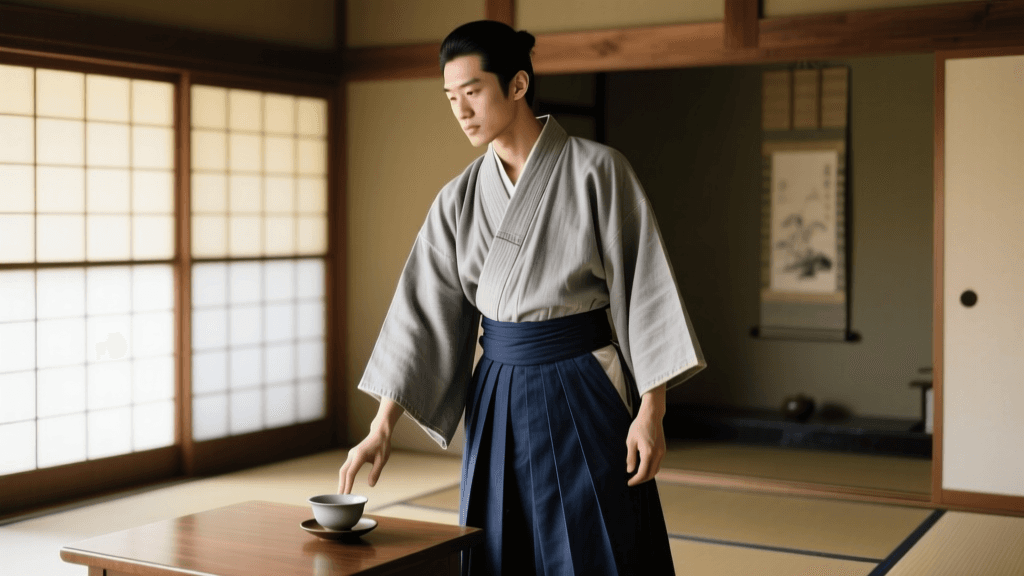
The hakama is a wide, pleated skirt-like trouser worn over a kimono or keikogi (training uniform). Historically worn by samurai to protect their legs while riding horses and to obscure their footwork in combat, it has evolved into a symbol of advanced rank and deep respect in modern Japanese arts.
Symbolism of the Pleats
The traditional martial arts hakama features seven deep pleats—five in the front and two in the back. According to teachings recognized by organizations like the Aikikai Foundation, these pleats represent the seven virtues of Bushido: Jin (benevolence), Gi (justice), Rei (courtesy), Chi (wisdom), Shin (sincerity), Chu (loyalty), and Kou (piety). When a practitioner ties the himo (strings) of the hakama, they are metaphorically binding these virtues to their body and mind, preparing themselves for disciplined training.
Martial Arts vs. Tea Ceremony Hakama
While the silhouette appears similar, the construction and fabric differ vastly based on the discipline.
- Martial Arts (Budo): Practitioners of Kendo and Aikido require hakama made from durable, heavy-duty materials. A blend of polyester and cotton (typically 65/35 or 85/15) is standard. The polyester provides wrinkle resistance and maintains the sharpness of the pleats during vigorous movement, while the cotton allows for breathability. The All Japan Kendo Federation notes that a proper Kendo hakama must be stiff enough to hide the practitioner's footwork, creating a gliding illusion during strikes.
- Tea Ceremony (Sado): In the tearoom, the hakama is worn primarily by male practitioners (though female students wear it for specific high-level ceremonies or graduations). Tea ceremony hakama are crafted from softer, more refined fabrics like pure silk, high-quality cotton, or tetsu-kon (traditional dark navy) dyed linen. The pleats are softer, allowing the practitioner to sit deeply in seiza (kneeling) without the stiff fabric bunching uncomfortably at the waist or knees.
Actionable Advice: Measuring for a Hakama
Ordering a hakama online requires precise measurements to ensure the hem rests exactly at the ankle bone (kurubushi), hiding the feet in martial arts but allowing the tabi socks to peek out slightly in the tearoom.
- Wear your obi or martial arts belt tied at the correct height (usually at the navel, or heso).
- Have a partner measure from the top of the obi down the side of your leg to the prominent ankle bone.
- For martial arts, subtract 1-2 cm to ensure the hem clears the floor during lunges. For tea ceremony, measure exactly to the ankle bone.
The Samue: Zen Roots and Tearoom Practicality
While the hakama represents formality and high rank, the samue represents the beauty of humble, mindful labor. Originating as the workwear for Zen Buddhist monks (the word samu translates to 'work' or 'chore' in a spiritual context), the samue is a two-piece garment consisting of a wrap-around jacket and loose-fitting trousers tied at the ankles.
The Samue in the Tearoom
In the context of the Urasenke Foundation and other major tea schools, the samue is the ultimate uniform for the mizuya (the preparation room behind the tearoom). Before and after a formal tea gathering (chaji), practitioners must wash bowls, carry heavy charcoal, and prepare sweets. Wearing a delicate silk kimono in the mizuya is impractical and disrespectful to the garments. The samue allows for full mobility, protects the wearer from water and ash, and maintains a dignified, traditional aesthetic that aligns with the Zen roots of the tea ceremony.
Materials and Seasonal Awareness
Japanese traditions are deeply tied to the seasons, and the samue is no exception.
- Spring/Autumn: Medium-weight cotton or cotton-linen blends are preferred. These provide warmth during chilly morning preparations but breathe well during physical labor.
- Summer: Washi (traditional Japanese paper) woven with cotton or pure ramie is used. Washi samue are incredibly lightweight, possess natural antibacterial properties, and dry remarkably fast if splashed with water during bowl washing.
- Winter: Quilted cotton or heavy indigo-dyed flannel samue are worn, often layered over thermal undergarments to withstand the drafty, unheated architecture of traditional tea houses.
Comparison Chart: Hakama vs. Samue
| Feature | Hakama | Samue |
|---|---|---|
| Primary Use | Formal practice, grading, ceremonies | Preparation work, informal gatherings, temple chores |
| Silhouette | Wide, pleated skirt-trousers | Two-piece jacket and tapered trousers |
| Mobility | High for lower body, restrictive for bending over | Unrestricted full-body mobility |
| Formality | High (symbolizes rank and respect) | Low to Medium (symbolizes humility and labor) |
| Common Fabrics | Poly-cotton blend, Silk, Tetsu-kon cotton | Cotton, Linen, Washi paper, Ramie |
| Average Cost (USD) | $80 - $300+ | $50 - $200 |
Sourcing, Costs, and Building Your Wardrobe
Investing in traditional Japanese garments requires an understanding of the market. Authentic, domestically produced garments (made in Japan) carry a premium but offer superior tailoring, authentic natural dyes, and longevity.
- Entry-Level (Imported/Mass-Produced): $40 - $80 USD. Usually made from thin polyester or low-grade cotton. Acceptable for absolute beginners in martial arts, but lacks the drape and durability required for serious tea ceremony practice.
- Mid-Tier (Specialty Martial Arts & Tea Brands): $90 - $180 USD. Brands like Tozando or Iwata offer excellent poly-cotton blend hakama and durable cotton samue. These are the workhorses of the dojo and the mizuya.
- High-End (Artisanal/Custom): $250 - $600+ USD. Hand-dyed tetsu-kon cotton, pure Oshima silk, or authentic Kurume kasuri (ikat) samue. These are reserved for tea masters, high-ranking martial artists, and formal presentations.
The Ritual of Care: Folding and Maintenance
In both Budo and Sado, the practice does not end when the physical activity stops. The act of removing, cleaning, and folding the uniform is a moving meditation known as shitsuke (discipline).
How to Fold a Martial Arts Hakama
Improper folding will ruin the pleats and show disrespect to the art. Follow this sequence:
- Lay the hakama flat on a clean surface, front side down.
- Carefully align the five front pleats and two back pleats, smoothing out any wrinkles.
- Fold the left and right outer edges inward so they meet at the center crease.
- Fold the bottom hem up to the waistband (the koshi-ita or rigid back plate).
- Fold the garment into thirds horizontally.
- Wrap the long front himo strings tightly around the folded bundle, tucking the shorter back strings into the wrap to secure it.
Washing Instructions
- Poly-Cotton Hakama: Can be machine washed on a gentle cycle in cold water, but must be hung to dry immediately. Never use a tumble dryer, as the heat will melt the internal stiffening agents in the pleats.
- Silk/Tea Ceremony Hakama: Dry clean only, or hand wash gently in cold water with a pH-neutral detergent designed for delicates.
- Cotton/Washi Samue: Hand wash or machine wash in a mesh laundry bag. Washi garments should be soaked briefly and gently squeezed, never wrung, to prevent tearing the delicate paper fibers.
Conclusion
The garments we wear shape our posture, our mindset, and our connection to history. Whether you are gripping a bamboo shinai in a Kendo dojo, executing a seamless throw on the Aikido mat, or whisking matcha in the quiet solitude of a tea room, the hakama and samue serve as your steadfast companions. By understanding the distinct purposes, materials, and care requirements of these traditional uniforms, you honor the centuries of artisans and masters who refined them. Dress with intention, fold with mindfulness, and let the fabric guide your practice.