Mastering Kimono Seasonal Layering: A Guide to Koromogae
The Rhythm of the Seasons: Introduction to Koromogae
The Japanese archipelago is defined by its profound reverence for the changing seasons, a cultural ethos that permeates everything from culinary arts to poetry. Nowhere is this seasonal awareness more vividly expressed than in the traditional wardrobe. The practice of koromogae—the seasonal changing of clothes—is not merely a practical response to shifting weather patterns; it is a deeply ingrained aesthetic and cultural ritual. For the modern kimono practitioner, mastering the transition from the humid, blooming days of late spring to the sweltering heat of the Japanese summer requires a nuanced understanding of textiles, layering techniques, and the precise architecture of kitsuke (the art of kimono dressing).
Historically codified during the Edo period for samurai and court officials, the koromogae calendar dictated strict dates for transitioning between lined and unlined garments. Today, while the strictures have relaxed, the underlying principles of temperature regulation, visual coolness, and textile appropriateness remain essential for anyone looking to wear traditional Japanese clothing with authenticity and comfort.
The Calendar of Koromogae: Timing the Transition
The traditional koromogae calendar is divided into distinct phases. From October 1st through May 31st, one wears the awase kimono, which features a full silk lining for warmth. As the plum rains (tsuyu) approach and temperatures rise, the wardrobe shifts on June 1st to the hitoe, an unlined kimono that allows for greater breathability. During the peak of summer in July and August, the sheer usugoromo (often referred to as natsu-goromo or summer kimono) takes precedence. Finally, on September 1st, the wardrobe reverts to the hitoe, and by October 1st, the cycle returns to the lined awase.
However, modern practitioners and meteorological realities necessitate flexibility. With Japan's summers growing increasingly hot and humid, many contemporary kimono schools advise adopting the hitoe as early as mid-May and utilizing sheer, breathable fabrics well into September. Prioritizing physical comfort and the prevention of heatstroke is now considered just as important as maintaining aesthetic integrity.
The Summer Textile Trinity: Ro, Sha, and Chijimi
The transition into summer introduces a specialized trinity of textiles designed specifically for heat mitigation. According to textile archives at the Metropolitan Museum of Art, the evolution of these specialized weaves represents a pinnacle of Japanese loom engineering, balancing structural integrity with maximum airflow.
- Ro (Leno Weave): Ro is characterized by a distinct ribbed or striped texture, created by twisting adjacent warp threads around each other before passing the weft thread through. This technique creates tiny, uniform gaps in the fabric that allow air to circulate against the skin while maintaining enough structural opacity to be worn in formal settings. It is the standard for high-summer tea ceremonies and formal visits.
- Sha (Gauze): Sha is a lighter, more open weave than ro. It is exceptionally sheer and delicate, often reserved for the most informal, peak-summer gatherings, theater outings, or obi accessories. Its visual transparency evokes a sense of coolness even to the observer.
- Chijimi (Crepe): Chijimi refers to crepe textiles, most notably Ojiya-chijimi, a ramie fabric woven with tightly twisted weft threads that are later massaged and stretched to create a bumpy, textured surface. This texture prevents the fabric from clinging to the skin, making it an extraordinarily cooling option for the height of August.
The Architecture of Cool: Seasonal Undergarments
The secret to surviving a Japanese summer in full traditional dress lies beneath the outer kimono. The nagajuban (long undergarment) and hadajuban (undershirt) are the primary defense against sweat and heat. Modern dressing techniques heavily rely on advanced material science blended with traditional cuts. Below is a guide to the essential summer undergarments and their estimated costs for modern practitioners.
| Garment | Material | Function & Season | Est. Cost (USD) |
|---|---|---|---|
| Hadajuban (Undershirt) | Ojiya-chijimi (Ramie) or Bamboo blend | Wicks sweat, provides a cooling barrier against the skin. Peak Summer. | $40 - $85 |
| Nagajuban (Long Juban) | Ro Silk or Coolcore Synthetic | Protects outer kimono from oils; Ro provides breathability, synthetics offer washability. June - Sept. | $120 - $300 |
| Date-eri (Under-collar) | Sheer Mesh or Ro Silk | Replaces padded winter collars to prevent heat trapping at the neck. Summer only. | $15 - $35 |
| Obi-ita (Obi Board) | Rigid Plastic Mesh | Keeps the obi sash smooth while allowing lower back ventilation. Summer only. | $10 - $25 |
| Koshihimo (Binding Ties) | Elasticized Mesh | Secures the kimono without trapping heat and moisture against the ribs. Year-round, preferred in Summer. | $8 - $15 |
Advanced Kitsuke: Dressing Techniques for Heat
Dressing for summer requires specific kitsuke adjustments to promote airflow and visual lightness. The eri-nuki (collar gap) is a critical element. In winter, the collar sits relatively close to the nape of the neck to retain warmth. In summer, practitioners use a specialized erinuki belt with a plastic or bamboo stay to pull the collar back, creating a gap of roughly three to four finger-widths (about 6 to 8 centimeters) between the fabric and the skin. This gap acts as a thermal chimney, allowing hot air to escape from the torso.
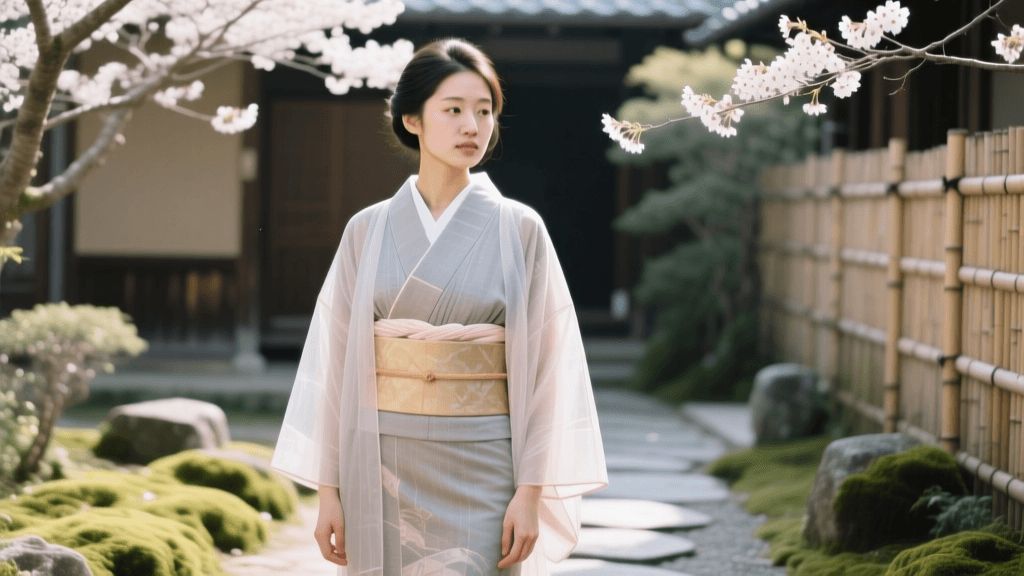
Furthermore, the usugoromo offers a unique layering technique that is highly celebrated in Japanese fashion history. As noted by the Victoria and Albert Museum, the interplay of transparency and opacity is a hallmark of Edo-period aesthetic refinement. When wearing a sheer ro or sha kimono, the nagajuban beneath is treated as a secondary canvas. Practitioners select a vibrant, boldly patterned silk nagajuban that contrasts or complements the muted, translucent tones of the outer summer kimono. The visual effect of the undergarment's pattern bleeding through the sheer outer layer creates a sense of depth and cooling visual lightness, an effect known as sukashi.
When securing the obi, summer dressing favors the hanhaba obi (half-width obi) for casual yukata, or a lighter, unlined fukuro obi for formal sheer kimono. Knots such as the bunko-musubi (bow knot) are preferred over dense, heavy knots like the taiko-musubi (drum knot) because they cover less surface area on the lower back, further enhancing ventilation.
Sourcing, Costs, and Modern Adaptations
Sourcing authentic summer garments requires navigating both vintage markets and modern textile innovators. For vintage silk ro and sha kimono, online specialty retailers and physical markets like Tokyo's Ameyoko or Kyoto's Toji Temple flea markets are excellent resources. A high-quality, vintage, unlined summer kimono in good condition typically ranges from $150 to $400, depending on the presence of family crests (kamon) and hand-painted yuzen dye work.
However, the maintenance of vintage sheer silk is costly and delicate. Dry cleaning a sheer kimono (maruarai) can cost between $80 and $120 per wash due to the fragility of the leno weave. Consequently, many modern practitioners are turning to advanced synthetic alternatives. Brands utilizing 'Coolcore' or specialized polyester meshes offer machine-washable nagajuban and outer garments that mimic the drape of silk while providing superior moisture-wicking properties. These modern synthetic sets generally cost between $60 and $120, offering a practical entry point for those living in humid climates outside of Japan.
Conclusion: The Enduring Identity of the Summer Kimono
The meticulous attention to seasonal layering in Japanese dress is a testament to a culture that refuses to view clothing as mere utility. As highlighted by BBC Culture, the kimono remains a profound garment of Japanese identity, one that continues to adapt to contemporary challenges without losing its historical soul. By understanding the precise timing of koromogae, investing in the correct breathable undergarments, and mastering the ventilated techniques of summer kitsuke, practitioners can honor the deep traditions of the Asian sartorial atlas while remaining perfectly attuned to the natural world.