Vintage Silk Kimono Care 2026: Foxing Removal & Storage Guide
The Rising Challenge of Preserving Vintage Silk in 2026
The global appreciation for vintage Japanese garments has reached new heights in 2026, with collectors and enthusiasts fiercely seeking out pristine Taisho (1912–1926) and early Showa (1926–1989) era kimonos. However, as these exquisite silk garments cross the 50-to-100-year threshold, the structural integrity of their protein-based fibers faces unprecedented threats. Fluctuating global climates, increased urban humidity, and the natural degradation of organic dyes have made preservation more complex than ever before. For collectors, museums, and inheritors of family heirlooms, understanding the nuanced science of Asian garment care is no longer optional; it is a critical necessity to prevent irreversible damage to these wearable masterpieces.
Understanding Foxing and Silk Degradation
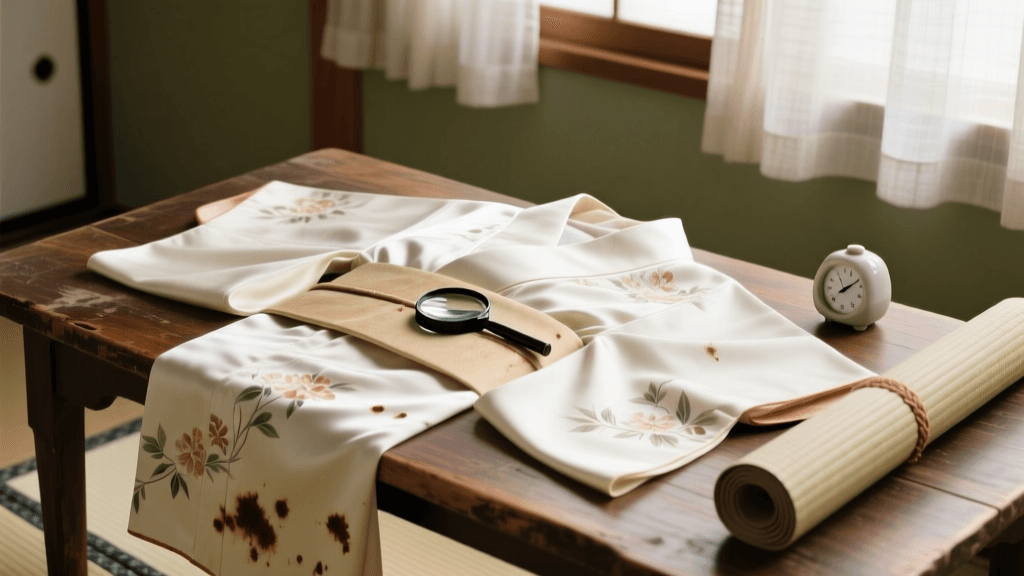
One of the most common and distressing issues found on vintage silk kimonos and obis is 'foxing'—the appearance of reddish-brown, rust-like spots on the fabric. Foxing is primarily caused by two factors: fungal growth thriving in high-humidity environments, and the oxidation of metallic impurities (such as iron or copper) that were present in the water used during the original silk weighting and dyeing processes decades ago.
Vintage silk, particularly rinzu (satin weave) and chirimen (crepe), is highly susceptible to these spots. Furthermore, heavily weighted silks from the early 20th century are prone to 'shattering,' a phenomenon where the silk physically splits along fold lines due to the corrosive nature of the metallic salts used to add weight and drape to the fabric. The Victoria and Albert Museum's conservation department notes that preventing mechanical stress and maintaining strict environmental controls are the only ways to halt the progression of shattering in weighted historical textiles. Once the silk's protein chains have been severed by acidic weighting agents, no chemical treatment can fuse them back together.
Professional Foxing Removal: The Art of Shiminuki
In 2026, the approach to stain and foxing removal on vintage Asian garments has evolved significantly, moving away from harsh, generalized dry cleaning toward highly specialized, localized treatments. In Japan, this specialized craft is known as shiminuki (stain removal). Attempting DIY foxing removal using commercial bleach, hydrogen peroxide, or standard laundry detergents will almost certainly destroy the delicate synthetic or natural dyes and accelerate silk shattering.
Modern 2026 Restoration Techniques
Today’s master shiminuki artisans and advanced textile conservation labs utilize a combination of cutting-edge technology and traditional knowledge:
- Ultrasonic Mist Cleaning: High-frequency ultrasonic misters are used to drive specialized, pH-neutral enzymatic solutions deep into the silk weave without aggressive rubbing, lifting fungal spores and oxidized particles safely.
- Localized Reductive Bleaching: For severe metallic oxidation, conservators apply highly controlled, localized reductive agents that neutralize the rust spots without affecting the surrounding dye.
- Sericin Replenishment: After intensive cleaning, some advanced 2026 restoration services apply a micro-mist of purified sericin (the natural silk protein) to restore the fiber's luster and flexibility.
The cost for professional shiminuki services in 2026 typically ranges from $150 to $450 per garment, depending on the severity of the foxing and the complexity of the obi or kimono's embroidery. It is a vital investment for high-value pieces, as documented by the Metropolitan Museum of Art, which emphasizes that localized, tested conservation methods are always preferred over full-immersion washing for historical Asian textiles.
Upgrading Your Storage: Paulownia vs. Modern Archival Solutions
Proper storage is the cornerstone of kimono preservation. The traditional Japanese method utilizes kiri-bako, boxes crafted from Paulownia wood. Paulownia is uniquely suited for textile preservation because it is highly hygroscopic (absorbing and releasing moisture to buffer humidity changes), naturally resistant to insects, and remarkably fire-retardant. However, authentic, high-quality Japanese Paulownia boxes are expensive and increasingly difficult to source outside of Asia.
For collectors in 2026 who cannot acquire kiri-bako, modern archival alternatives provide excellent protection. Below is a comparison of the most common storage materials used for vintage silk kimonos today.
| Storage Material | Pros | Cons | Best For |
|---|---|---|---|
| Paulownia Wood (Kiri-bako) | Buffers humidity naturally; insect and fire-resistant; traditional aesthetic. | Very expensive; heavy; requires periodic sanding to maintain effectiveness. | Museum-grade collections and high-value antique silk kimonos. |
| Archival Acid-Free Corrugated Boxes | Affordable; lightweight; chemically stable; prevents acid migration. | Does not buffer humidity; vulnerable to water damage and pests if unsealed. | Long-term storage in climate-controlled rooms; budget-conscious collectors. |
| Cedar Chests | Readily available; natural aroma deters some moths. | Cedar oils can stain and degrade silk over time; acidic wood. | Not recommended for direct silk contact. Use only if lined with heavy archival barriers. |
| Plastic Bins (Polypropylene) | Waterproof; pest-proof; inexpensive. | Traps moisture (causing mold); off-gasses harmful VOCs over time. | Transportation only. Never use for long-term vintage silk storage. |
Smart Climate Monitoring for Kimono Collections
The Library of Congress guidelines for textile preservation stress that stability is just as important as the absolute numbers when it comes to temperature and relative humidity (RH). For vintage silk, the ideal environment is a stable 65°F to 68°F (18°C to 20°C) with an RH of 50% to 55%. Fluctuations cause the silk fibers to expand and contract, leading to micro-tears and accelerated shattering.
In 2026, relying on a basic analog hygrometer is no longer sufficient for serious collectors. Wi-Fi enabled smart home sensors with data-logging capabilities are now standard practice. These devices send push alerts to your smartphone if the RH in your storage closet spikes above 60% (the danger zone for mold and foxing) or drops below 40% (which dries out silk, making it brittle). Pairing these smart sensors with a modern, energy-efficient dehumidifier or a dedicated HVAC zone ensures your collection remains in a micro-climate of perfect stability.
The Hon-Tatami Folding Method and Tatōshi Wrapping
How a kimono is folded and wrapped is just as critical as the box it is stored in. The traditional hon-tatami folding method is designed to align the seams and distribute the bulk of the fabric evenly, preventing awkward pressure points. However, folding vintage silk in the exact same place year after year will cause permanent crease stress, eventually leading to the silk shattering along the fold line.
Modern Folding and Wrapping Best Practices
- Vary the Folds: Every six months, slightly alter the folding lines by a few millimeters to shift the stress points on the vintage fibers.
- Pad the Creases: Roll acid-free, unbuffered tissue paper into loose tubes and place them inside the major folds of the kimono. This prevents hard creases and maintains the three-dimensional structure of the silk.
- Use Proper Tatōshi: Wrap the folded garment in tatōshi (traditional wrapping paper) made from unbleached, acid-free cotton or custom-sized archival tissue. Never use plastic bags, dry-cleaning covers, or standard tissue paper, as these trap moisture and introduce acids that will yellow and rot the silk.
Seasonal Airing (Mushiboshi) Best Practices
Even in a climate-controlled environment, vintage kimonos need to 'breathe' periodically. The Japanese tradition of mushiboshi (airing out garments) is typically performed during the dry, crisp days of late autumn or early spring. In 2026, with increased urban air pollution and unpredictable weather patterns, mushiboshi must be done with caution.
Never hang vintage silk in direct sunlight, as UV radiation will rapidly fade natural dyes and weaken the protein structure. Instead, drape the kimono over a wide, padded hanger in a well-ventilated, shaded indoor room equipped with a HEPA air purifier. Allow the garment to air out for 2 to 4 hours. This process releases trapped odors, allows any residual moisture to evaporate, and gives you a vital opportunity to inspect the seams, lining, and fabric surface for early signs of pest activity or new foxing spots.
Conclusion
Preserving a vintage silk kimono is an act of cultural stewardship. As these garments continue to age, the margin for error in their care shrinks. By embracing professional shiminuki restoration, investing in proper archival storage materials, utilizing 2026 smart climate monitoring, and adhering to the meticulous traditions of hon-tatami folding, collectors can ensure that these breathtaking examples of Asian textile heritage survive for generations to come. The key to successful preservation is vigilance, patience, and a deep respect for the delicate organic materials that compose these historic works of art.