Japanese Kimono & Yukata Guide 2026: Types & Styling
Introduction to Japanese Traditional Garments in 2026
The landscape of Japanese traditional garments has evolved beautifully as we navigate 2026. While Western fashion dominates daily life in Tokyo, Osaka, and Kyoto, traditional garments like the kimono, yukata, and hakama remain vital pillars of Japanese cultural identity. Today, these garments are not merely museum relics; they are living, breathing textiles worn during tea ceremonies, summer festivals, weddings, and coming-of-age ceremonies. Furthermore, a massive resurgence in sustainable fashion has brought vintage and upcycled silk kimono to the forefront of global eco-conscious wardrobes. Whether you are a textile collector, a cultural enthusiast, or a traveler preparing for the 2026 summer festival season, understanding the nuances of Japanese garment types, layering techniques, and modern styling is essential.
According to the Japan National Tourism Organization (JNTO), the appreciation for traditional Japanese arts and textiles has seen a significant global surge, driven by international travelers seeking authentic, immersive cultural experiences. This guide will break down the core types of Japanese garments, the intricate art of layering, and how to source and style these pieces in the modern era.
The Anatomy of the Tanmono: Zero-Waste Construction
Before diving into specific garment types, it is crucial to understand how traditional Japanese clothing is constructed. Unlike Western tailoring, which cuts curved shapes from wide fabric and discards the scraps, traditional Japanese garments are cut from a single bolt of fabric known as a tanmono. A standard tanmono measures approximately 36 to 40 centimeters in width and 11 to 12 meters in length. The garment is constructed using straight-line cutting, resulting in a zero-waste design that is remarkably sustainable. Because the pieces are rectangular and stitched together using straight seams, a kimono can be easily taken apart, washed, re-dyed, and restitched—a practice that aligns perfectly with the circular fashion movements dominating 2026.
Core Garment Types: Kimono, Yukata, and Hakama
The term 'kimono' literally translates to 'thing to wear' (ki = wear, mono = thing). However, in modern parlance, it refers specifically to the T-shaped, ankle-length robe worn with an obi (sash). The yukata and hakama are distinct variations, each serving specific cultural and practical purposes.
1. The Kimono (Silk and Formal Wear)
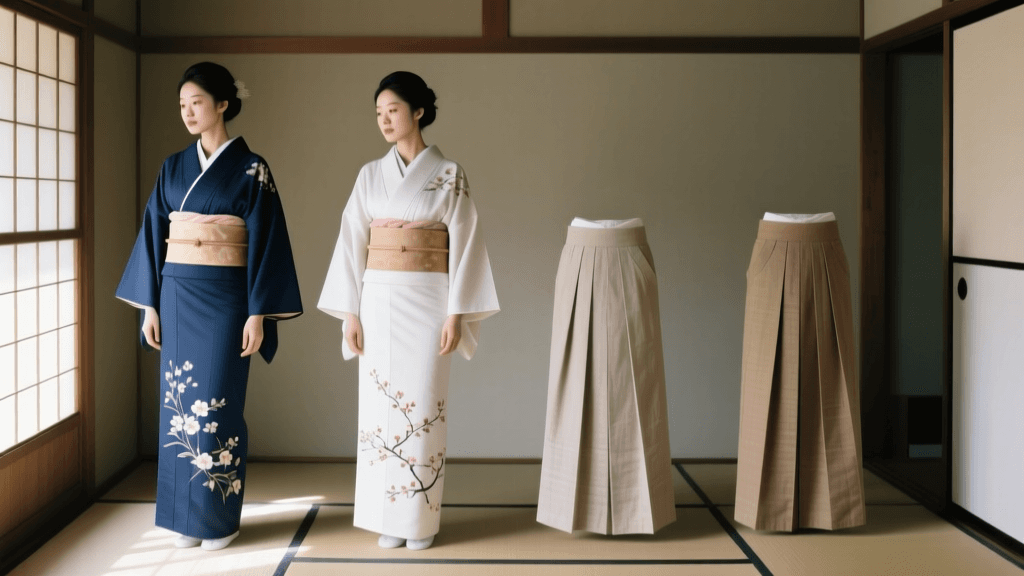
The kimono is the most formal and complex of the traditional garments. It is typically made from silk, crepe (chirimen), or high-quality synthetic blends designed to mimic the drape of silk. Kimono are categorized by their formality, which is dictated by the fabric type, the number of family crests (kamon), and the dyeing technique. The kurotomesode (black with crests and hem patterns) is the most formal for married women, while the furisode (featuring long, swinging sleeves) is worn by unmarried women for events like the Seijin Shiki (Coming of Age Day).
2. The Yukata (Cotton and Summer Festivals)
The yukata is a casual, unlined summer garment originally worn as a bathrobe by the nobility before becoming the standard attire for summer matsuri (festivals) and fireworks displays. Made primarily from breathable cotton or modern cooling linen-blends, the yukata is worn directly over basic undergarments, bypassing the complex layering required for a silk kimono. In 2026, contemporary yukata feature bold, graphic prints, retro-pop motifs, and even collaborations with modern anime and streetwear brands.
3. The Hakama (Pleated Trousers)
The hakama is a pleated, skirt-like garment worn over a kimono. Historically worn by samurai to protect their legs while riding horses, it is now standard attire for martial artists (kendo, aikido), Shinto priests, and university graduates. Women also wear hakama over kimono for graduation ceremonies, a tradition that remains incredibly popular in 2026.
Comparison of Traditional Japanese Garments
| Garment Type | Primary Material | Formality Level | 2026 Avg. Retail Price (USD) | Standard Footwear |
|---|---|---|---|---|
| Furisode Kimono | Heavy Silk / Crepe | Very Formal (Unmarried Women) | $800 - $3,500+ | Zori with Tabi |
| Komon Kimono | Silk / Synthetic Blend | Casual / Daily Wear | $150 - $600 | Zori or Geta with Tabi |
| Yukata | Cotton / Linen Blend | Casual (Summer / Festivals) | $45 - $150 | Geta (Barefoot/Tabi) |
| Hakama Set | Silk / Polyester Blend | Ceremonial / Academic / Martial | $200 - $900 | Zori or Boots |
The Essential Layering System
Wearing a formal kimono is an exercise in structured layering. The silhouette is not created by the body's natural curves, but by the padding and binding of the undergarments, creating a smooth, cylindrical shape that allows the outer silk to drape flawlessly.
- Hadajuban and Susoyoke: The base layer consists of a thin cotton top (hadajuban) and a wrap skirt (susoyoke). These protect the expensive outer silk from body oils and sweat.
- Nagajuban: The primary under-kimono. The collar of the nagajuban is intentionally left peeking out from beneath the outer kimono collar by exactly one centimeter. In 2026, interchangeable collars (han-eri) featuring intricate embroidery or seasonal motifs are highly sought after by collectors.
- Koshihimo and Datejime: These are the binding cords and sashes used to secure the layers in place before the outer obi is tied. Modern innovations include elasticized koshihimo with silicone grips, making self-dressing much easier for beginners.
Understanding the Obi: The Focal Point
The obi is the sash that secures the kimono, and it is often the most expensive and visually striking element of the ensemble. The Victoria and Albert Museum's extensive kimono archives highlight how the obi evolved from a simple, narrow tie in the Edo period to a wide, heavily brocaded centerpiece of Japanese textile art. Today, there are three main types you will encounter:
Fukuro Obi
The fukuro obi is a formal sash, typically woven with gold or silver metallic threads. It is worn with formal kimono like the furisode or houmongi and requires complex, sculptural knots, such as the majestic taiko musubi (drum knot) or the elaborate fukura-suzume (sparrow knot).
Nagoya Obi
Invented in the 1920s in Nagoya, this semi-formal obi is pre-folded and stitched in half for part of its length, making it significantly easier to tie. It is the standard choice for everyday silk kimono (komon) and tea ceremony attire.
Hanhaba Obi
The hanhaba obi is a narrow, casual sash used exclusively with yukata or casual wool kimono. It requires no stiffeners (obi-ita) and is tied in simple, playful knots like the bunko musubi (bow knot).
Footwear and Accessories: Tabi, Zori, and Geta
No traditional Japanese outfit is complete without the correct footwear. The foundation is the tabi, the iconic split-toe sock. For formal kimono, white cotton tabi are mandatory. However, in 2026, stretch-lace tabi and patterned tabi are widely accepted for casual and semi-formal styling.
Footwear is divided into two main categories: zori and geta. Zori are flat, thonged sandals made from vinyl, leather, or woven brocade, worn with formal kimono. Geta are elevated wooden clogs with one or two 'teeth' on the bottom, designed to keep the hem of the yukata clean from mud and rain. The sound of wooden geta clicking against the pavement remains the quintessential auditory hallmark of Japanese summer festivals.
Seasonal Motifs and Cultural Significance
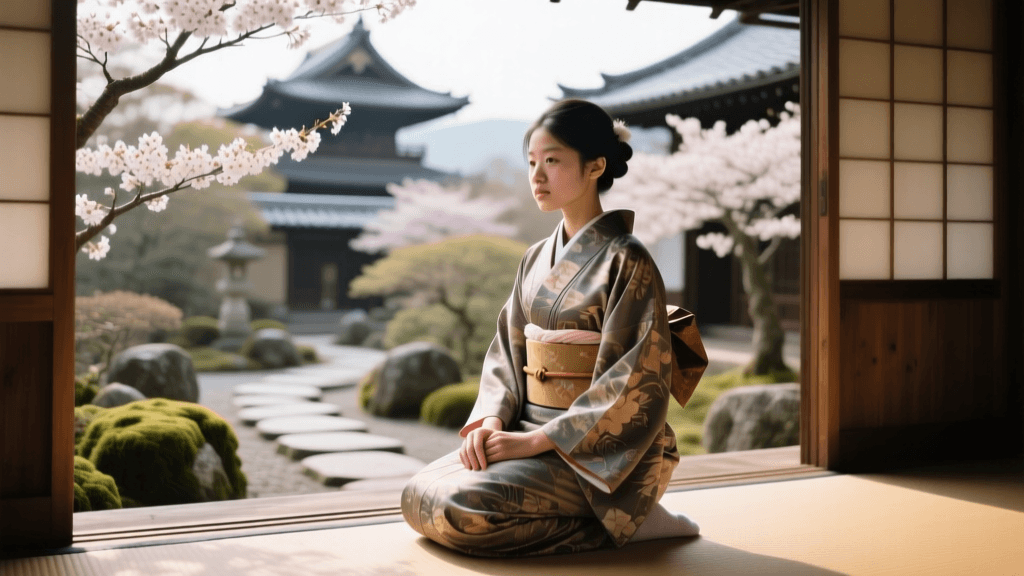
Japanese garments are deeply tied to the seasons. Wearing a motif out of season is considered a major fashion faux pas. In spring, cherry blossoms (sakura) and plum blossoms (ume) dominate. Summer features cooling motifs like flowing water, goldfish, and morning glories. Autumn brings maple leaves (momiji) and chrysanthemums, while winter showcases pine, bamboo, and plum (the auspicious shochikubai trio). In 2026, contemporary textile artists are blending these ancient motifs with abstract geometric designs, appealing to a younger demographic that values both heritage and modern aesthetics.
The 2026 Market: Sustainability and Vintage Silk
One of the most exciting developments in the Japanese traditional garment market in 2026 is the booming vintage and upcycling sector. With the cost of new, hand-woven silk kimono easily exceeding $5,000, younger generations and international buyers are turning to the secondhand market. Tokyo's Otsuka and Kyoto's Tenjin-san flea markets are treasure troves for high-quality vintage silk. Furthermore, as noted by Japan's Ministry of Economy, Trade and Industry (METI), government initiatives are actively supporting traditional craftspeople who are adapting ancient weaving techniques like nishijin-ori and yuzen dyeing to create sustainable, modern accessories from upcycled kimono silk. This circular approach ensures that the legacy of Japanese textile artistry continues to thrive without placing additional strain on the environment.
Conclusion
Navigating the world of Japanese traditional garments requires an appreciation for history, an eye for seasonal detail, and an understanding of complex layering. Whether you are slipping into a breezy cotton yukata for a summer matsuri or carefully tying a silk fukuro obi for a formal tea gathering, you are participating in a centuries-old sartorial tradition. By embracing both the meticulous craftsmanship of the past and the sustainable, modern styling trends of 2026, wearers around the world can keep the magnificent legacy of the kimono alive and vibrant for generations to come.