Hanfu in Peking Opera & Kunqu: 2026 Stage Costume Guide
The Intersection of Hanfu and Traditional Chinese Theater
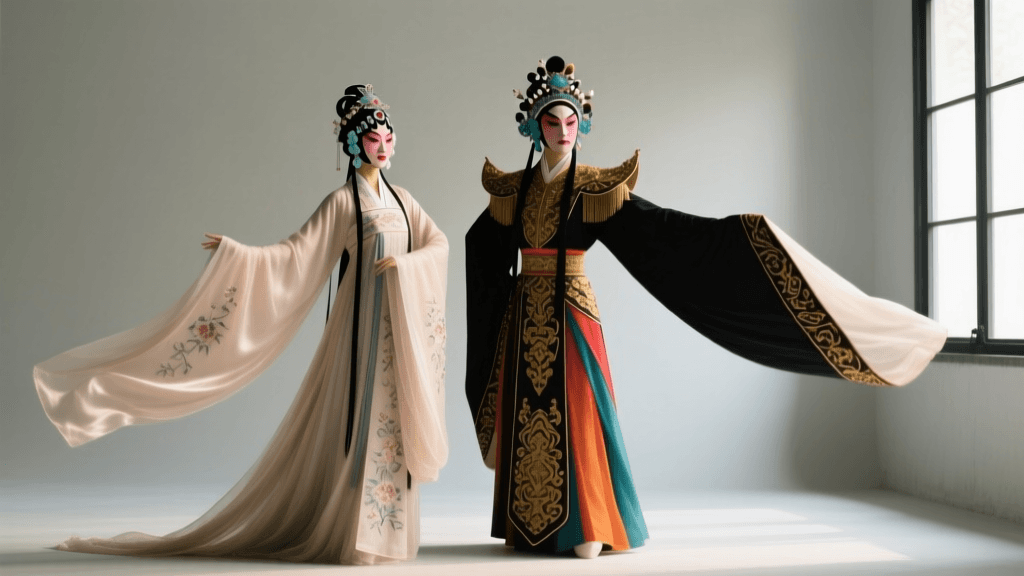
The intersection of historical Hanfu and traditional Chinese theater represents one of the most fascinating sartorial evolutions in Asian cultural history. As the global Hanfu revival movement continues to mature in 2026, enthusiasts and scholars are increasingly looking toward the stage to understand how traditional garments were adapted for performance. Peking Opera (Jingju) and Kunqu, two of China's most revered theatrical forms, utilize a highly stylized costume system known as Xifu (theatrical clothing). While these stage costumes are deeply rooted in the historical Hanfu of the Ming Dynasty, they have been dramatically exaggerated, color-coded, and structurally modified to convey character, emotion, and social status to audiences sitting far from the stage.
According to cultural heritage registries, both Kunqu and Peking Opera are recognized globally for their intricate performative arts, where costume is not merely clothing but an extension of the actor's body and character. As noted by UNESCO's Intangible Cultural Heritage registry, Kunqu opera is celebrated for its elegant movements and refined aesthetics, which are inextricably linked to the flowing silk garments worn by its performers. Similarly, the dynamic, acrobatic nature of Peking Opera demands costumes that can withstand rigorous physical exertion while maintaining a striking visual silhouette.
Historical Hanfu vs. Stage Xifu: Key Differences
For modern Hanfu collectors and theatrical costumers in 2026, understanding the divergence between historically accurate Ming Dynasty Hanfu and stage Xifu is critical. Historical Hanfu prioritized drape, modesty, and adherence to strict sumptuary laws. In contrast, stage Xifu prioritizes visual impact, character archetypes, and kinetic movement. Theatrical costumes deliberately ignore strict historical timelines, often blending elements from the Tang, Song, and Ming dynasties into a single, cohesive 'theatrical timelessness.'
| Feature | Historical Ming Hanfu (Street/Court) | Stage Xifu (Peking Opera/Kunqu) |
|---|---|---|
| Silhouette | Natural drape, layered, modest proportions. | Exaggerated shoulders, padded, rigid structures. |
| Sleeves | Wide sleeves (Pipa or straight), ending at the hand. | Extended 'Water Sleeves' (Shuixiu) adding 60-90cm of white silk. |
| Fastenings | Hidden ties, subtle fabric knots, metal buttons. | Heavy sashes, prominent jade belts, structural rigging for armor. |
| Embroidery | Woven patterns, subtle regional motifs, restrained. | Dense metallic thread, high-contrast dragons, tigers, and waves. |
| Color Coding | Dictated by court rank and season. | Dictated by character morality (e.g., Red=Loyal, White=Treacherous). |
The Core Wardrobe: Mang, Pei, and Kao
To navigate the 2026 market for traditional performing arts garments, one must understand the primary categories of stage Xifu. These garments are direct, albeit theatrical, descendants of specific Hanfu archetypes.
The Mang (Python Robe)
Worn by emperors, high-ranking officials, and nobility, the Mang robe is the most formal garment in the theatrical wardrobe. Historically derived from the Ming Dynasty court robes, the stage Mang features a round collar, side slits, and dense embroidery of four-clawed pythons (dragons with four claws were reserved for nobility, while five-clawed dragons were strictly for the emperor). In 2026, a hand-embroidered Mang robe crafted by master artisans in Suzhou utilizing real gold-wrapped threads can command prices upwards of $6,500 USD, reflecting the intense labor and premium mulberry silk required.
The Pei (Informal Robe)
The Pei serves as the everyday wear for scholars, nobles, and their wives on stage. It is characterized by a center-front opening, a crossing collar, and side slits. The female Pei in Kunqu opera is particularly notable for its exquisite Su embroidery, often featuring delicate plum blossoms, orchids, or butterflies. Unlike the stiff Mang, the Pei allows for the fluid, graceful movements required in Kunqu's romantic and scholarly scenes.
The Kao (Armor)
Used by generals and warriors, the Kao is a highly stylized adaptation of historical Ming military armor. While historical Hanfu armor utilized metal plates, heavy leather, and chainmail, stage Kao is constructed from stiffened silk, velvet, and intricate embroidery to allow for the acrobatic flips and martial arts sequences inherent to Peking Opera. The Kao features four triangular flags attached to the back, representing the general's command over troops and adding a dramatic, sweeping silhouette during combat choreography.
Color Symbolism and Character Alignment
In traditional Chinese theater, the color of a garment immediately signals a character's moral alignment and personality to the audience. This system, refined over centuries, remains strictly adhered to in 2026 productions.
- Red: Symbolizes loyalty, courage, and uprightness. Often worn by heroic generals and virtuous officials.
- Black: Represents integrity, bluntness, and a fierce but just nature. Frequently used for impartial judges and fierce warriors.
- White: Denotes treachery, cunning, and deceit. The classic villain or manipulative courtier is almost always dressed in white Mang robes.
- Yellow: Reserved exclusively for the imperial family, representing supreme power and the center of the universe.
- Blue/Green: Often associated with martial arts masters, bandits, or supernatural beings, indicating a connection to the wild or the mystical.
The Mechanics of Water Sleeves (Shuixiu) in 2026
No discussion of Hanfu in traditional performing arts is complete without addressing Shuixiu, or water sleeves. These are the long, flowing extensions of white silk attached to the cuffs of the Mang, Pei, and other robes. Originating from the extended sleeves of historical Hanfu, water sleeves have been transformed into a primary tool for emotional expression. A flick of the wrist can convey anger, while a gentle folding of the silk over the face signifies weeping or shyness.
Sizing and Fabric Weight for Stage vs. Street
For modern practitioners and collectors acquiring performance-grade garments in 2026, the specifications of water sleeves are highly precise. Professional Kunqu performers typically utilize sleeves made from heavy silk crepe or high-density chiffon. The weight of the fabric is crucial; it must be heavy enough to snap back to the actor's forearm when thrown, yet light enough to ripple like water when extended. The standard extension length for female roles (Dan) ranges from 65 cm to 90 cm, while male roles (Sheng) generally use slightly shorter extensions of 50 cm to 70 cm to accommodate martial movements. The base cuff, to which the water sleeve is attached, is often reinforced with cotton or light canvas to bear the weight of the silk without tearing the primary garment.
Sourcing Performance-Grade Hanfu and Kunqu Costumes
The market for authentic, performance-grade theatrical Hanfu has expanded significantly by 2026, driven by a new generation of global theater students, cultural preservationists, and high-end collectors. The Victoria and Albert Museum's extensive Asian collections highlight the historical importance of these textiles, driving contemporary demand for museum-quality reproductions.
For those looking to source authentic pieces, the geographical divide between Peking Opera and Kunqu costuming remains distinct. Beijing remains the epicenter for Peking Opera Xifu, particularly for the structural armor (Kao) and heavily padded garments required for the acrobatic Jing (painted face) roles. Suzhou, however, is the undisputed capital for Kunqu costuming. The city's heritage ateliers specialize in Su embroidery, a technique requiring incredibly fine silk threads that can split into fractions of a millimeter, allowing for the photorealistic floral and avian motifs seen on high-end Pei robes.
When commissioning a piece in 2026, buyers should expect a lead time of four to eight months for fully hand-embroidered garments. Machine-embroidered alternatives are available for amateur troupes and university theater departments, typically costing between $300 and $800 USD, but they lack the kinetic drape and metallic luster of traditional hand-stitched gold and silver threads.
Caring for Embroidered Stage Garments
The preservation of stage Xifu requires meticulous care, as the materials used in 2026 remain true to historical, organic methods. The metallic threads used in Mang and Kao robes are often made from genuine gold or silver leaf applied to paper or animal hide, which is then wrapped around a silk core. These threads are highly susceptible to oxidation, moisture, and friction.
Garments must never be folded, as this will permanently crease the metallic embroidery and cause the threads to snap. Instead, they should be hung on wide, padded wooden hangers to support the heavy shoulders and prevent stress on the silk seams. Storage environments must be strictly climate-controlled, maintaining a relative humidity of around 45-50% to prevent the silk from becoming brittle or the metallic threads from tarnishing. For collectors displaying these pieces, UV-filtering glass is mandatory, as direct sunlight will rapidly fade the vibrant, naturally dyed silks used in the lining and water sleeves.
Conclusion
The relationship between historical Hanfu and the stage costumes of Peking Opera and Kunqu is a testament to the adaptability and enduring power of Asian sartorial traditions. While the garments worn on stage in 2026 are exaggerated for theatrical effect, they serve as a living, breathing archive of Ming Dynasty aesthetics, textile techniques, and cultural symbolism. Whether you are a performer mastering the kinetic art of the water sleeve, or a collector preserving a masterwork of Suzhou embroidery, understanding the profound differences and deep connections between street Hanfu and stage Xifu is essential to appreciating this magnificent art form.