Recreating Chinese Mythology Hanfu: A Deity Cosplay Guide
The Allure of Mythological Hanfu in Modern Cosplay
The global resurgence of traditional Chinese clothing has transcended historical reenactment, venturing deeply into the realm of fantasy and folklore. As noted by Smithsonian Magazine, the modern Hanfu movement is largely driven by younger generations seeking a connection to their cultural heritage through vibrant, community-driven events. Within this movement, mythological cosplay—recreating the garments of gods, spirits, and legendary figures—has become a highly specialized and visually stunning niche.
According to Encyclopedia Britannica, Chinese mythology is populated by a vast pantheon of deities whose visual identities were codified during the Ming and Qing dynasties through opera, literature, and religious iconography. For modern cosplayers and Hanfu enthusiasts, translating these divine beings into wearable garments requires a deep understanding of historical silhouettes, textile behavior, and precise tailoring. This guide provides actionable advice for recreating three iconic mythological figures: Chang'e (the Moon Goddess), the Huli Jing (Nine-Tailed Fox Spirit), and Ao Guang (the Dragon King).
Chang'e: The Moon Goddess and Ethereal Layering
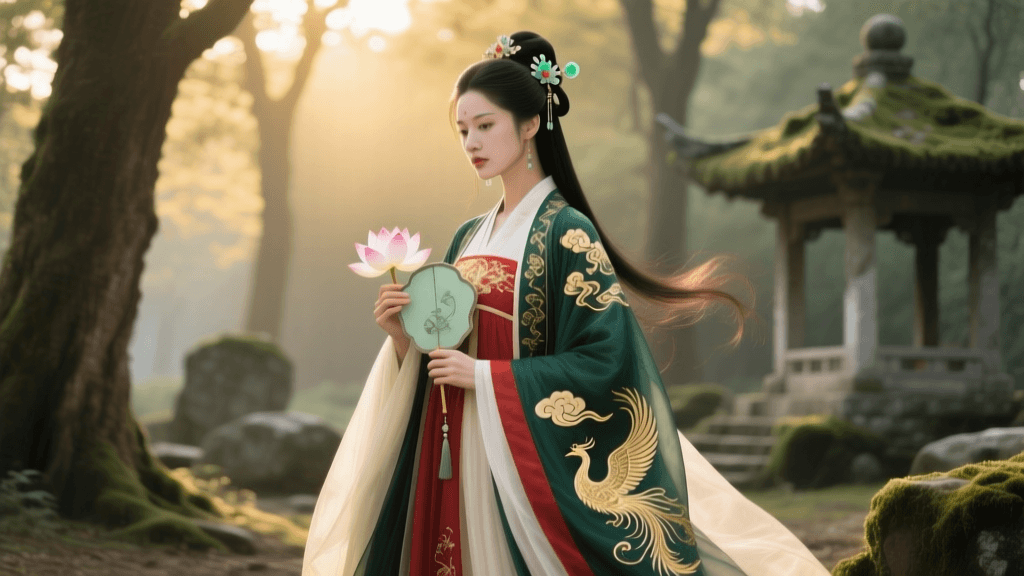
Chang'e, the goddess who floated to the moon after consuming the elixir of immortality, is defined by weightlessness and celestial elegance. Her cosplay relies heavily on the Qixiong Ruqun (chest-high skirt ensemble) paired with a Daxiushan (large-sleeved outer robe) and a sweeping Pibo (silk shawl).
Garment Construction and Measurements
- The Skirt (Qun): To achieve the iconic 'pooling' effect seen in Dunhuang murals, the skirt length should be your height plus 2 to 3 inches. The waistband must be constructed from non-stretch cotton interfacing to support the heavy skirt without slipping down the chest.
- The Outer Robe (Daxiushan): Sleeve width should be a minimum of 60 cm (24 inches) at the cuff to allow for dramatic draping. The robe length should graze the floor, requiring approximately 4.5 meters of fabric for an average-height wearer.
- The Shawl (Pibo): Cut on a 45-degree bias to ensure fluid movement. A proper Pibo should be at least 3.5 meters long and 40 cm wide, allowing it to wrap around the arms and trail behind the wearer.
Color Palette & Budget: Opt for lunar whites, pale celadons, and silver. A complete, high-quality polyester-silk blend set sourced from specialized Taobao or Etsy Hanfu makers typically costs between $120 and $250. For a custom silk organza Pibo, expect to pay around $45 for materials and labor.
The Huli Jing: Nine-Tailed Fox Spirit and Structural Pleats
The Huli Jing, or fox spirit, is a shapeshifter often depicted in literature like Strange Tales from a Chinese Studio. In modern media and cosplay, the fox spirit is usually styled in a Jiaoling Youren (cross-collar top) and a highly structured Mamianqun (horse-face skirt), projecting an aura of dangerous elegance and aristocratic wealth.
Mastering the Mamianqun (Horse-Face Skirt)
The Mamianqun is the centerpiece of the fox spirit cosplay. It features two flat, unpleated panels (the 'horse faces') at the front and back, with heavily pleated sides. To recreate this accurately:
- Pleat Math: A standard Mamianqun requires 4 to 5 meters of fabric. The side pleats are typically knife pleats, measuring 3 cm wide on the exterior and 6 cm deep on the interior. You will need to use a 1:2 pleating ratio.
- Waistband Construction: The waistband should be wide (8-10 cm) and extend into long ties that wrap around the waist twice before tying at the side. Use a heavy brocade for the waistband to contrast with the skirt body.
- Motifs: Look for woven jacquard fabrics featuring subtle fox, floral, or cloud motifs. Gold and crimson threads woven into dark burgundy or black fabric are industry standards for this archetype.
'The magic of the Mamianqun lies in its kinetic energy. When the wearer walks, the flat panels remain still while the pleated sides flare out, mimicking the swishing tails of a fox spirit.'
Cost Expectation: Authentic woven jacquard Mamianqun skirts from established Hanfu brands (like Minghuatang or Shizhitang) range from $150 to $400. Budget alternatives using printed polyester start around $60 but lack the structural weight required for accurate draping.
Ao Guang: The Dragon King and Imperial Silhouettes
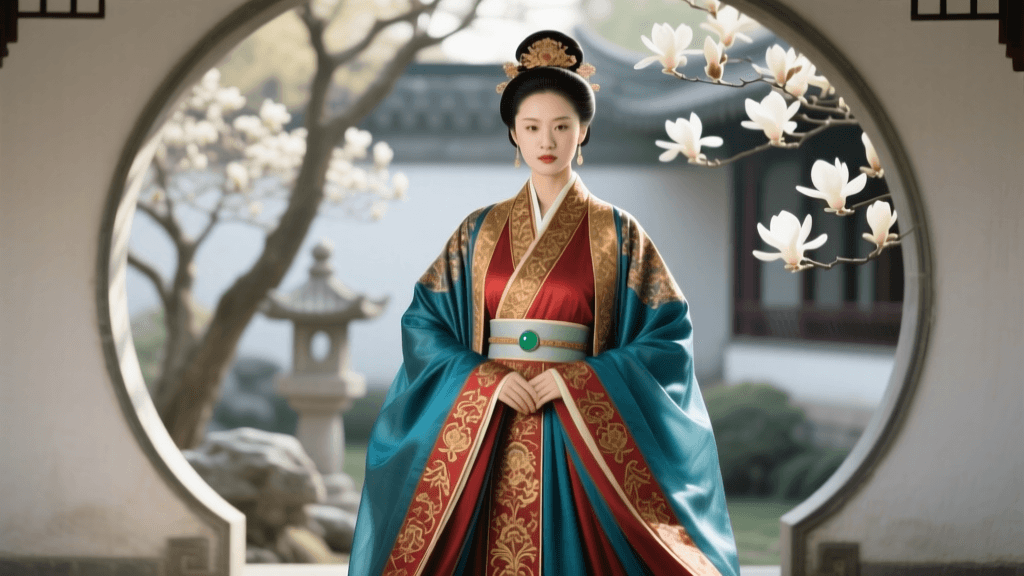
As the Dragon King of the East Sea, Ao Guang requires a commanding, martial presence. His wardrobe is rooted in the Yuanlingpao (round-collar robe), a staple of male official and military dress from the Tang and Ming dynasties.
Armor, Robes, and Accessories
- The Yuanlingpao: This robe features a round collar, side slits for mobility, and a leather belt. For a mythological twist, the fabric should be a heavy brocade in imperial yellow or deep azure, adorned with embroidered dragon Buzi (rank badges) on the chest and back.
- Shoulder Armor (Jianjia): To elevate the cosplay from a mere official to a deity, integrate EVA foam shoulder armor painted to resemble jade or gilded bronze. The armor should be attached via hidden snaps to the robe's shoulders.
- Headwear (Guan): The Dragon King is traditionally depicted wearing a formal hat with upward-flaring wings, known as a Wushamao or a stylized crown. 3D printing or lightweight Worbla are the best materials for crafting a durable, convention-safe crown.
Practical Tip: The Yuanlingpao can be incredibly hot under convention center lighting. Line the inner collar and cuffs with moisture-wicking bamboo fabric, and wear a breathable linen Zhongyi (inner garment) underneath to absorb sweat and protect the expensive outer brocade.
Fabric and Material Selection Guide
Choosing the right textile is paramount in mythological cosplay. According to the Metropolitan Museum of Art, Chinese silk weaving has historically relied on specific weaves to achieve distinct structural and visual effects. Modern cosplayers must replicate these effects using accessible fabrics.
| Fabric Type | Drape & Texture | Best Used For | Estimated Cost (Per Yard) |
|---|---|---|---|
| Silk Organza | Crisp, sheer, lightweight | Pibo shawls, ethereal outer layers | $15 - $25 |
| Woven Brocade | Heavy, textured, stiff | Mamianqun skirts, Dragon King robes | $30 - $60 |
| Silk Charmeuse | Fluid, glossy, soft | Inner garments, Qixiong Ruqun tops | $18 - $30 |
| Crepe-Back Satin | Medium drape, matte/sheen | Daxiushan robes, flowing sleeves | $12 - $22 |
| Cotton-Linen Blend | Breathable, matte, structured | Zhongyi (inner layers), waistbands | $8 - $15 |
Sourcing, Styling, and Convention Survival
When assembling a mythological Hanfu ensemble, the details in styling separate a basic costume from an accurate cultural representation. Hair styling is critical: Chang'e requires elaborate updos secured with jade hairpins and pearl tassels, while the Fox Spirit often utilizes half-up styles adorned with gold Buyao (dangling hairpins) that sway with movement. Invest in resin or carved jade replicas for hair sticks to ensure they pass convention weapon and prop safety checks.
Footwear is another practical consideration. Traditional cloth boots are historically accurate but offer zero arch support for a 10-hour convention day. The most practical solution is to purchase traditional embroidered boot uppers and have a cobbler attach them to modern, cushioned rubber soles. This maintains the visual silhouette while preserving your feet.
Finally, budget your time. Custom Hanfu orders from overseas artisans typically require a 30 to 60-day production window, plus 2 to 3 weeks for international shipping. Always order your foundational garments (skirts and robes) at least three months before your target convention to allow ample time for tailoring adjustments and accessory sourcing.
Conclusion
Recreating the garments of Chinese mythology is a rewarding intersection of historical tailoring and fantasy design. By understanding the structural requirements of the Mamianqun, the ethereal draping of the Daxiushan, and the martial presence of the Yuanlingpao, cosplayers can bring ancient legends to life with authenticity, respect, and breathtaking visual impact.