The Hanfu E-Commerce Boom: Buying Traditional Chinese Garments Online
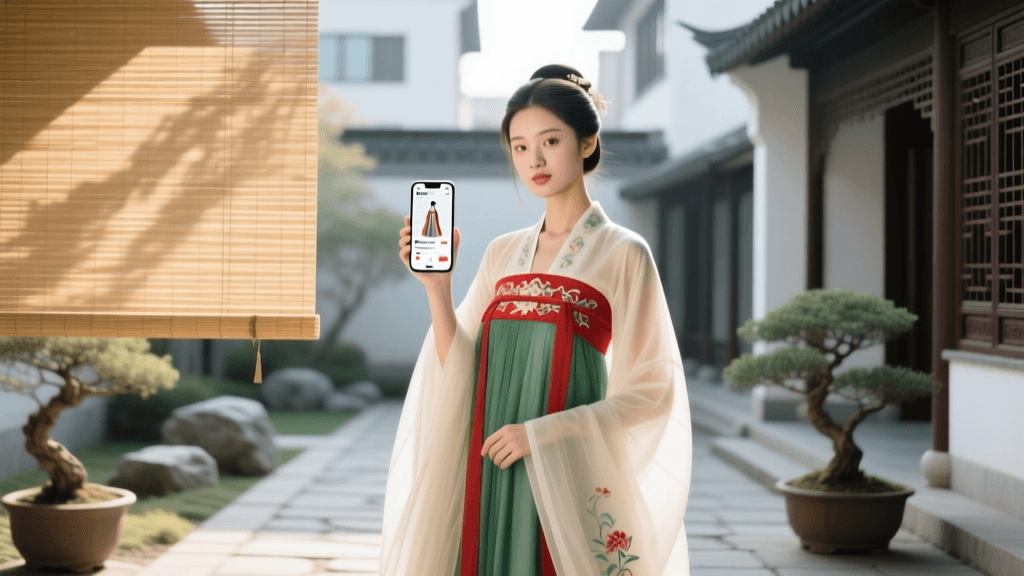
From Silk Alleys to Digital Storefronts: The Evolution of Chinese Garment Markets
For centuries, the acquisition of traditional Chinese garments was an inherently local, tactile, and bespoke experience. In historical textile hubs like Suzhou and Hangzhou, the silk trade was the lifeblood of the local economy. Buyers would visit bustling physical markets, selecting raw silks, brocades, and linens directly from weavers. According to the China National Silk Museum, these regions developed highly specialized weaving techniques, such as the intricate kessi (silk tapestry) and complex brocades, which required patrons to consult directly with master artisans for custom fittings and pattern selections. Garments were not bought off the rack; they were commissioned, measured, and tailored over weeks or months.
The physical market experience was defined by sensory engagement. Shoppers felt the drape of mulberry silk, negotiated prices in lively alleyway bazaars, and relied on the reputation of multi-generational tailor shops. However, this localized model meant that traditional garments were largely inaccessible to those outside these geographic hubs, and as modern Western clothing became the norm in the 20th century, these traditional tailors saw a drastic decline in everyday patronage.
The Catalyst: Internet Forums and the Hanfu Movement
The revival of traditional Han Chinese clothing—known as the Hanfu movement—did not begin in high-end boutiques or physical markets, but on early 2000s internet forums and BBS (Bulletin Board Systems). Enthusiasts began researching historical texts and scroll paintings to reconstruct ancient garments. As demand grew, early adopters turned to Taobao, China's nascent e-commerce giant, to find independent seamstresses willing to create these historical pieces. This marked the pivotal shift from localized, physical tailoring to a decentralized, digital marketplace. Today, the Hanfu market is a multi-billion-dollar industry, heavily driven by e-commerce platforms, live streaming, and social media trends, as frequently covered by the South China Morning Post.
Navigating the Modern Hanfu E-Commerce Landscape
For modern consumers, buying Hanfu online offers unprecedented access to historical accuracy, diverse styles, and varied price points. However, the sheer volume of vendors on platforms like Taobao and Tmall can be overwhelming. Understanding the ecosystem is crucial for making informed purchases.
Top E-Commerce Platforms for Hanfu
- Taobao & Tmall: The undisputed kings of Hanfu e-commerce. Taobao hosts thousands of independent, small-batch studios (often called original design shops), while Tmall features larger, established brands like Shisanyu and Minghuatang. Tmall offers stricter quality control and buyer protection.
- Douyin (TikTok China) Live Streams: Live commerce has revolutionized Hanfu sales. Vendors demonstrate the drape, fabric movement, and layering of garments in real-time. Flash sales during these streams offer heavy discounts, though buyers must be wary of "fast fashion" Hanfu that sacrifices historical accuracy for mass production.
- JD.com: While less focused on niche indie brands, JD is excellent for purchasing standardized, high-quality silk fabrics and established heritage brands with guaranteed authenticity and rapid logistics.
Practical Buyer’s Guide: Sizing, Costs, and Timing
Unlike modern Western fashion, which relies on standardized S/M/L sizing based on body volume, traditional Chinese garments are largely flat-patterned and rely on precise linear measurements. When ordering online, you must provide exact metrics in centimeters.
Essential Measurements for Online Orders
- Xiongwei (Bust/Chest): Measured around the fullest part of the chest. Crucial for Ruqun (blouse and skirt sets) and Ao (lined jackets).
- Yaowei (Waist): Measured at the natural waist or where the skirt will sit. Essential for the Mamianqun (horse-face skirt).
- Skirt Length: Measured from the waist to the desired hemline (usually just above the ankle bone to prevent tripping).
- Sleeve Length: Traditional Hanfu sleeves range from standard wrist-length to dramatic floor-sweeping lengths. Measure from the base of the neck, across the shoulder, and down the arm to the desired endpoint.
Understanding Price Tiers and Shopping Festivals
Hanfu pricing is highly stratified based on fabric, construction complexity, and brand prestige. To maximize your budget, time your purchases around China's major e-commerce festivals: 618 (June 18) and Singles' Day (November 11). During these events, cross-store discounts and platform coupons can reduce costs by 20% to 40%.
- Budget Tier (100 - 300 RMB / $15 - $45 USD): Typically made from polyester or polyester-cotton blends. Ideal for beginners, cosplay, or casual summer wear. Mass-produced with machine embroidery.
- Mid-Tier (300 - 800 RMB / $45 - $120 USD): Features better fabrics like viscose, linen, or basic mulberry silk. Includes detailed machine embroidery, better pleating (like the heat-set pleats on a Mamianqun), and historically accurate patterns.
- High-End & Luxury (1,000 - 10,000+ RMB / $150 - $1,500+ USD): Brands like Minghuatang or specialized Xiangyunsha (gambiered silk) artisans. Features hand-woven silks, genuine gold-thread weaving, and meticulous historical reconstruction. These pieces are treated as wearable art and investment pieces.
Comparing Purchasing Channels
Where you buy your Hanfu drastically affects the price, quality, and shopping experience. Below is a comparison of the primary channels available to modern consumers.
| Purchasing Channel | Pros | Cons | Best For | Est. Price Range (USD) |
|---|---|---|---|---|
| Physical Markets (Suzhou/Hangzhou) | Tactile fabric selection, bespoke tailoring, cultural immersion. | Requires travel, language barrier, high base costs. | Luxury silks, bespoke wedding garments, serious collectors. | $200 - $2,000+ |
| Taobao / Tmall | Massive variety, buyer protection, detailed size charts, indie brands. | Overwhelming search, requires translation tools, domestic shipping only. | Everyday Hanfu, mid-tier quality, trend-followers. | $30 - $300 |
| Douyin Live Streams | Visual demonstrations of drape/movement, exclusive flash discounts. | Impulse buying risk, limited stock, fast-fashion quality issues. | Bargain hunters, visual learners, trendy seasonal styles. | $20 - $150 |
| Global Agents (Superbuy, CSSBuy) | English interface, consolidated international shipping, QC photos. | High international shipping fees, longer delivery times, agent commissions. | Overseas enthusiasts, international Hanfu societies. | Item cost + $30-$80 shipping |
Identifying Quality: Fabrics and Construction
When browsing e-commerce listings, the fabric composition is the primary indicator of quality and historical authenticity. According to The Metropolitan Museum of Art's historical archives on Chinese silk, the structure and weave of the fabric dictate the garment's drape and longevity.
- Xiangyunsha (Gambiered Silk): A highly prized, intangible cultural heritage fabric from Guangdong. It is dyed with薯莨 (shoulang) yam juice and coated in river mud, resulting in a dark, crinkled, water-resistant silk that rustles when worn. Authentic Xiangyunsha is expensive and usually sold by specialized Tmall boutiques.
- Song Brocade (Songjin): Originating from the Song Dynasty, this fabric features intricate, flat-woven patterns that are durable and less prone to snagging than raised brocades. It is ideal for structured outer garments like Beizi (long coats).
- Linens and Ramie: For summer Hanfu, look for natural ramie or linen blends. These provide excellent breathability and a beautiful, rustic drape that mimics the clothing of ancient scholars and commoners.
Pro-Tip for Online Buyers: Always check the skirt sweep (the total circumference of the hem) when buying a Mamianqun. A high-quality, historically accurate horse-face skirt should have a minimum sweep of 4 to 6 meters to ensure the pleats overlap correctly and the skirt flows elegantly while walking. Budget skirts often skimp on fabric, resulting in a 3-meter sweep that gaps open and loses its structural integrity.
Conclusion: The Future of Traditional Garments in a Digital Age
The transition from the historic silk alleys of Hangzhou to the digital storefronts of Taobao represents a triumph of cultural preservation through modern technology. E-commerce has not only democratized access to traditional Chinese garments but has also fostered a highly competitive environment that drives innovation in textile manufacturing and historical research. By understanding sizing metrics, fabric types, and the nuances of digital marketplaces, global consumers can confidently participate in this living tradition, ensuring that the artistry of Chinese garment history continues to thrive in the modern era.