Ceremonial vs Everyday Hanbok: 2026 Fabric and Styling Guide
The Hanbok Renaissance of 2026
The hanbok, the traditional Korean garment characterized by its vibrant colors and elegant, sweeping lines, has experienced a monumental evolution over the last decade. As we navigate through 2026, the global fascination with Korean culture has propelled the hanbok from a strictly ceremonial relic into a dynamic staple of contemporary wardrobes. However, a distinct divide remains between the traditional ceremonial hanbok (worn during holidays, weddings, and rites of passage) and the modern everyday hanbok, known as saenghwal hanbok (living hanbok). Understanding the nuances between these two categories is essential for anyone looking to appreciate, purchase, or style Korean traditional wear today.
According to initiatives tracked by the Hanbok Advancement Center, the push to modernize the hanbok while preserving its core structural integrity has led to incredible innovations in textile engineering and pattern drafting in 2026. Designers are now bridging the gap between historical accuracy and modern comfort, creating a diverse market that caters to both strict traditionalists and avant-garde fashion enthusiasts.
Ceremonial Hanbok: Heritage and Formality
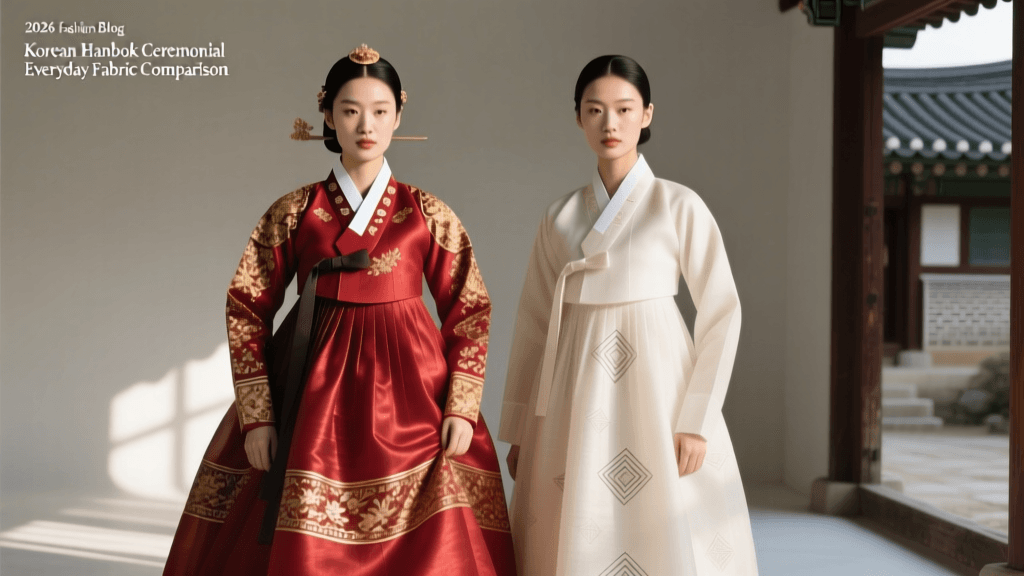
Ceremonial hanbok, often referred to as Myeongjeol Bok (festive clothing) or Gwanrye Bok (ceremonial clothing), is designed to command respect and honor tradition. These garments are typically worn during major holidays like Seollal (Lunar New Year) and Chuseok (Korean Thanksgiving), as well as during weddings and ancestral rites (Jesa).
Luxurious Fabrics and Traditional Dyes
The hallmark of a ceremonial hanbok is its fabric. In 2026, high-end ceremonial sets are predominantly crafted from gongdan (silk brocade), sa (gauze silk), and premium mosi (ramie) for summer wear. These textiles are often woven with intricate floral or geometric patterns that catch the light as the wearer moves. The colors traditionally follow the Obangsaek theory, utilizing the five cardinal colors (blue, red, yellow, white, and black) to represent cosmic balance and ward off evil spirits. While modern ceremonial wear sometimes incorporates pastel palettes, the saturation and sheen of the silk remain unmistakably formal.
Complex Construction and Layering
A ceremonial ensemble is heavy and highly structured. The chima (skirt) is exceptionally full, often requiring multiple layers of undergarments like the sokchima (slip skirt) and mujigi chima (stiffened petticoat) to achieve the iconic bell-shaped silhouette. The jeogori (jacket) is tailored with precise, sharp angles at the collar and features long, elaborate sleeves that extend past the wrists.
Everyday Hanbok: The Saenghwal Revolution
The saenghwal hanbok movement, which began gaining serious traction in the early 2010s, has fully matured by 2026. Everyday hanbok is designed for the realities of modern life: commuting, working in an office, dining out, and traveling. It strips away the cumbersome layers of its ceremonial counterpart while retaining the fundamental aesthetic markers of Korean dress.
Practical Fabrics and Muted Palettes
Comfort and easy maintenance are the driving forces behind everyday hanbok. Designers heavily utilize breathable cottons, linen blends, washable polyesters, and even sustainable bamboo fibers. Natural dyeing techniques, such as galot (persimmon dye) and jjok (indigo dye), are incredibly popular in 2026 everyday collections, offering earthy, muted tones that pair effortlessly with modern accessories. The Cultural Heritage Administration of Korea has actively supported workshops that teach these traditional natural dyeing methods to younger generations, ensuring these eco-friendly practices remain relevant in modern fashion.
Streamlined Silhouettes
The most noticeable difference in everyday hanbok is the silhouette. The chima is significantly shorter, often falling to the mid-calf or ankle, and the waistband is frequently replaced with a discreet elastic band or a side zipper, eliminating the need to constantly adjust tight ribbons. The jeogori is simplified, sometimes featuring hidden snaps instead of traditional ties, and the sleeves are tapered to prevent them from catching on doors or dipping into food.
2026 Market Comparison: Ceremonial vs. Everyday
When shopping for a hanbok in 2026, it is crucial to understand the differences in investment, upkeep, and styling potential. Below is a comprehensive comparison chart detailing the current market standards for both categories.
| Feature | Ceremonial Hanbok (Myeongjeol) | Everyday Hanbok (Saenghwal) |
|---|---|---|
| Primary Fabrics | Silk brocade, heavy ramie, lined satin | Cotton-linen blends, washable poly, chambray |
| Average Cost (USD) | $350 - $1,200+ (Custom tailored) | $80 - $250 (Ready-to-wear) |
| Maintenance | Dry clean only; requires specialized pressing | Machine washable (gentle cycle); easy ironing |
| Skirt (Chima) Closure | Traditional long ties requiring specific knotting | Elastic waist, side-zipper, or snap hooks |
| Collar (Dongjeong) | Stiff, detachable white paper/fabric insert | Soft, integrated fabric collar or mock-turtleneck |
| Weight & Mobility | Heavy; restricts fast movement; highly formal | Lightweight; allows full mobility for daily tasks |
Structural Nuances: Git, Goreum, and Chima
To truly appreciate the transition from ceremonial to everyday wear, one must look at the specific anatomical components of the hanbok that designers alter for modern use.
- The Git (Collar Band): In ceremonial wear, the git is wide and rigid, framing the face and demanding an upright, graceful posture. In everyday 2026 designs, the git is often narrowed or softened to mimic the lapel of a modern blazer, making it more comfortable for long hours at a desk.
- The Goreum (Ribbons): The long, flowing ribbons that tie the jeogori are iconic. Ceremonial goreum are wide, long, and tied in a specific, asymmetrical bow. Everyday versions often feature shortened, narrowed ribbons, or replace them entirely with subtle internal hooks and eyes for a minimalist look.
- The Dongjeong (White Collar): The crisp white collar insert is a symbol of purity and formality. While ceremonial hanbok still relies on the stiff, removable dongjeong, everyday hanbok often integrates a soft white trim directly into the neckline, eliminating the fuss of pinning and adjusting the insert throughout the day.
Styling Your Hanbok in 2026
The beauty of the 2026 hanbok landscape is its versatility. Styling a hanbok no longer requires a head-to-toe traditional commitment. Here are actionable styling tips for the modern wearer:
Mixing Traditional and Contemporary Pieces
One of the most popular trends in 2026 is pairing an everyday jeogori with modern high-waisted trousers or a pleated midi skirt. A linen jeogori in a muted indigo or sage green acts as a stunning, cropped outer layer that echoes the silhouette of a modern bolero or wrap top. Conversely, a traditional chima can be paired with a fitted, modern turtleneck sweater during the autumn months, blending historical volume with contemporary minimalism.
Footwear and Accessories
While ceremonial hanbok demands traditional kkotsin (embroidered silk shoes) or formal leather shoes, everyday hanbok pairs beautifully with modern footwear. White leather sneakers, minimalist loafers, and even ankle boots are standard pairings in Seoul's fashion districts like Seongsu-dong and Hannam-dong. For accessories, the norigae (a decorative pendant traditionally tied to the skirt waist or jacket tie) has been reimagined in 2026 as a versatile bag charm or a delicate brooch pinned to a modern coat lapel.
Garment Care and Preservation
Proper care ensures the longevity of these beautiful garments, though the methods differ vastly between the two categories.
'The key to preserving a silk ceremonial hanbok is humidity control and avoiding direct sunlight, which can shatter the delicate protein fibers of the silk over time. Everyday cotton and linen hanbok, however, thrive on regular, gentle washing which actually softens the natural fibers and enhances the depth of natural dyes.' — Textile Conservation Guidelines, Korea Traditional Crafts Foundation
For your ceremonial silks, always invest in professional dry cleaning that specializes in traditional garments. Store them flat or loosely rolled in acid-free tissue paper within a breathable cotton garment bag. Never hang a heavy silk chima by its ties, as the weight of the fabric will distort the waistline over time.
For everyday cotton and linen sets, wash them on a delicate cycle using a pH-neutral detergent. If your everyday hanbok features natural persimmon or indigo dyes, avoid harsh chemical bleaches and dry them in the shade to prevent the rich, organic colors from fading. A quick pass with a steam iron on the appropriate fabric setting will keep the git and sleeves looking crisp and intentional.
Conclusion
The dichotomy between ceremonial and everyday hanbok in 2026 is not a battle between the old and the new, but rather a harmonious coexistence. Ceremonial hanbok preserves the breathtaking artistry, strict color theories, and historical reverence of Korea's past, serving as a vital link to ancestral traditions during life's most significant milestones. Meanwhile, the everyday saenghwal hanbok proves that traditional dress can adapt, breathe, and thrive in the fast-paced modern world. Whether you are investing in a custom silk brocade set for a wedding or purchasing a breathable linen jeogori for your daily commute, understanding these distinctions allows you to wear the hanbok with confidence, respect, and impeccable style.
For those looking to explore more about the heritage and ongoing preservation of these garments, the official Korea.net portal offers extensive cultural resources and directories of certified hanbok artisans practicing their craft today.