Vintage Silk Kimono Preservation & Restoration Guide 2026

The Delicate Nature of Vintage Silk Kimonos
As we navigate the evolving landscape of textile conservation in 2026, the preservation of vintage silk kimonos remains one of the most intricate challenges faced by collectors, museums, and heritage enthusiasts. Garments dating back to the Meiji (1868–1912), Taisho (1912–1926), and early Showa (1926–1989) eras are not merely articles of clothing; they are woven tapestries of Japanese history, artistry, and cultural identity. However, the very material that gives these garments their legendary drape and luster—silk—is inherently vulnerable to environmental degradation. Silk is a natural protein fiber composed primarily of fibroin, which is bound together by a gummy protein called sericin. Over decades, fluctuations in humidity, exposure to ultraviolet light, and the acidic breakdown of historical dyes can cause the fibroin chains to fracture, leading to the dreaded 'shattering' effect where the fabric literally crumbles to the touch. According to the Smithsonian Museum Conservation Institute, protein fibers like silk are highly sensitive to alkaline substances and extreme light exposure, making modern, scientifically backed preservation methods absolutely critical for any serious collector in 2026.
2026 Climate Control Standards for Silk Storage
The foundation of any successful garment preservation strategy is rigorous environmental control. In 2026, the integration of smart home technology with archival storage has revolutionized how we monitor micro-climates. The ideal storage environment for vintage silk requires a stable temperature of 65°F (18°C) and a relative humidity (RH) level of exactly 50%, with a permissible fluctuation of no more than 5% in either direction. High humidity encourages the growth of mold spores and attracts silverfish, while low humidity desiccates the silk proteins, accelerating structural brittleness. Modern collectors now rely on advanced IoT-enabled hygrometers, such as the latest 2026 models from Govee and Tempdrop, which provide real-time telemetry and automated alerts directly to a smartphone if the archival vault's climate deviates from the safe zone. Furthermore, the American Institute for Conservation (AIC) strongly advises against storing textiles in basements or attics, as these areas are notoriously prone to rapid thermal shifts and moisture ingress. Instead, a dedicated, interior, climate-controlled room with HEPA filtration to remove airborne particulate matter and acidic pollutants is the gold standard for 2026 kimono preservation.
Advanced Cleaning and Stain Mitigation Protocols
Cleaning a vintage kimono is a high-stakes endeavor. Traditional dry cleaning methods utilizing tetrachloroethylene (perc) are now widely recognized as too harsh for antique silk, often stripping the fabric of its natural lipids and causing historical metallic threads to tarnish or peel. In 2026, the conservation industry has largely shifted toward liquid carbon dioxide (CO2) cleaning and specialized silicone-based solvents like GreenEarth. Liquid CO2 cleaning is particularly advantageous for vintage textiles because it operates at low temperatures, requires no aggressive mechanical agitation, and leaves zero chemical residue on the delicate fibers. For localized staining, such as the inevitable yellowing of the underarm areas caused by historical perspiration and urea breakdown, conservators employ targeted enzymatic treatments. These biological agents are carefully applied under a stereomicroscope to break down the protein-based stains without affecting the surrounding aniline or natural plant dyes. It is a cardinal rule in modern conservation to never attempt to bleach or aggressively scrub a vintage kimono; the goal is always stabilization and mitigation, not necessarily the complete eradication of every historical mark.
The Art of Kake-Tsugi: Invisible Structural Restoration
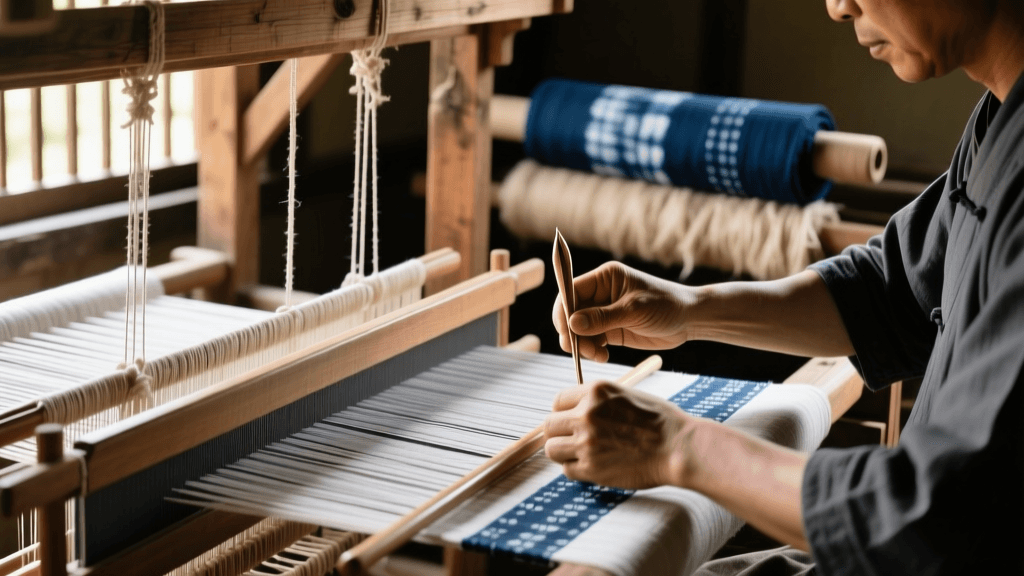
When a vintage kimono suffers from physical damage, such as tears, moth holes, or localized shattering, the traditional Japanese technique of kake-tsugi (invisible mending) remains the most revered and effective restoration method. Unlike modern fusible webs or visible darning, which can alter the drape of the garment or introduce incompatible synthetic adhesives that degrade over time, kake-tsugi is a painstaking process of re-weaving the fabric. The master artisan begins by carefully extracting individual silk threads from a hidden donor area of the kimono, such as the inside of the hem or the deep folds of the sleeve. Using a specialized, ultra-fine needle and a magnification loupe, the artisan meticulously re-weaves the extracted threads into the damaged area, perfectly mimicking the original warp and weft tension of the textile. This technique requires an extraordinary level of skill and patience; restoring a single moth hole can take several hours of continuous labor. In 2026, while some contemporary tailors offer machine-assisted re-weaving, true museum-grade kake-tsugi remains a purely manual art form. The Victoria and Albert Museum (V&A) Conservation Department frequently highlights such traditional, reversible, and chemically inert techniques as the pinnacle of ethical textile restoration, ensuring that the repair does not compromise the historical integrity of the artifact.
Hon-Datami Folding and Archival Storage Materials
How a kimono is folded and stored is just as critical as the climate it resides in. The traditional Japanese folding method, known as hon-datami, is specifically designed to distribute stress evenly across the garment and align the seams to prevent permanent creasing. When executing the hon-datami fold, the kimono is laid flat, and the panels are folded inward along their natural seam lines, resulting in a neat, rectangular package. Once folded, the kimono must never be stored in plastic bags or vacuum-sealed containers. Plastic traps moisture and off-gasses volatile organic compounds (VOCs) that can yellow and weaken silk. Instead, the 2026 standard for wrapping vintage kimonos is the use of tatoushi—custom-sized envelopes made from acid-free, lignin-free, and buffered archival paper. Alternatively, unbleached, washed cotton muslin can be used, provided it is changed and laundered annually to prevent the transfer of acids. The wrapped kimonos are then placed in archival-grade, acid-free corrugated cardboard boxes or powder-coated steel flat-file cabinets. To prevent crushing, no more than three kimonos should be stacked in a single box, and the stack should be rotated every six months to shift the gravitational stress on the lower garments.
Comparison of 2026 Archival Storage Materials
| Material Type | Pros for Silk Preservation | Cons & Risks | 2026 Recommendation |
|---|---|---|---|
| Acid-Free Tatoushi Paper | Breathable, chemically inert, traditional aesthetic. | Can tear if handled roughly; requires custom folding. | Highly Recommended (Primary Wrap) |
| Washed Cotton Muslin | Soft, reusable, allows air circulation. | Must be pre-washed to remove sizing; can harbor pests if not cleaned. | Recommended (Secondary Wrap) |
| Polyethylene Plastic Bags | Waterproof, inexpensive, keeps out dust. | Traps moisture, causes mold, off-gasses VOCs. | Strictly Prohibited |
| Vacuum Storage Bags | Saves space, blocks oxygen. | Crushes fibers, permanently sets creases, causes shattering. | Strictly Prohibited |
| Direct Cedar Wood Boxes | Repels insects naturally, beautiful craftsmanship. | Cedar oils are highly acidic and will stain and degrade silk over time. | Use Only with Archival Barrier Liner |
Display Guidelines and Light Exposure Limits
While keeping a vintage kimono safely tucked away in an archival box ensures its survival, collectors naturally wish to display their prized pieces. However, light damage is cumulative and irreversible. The ultraviolet (UV) and visible light spectrums cause the chemical bonds in silk dyes to break down, leading to severe fading and fiber embrittlement. In 2026, the strict guideline for displaying antique silk textiles is a maximum illumination level of 50 lux. To achieve this, display cases must be fitted with museum-grade, UV-filtering acrylic glazing, which blocks 99.9% of harmful ultraviolet radiation. Furthermore, the light source should be LED, specifically calibrated to emit zero UV output and minimal infrared heat. Rotational display is another critical strategy; a vintage kimono should never be left on a mannequin or display mount for more than three to six months at a time. When mounting a kimono for display, conservators use custom-built, padded internal supports made from polyester batting covered in washed cotton, ensuring that the weight of the heavy silk sleeves is fully supported and the shoulder seams are not subjected to undue tension.
Conclusion
Preserving and restoring vintage silk kimonos in 2026 requires a harmonious blend of deep respect for traditional Japanese craftsmanship and the application of cutting-edge conservation science. By maintaining rigorous climate control, utilizing advanced liquid CO2 cleaning methods, supporting the meticulous art of kake-tsugi, and adhering to strict archival storage protocols, collectors can ensure that these magnificent garments survive for future generations. The kimono is more than a relic of the past; it is a living artifact that, with proper care, will continue to tell its vibrant story for centuries to come.