Jibata Loom Weaving Guide 2026: Master Japanese Hand-Textiles
The Renaissance of the Jibata Loom in 2026
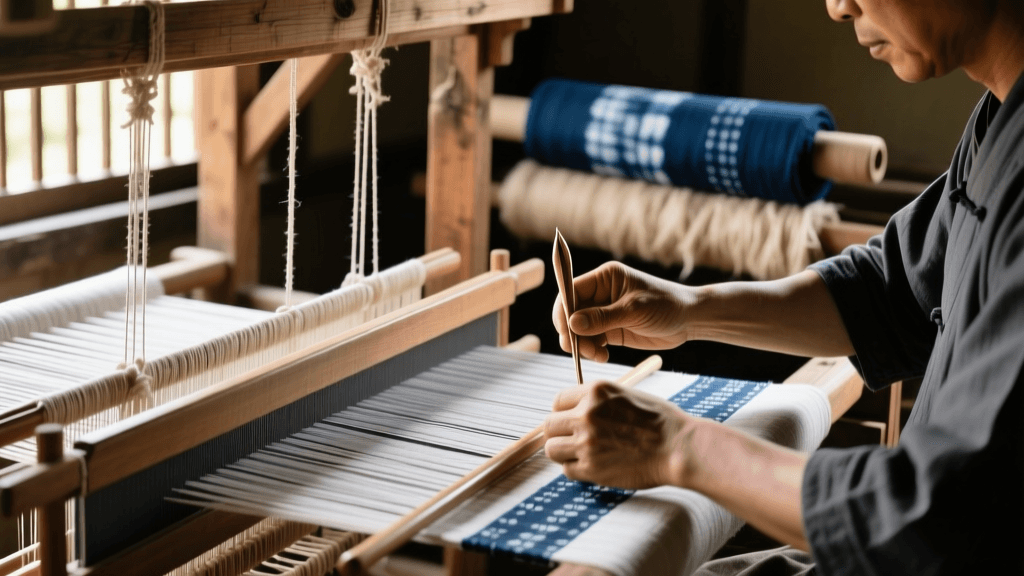
The Jibata (地機), or traditional Japanese floor loom, represents centuries of meticulous textile engineering and cultural heritage. Unlike Western floor looms that rely on heavy wooden frames and foot treadles, the Jibata utilizes a unique back-tensioning system where the weaver's own body acts as the warp beam. As we navigate the artisan landscape of 2026, there is a profound renaissance in traditional Japanese hand-weaving. Younger generations of makers and international textile artists are actively seeking out these looms, driven by a desire for sustainable, slow-fashion practices and a deep appreciation for tactile craftsmanship.
In 2026, the intersection of heritage and modern ergonomics has never been more apparent. Artisans are now pairing antique Hinoki cypress loom frames with digitally calibrated tension meters to achieve mathematical precision in their weave structures. Whether you are looking to weave the intricate resist-dyed patterns of Kurume Kasuri or the delicate, slubby textures of Oshima Tsumugi silk, mastering the Jibata requires an understanding of both historical technique and contemporary material sourcing.
Jibata vs. Takahata: Choosing Your Traditional Loom
Before investing in equipment, it is crucial to understand the distinction between the two primary traditional Japanese looms: the Jibata (floor loom) and the Takahata (tall loom). The Jibata is operated while seated on the floor, using a waist strap to control warp tension. The Takahata, introduced later in Japanese history, features a raised wooden frame and foot treadles, allowing the weaver to sit on a bench. While the Takahata is faster for production, the Jibata remains the undisputed champion for high-end, artisanal silk and complex Kasuri work, as the weaver's body can feel and micro-adjust the tension of every single silk thread.
| Loom Type | Best For | Tension Method | Space Required | 2026 Avg Cost (USD) |
|---|---|---|---|---|
| Jibata (Floor Loom) | Kasuri, Tsumugi, fine silk | Body/Back-tension via waist strap | 2 x 3 meters | $3,500 - $12,000 |
| Takahata (Tall Loom) | Nishijin-ori, Obi, brocade | Frame weights and foot treadles | 3 x 4 meters | $5,000 - $18,000 |
| Modern Table Loom | Beginners, sampling, cotton | Friction brake or ratchet | 1 x 1.5 meters | $800 - $2,500 |
According to the Ministry of Economy, Trade and Industry (METI), the designation of Traditional Craft Products continues to protect and subsidize the regional hubs that produce these specialized looms and their accompanying tools, ensuring that the knowledge required to build a true Jibata is not lost to time.
Sourcing Authentic Materials and Loom Parts in 2026
Acquiring a genuine Jibata outside of Japan remains a specialized endeavor. In 2026, the market for refurbished antique looms is highly active, with most international artisans sourcing through specialized Kyoto-based export cooperatives. When purchasing, verify that the main structural beams are crafted from aged Hinoki (Japanese cypress). Hinoki is prized for its natural resistance to insects, its dimensional stability, and its smooth grain, which prevents snagging delicate silk warps.
The most critical, and often most fragile, component of the Jibata is the Osa (reed). Traditional Osa are made from split bamboo, bound with silk or cotton thread and lacquered. In 2026, master reed-makers in regions like Fukui Prefecture are experiencing a surge in demand, resulting in lead times of up to six months for custom-dented bamboo reeds. If you are weaving standard Kasuri cotton, you will typically require a reed with 12 to 14 dents per inch (DPI). For ultra-fine Oshima Tsumugi silk, you may need a specialized reed with 18 to 22 DPI. Always store bamboo reeds horizontally in a climate-controlled environment to prevent the lacquer from cracking and the bamboo from warping.
Step-by-Step: Setting Up for Kurume Kasuri
Kurume Kasuri is a masterpiece of resist-dyeing and weaving, originating from Fukuoka Prefecture. The hallmark of Kasuri is the slightly blurred, organic edge of the dyed patterns, which requires absolute precision during both the tying of the dyed threads and the weaving process. Preserving these complex techniques is vital for global cultural heritage, a mission supported by organizations tracking UNESCO's Intangible Cultural Heritage initiatives.
Setting up a Jibata for Kasuri requires meticulous preparation:
- Warp Measurement: Calculate your warp length adding a minimum of 15% for loom waste and take-up. For a standard 12-meter kimono bolt (tanmono), prepare 14 meters of warp.
- Thread Counting: A traditional Kurume Kasuri kimono bolt is approximately 38 centimeters wide. Using a 12-DPI reed, you will thread roughly 450 to 480 warp ends.
- Threading the Heddles: The Jibata uses Soko (heddle sticks) rather than wire heddles. You must manually lasso each thread through the silk loops using a specialized hook. This process, known as soko-doshi, can take a skilled artisan up to 12 hours for a complex pattern.
- Tying the Waist Strap: The warp is attached to the makigami (cloth beam), which is then secured to the weaver via a wide cotton koshimaki (waist strap). The weaver leans back to apply tension.
Oshima Tsumugi: The Pinnacle of Silk Weaving
While Kasuri often utilizes cotton, Oshima Tsumugi from Amami Oshima island represents the zenith of Japanese silk weaving. This textile is famous for its lightweight, wrinkle-resistant properties and its intricate, mud-dyed geometric patterns. In 2026, ethical sourcing of the base silk has become a major focus for weaving cooperatives, with many shifting to certified sustainable mulberry silk farms.
Weaving Oshima Tsumugi on a Jibata requires an incredibly light touch. The warp threads are often a mere 20-denier thickness. If the weaver leans back too aggressively, the tension will snap the silk. Artisans use a jikko (temple or stretcher) placed at the fell line of the fabric to maintain the exact width and prevent the selvedges from drawing in. The shuttle (hi) is thrown with a flick of the wrist, caught softly, and the beater (osaduki) is pulled forward with a rhythmic, glancing blow rather than a hard strike. This specific rhythm creates the characteristic soft hand-feel of Tsumugi silk.
The Rhythm of the Weave: Technique and Tension
The physical act of weaving on a Jibata is a full-body engagement. Unlike Western weaving, where the frame absorbs the mechanical stress, the Jibata weaver acts as a living shock absorber. This intimate connection allows the artisan to feel variations in thread thickness, humidity, and tension through their lower back.
'The Jibata does not weave the cloth; the weaver's breath and posture weave the cloth. The loom is merely the instrument that holds the space.' — Master Weaver Proverb, Nishijin District.
To achieve a balanced weave structure, pay close attention to the shedding mechanism. The Jibata utilizes a soroban (abacus-like shed stick) or a pulley system operated by the hands and feet. When depressing the foot pedal (fumiki) to open the shed, do so smoothly. A jerky motion will cause the delicate bamboo heddles to abrade the warp threads. In 2026, many modern artisans are installing silent, Teflon-coated pulleys on antique frames to reduce friction and protect fragile, hand-spun yarns.
Humidity control is equally critical. Traditional Japanese textiles are woven in high-humidity environments to keep cotton and silk pliable. If your studio's relative humidity drops below 45%, the threads will become brittle and snap. Use a localized ultrasonic humidifier directed at the warp beam to maintain an optimal 55% to 60% humidity level directly around the loom.
Caring for Your Wooden Loom
A well-maintained Jibata can last for centuries. The Hinoki wood should never be treated with modern synthetic varnishes or oils, which can gum up the sliding parts and attract dust. Instead, wipe the wooden beams down monthly with a dry, lint-free cotton cloth. If the wood becomes excessively dry, a microscopic application of natural camellia oil (tsubaki abura) on the friction points of the pulleys will keep the mechanism gliding smoothly.
For historical context on Japanese textile structures and to study the drape and density of antique fabrics before planning your own projects, the Metropolitan Museum of Art's Asian Art textile collection remains an unparalleled digital resource. By analyzing high-resolution macro photography of Edo-period textiles, modern weavers can reverse-engineer the exact reed densities and shuttle techniques used by their predecessors.
Conclusion
Mastering the Jibata in 2026 is an exercise in patience, physical awareness, and deep respect for material culture. Whether you are threading a bamboo reed for a crisp cotton Kasuri or delicately beating a silk Tsumugi weft, the traditional Japanese floor loom offers an unparalleled connection to the fabric you create. By combining antique wisdom with modern studio practices, today's artisans ensure that the rhythmic clack of the Jibata will continue to resonate for generations to come.