New Chinese Style: How to Master the Xin Zhongshi Trend
The Rise of Xin Zhongshi: Redefining Heritage Fashion
In the ever-evolving landscape of global fashion, few movements have captured the cultural zeitgeist quite like Xin Zhongshi, or the 'New Chinese Style.' Moving away from the strict historical accuracy required by traditional Hanfu or the formal constraints of the classic Qipao, Xin Zhongshi represents a sophisticated, modernized fusion of traditional Chinese sartorial elements with contemporary, everyday silhouettes. It is a trend that speaks to a younger, globally-minded generation seeking to honor their heritage without sacrificing modern functionality or minimalist aesthetics.
According to a comprehensive analysis by Jing Daily, the Xin Zhongshi movement represents a maturation of the broader 'Guochao' (national trend) phenomenon. While early Guochao relied heavily on loud streetwear graphics and overt cultural symbols, Xin Zhongshi is characterized by quiet luxury, subtle textile manipulation, and an emphasis on traditional craftsmanship adapted for the modern wardrobe. As noted by Vogue Business, this trend is not merely a fleeting aesthetic; it is a fundamental shift in how Asian consumers and global fashion houses approach the intersection of antiquity and modernity.
Core Pillars of the New Chinese Style Wardrobe
To successfully integrate Xin Zhongshi into your wardrobe, one must understand the foundational elements that define the aesthetic. The movement relies on a delicate balance between structured heritage details and relaxed, modern tailoring.
The Modern Pankou Knot
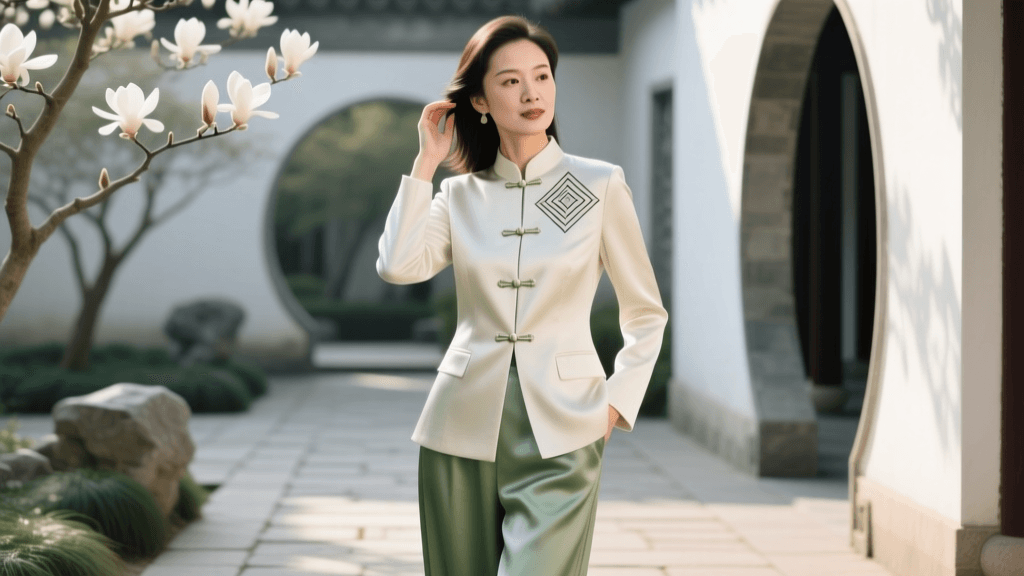
The Pankou (traditional knotted button) is perhaps the most recognizable motif in Chinese traditional clothing. In Xin Zhongshi, the Pankou is reimagined. Instead of being used strictly as a functional fastening down the center of a garment, it is deployed as an asymmetric accent on the lapels of oversized wool blazers, the cuffs of wide-leg trousers, or the back of a minimalist trench coat. Look for Pankou knots crafted from matte leather or raw silk rather than shiny synthetic satin to maintain a grounded, contemporary feel.
Heritage Textiles: Xiangyunsha and Song Brocade
Fabric choice is paramount. Xiangyunsha (Gambiered Canton Gauze) is a highly prized silk dyed with river mud and plant extracts, resulting in a dark, crackled texture that feels almost like soft leather. It is increasingly used in Xin Zhongshi for slip dresses and tailored vests. Similarly, Song Brocade, known for its intricate, flat-woven geometric and floral patterns, is being utilized in small, strategic doses—such as on the lapels of a jacket or as a wide belt—rather than for full, overwhelming garments. For a more accessible, everyday option, high-grade bamboo linen and raw hemp are favored for their breathable, textured drape.
The Relaxed H-Silhouette
Unlike the form-fitting Qipao, Xin Zhongshi embraces the 'H-silhouette'—a straight, columnar cut that skims the body without clinging. This draws inspiration from traditional scholar's robes and Han dynasty tunics, prioritizing comfort, fluidity, and a sense of effortless grace. Drop shoulders, wide sleeves, and straight-leg cuts are standard.
Styling Guide: Integrating Heritage into Daily Wear
The true test of Xin Zhongshi is its versatility. Here are three actionable styling formulas to incorporate these elements into your daily rotation.
Look 1: The Contemporary Office
Replace your standard notch-lapel blazer with a structured, mandarin-collar (Mao collar) jacket crafted from mid-weight wool crepe. Ensure the collar height is no more than 3 centimeters to avoid restricting neck movement. Pair this with high-waisted, wide-leg charcoal trousers and a simple silk camisole. The absence of a traditional shirt collar creates a sleek, unbroken vertical line that is both authoritative and culturally resonant.
Look 2: Weekend Casual
For a relaxed weekend aesthetic, layer a cropped, raw-hemp jacket featuring subtle side-slits and hidden Pankou closures over a plain white heavyweight cotton t-shirt. Combine this with vintage-wash straight-leg denim and minimalist leather loafers. The juxtaposition of the ancient textile with rugged denim perfectly encapsulates the Xin Zhongshi philosophy of 'heritage in motion.'
Look 3: Evening Elegance
For evening wear, a bias-cut Xiangyunsha silk slip dress is unparalleled. The fabric's natural dark sheen and subtle crackling catch the light beautifully. Layer it under an oversized, menswear-inspired tuxedo jacket to offset the delicacy of the silk. Finish with architectural metallic earrings and a low bun secured with a carved wooden or jade hair stick.
Tailoring and Fit: The Secret to the Silhouette
Because Xin Zhongshi relies on relaxed, flowing silhouettes, precise tailoring is crucial to ensure the garment looks intentional rather than simply oversized. When shopping or commissioning custom pieces, pay close attention to these specific measurements:
- Shoulder Drop: For jackets and coats, aim for a shoulder seam drop of 3 to 5 centimeters past your natural shoulder bone. This creates the relaxed, scholarly drape essential to the aesthetic.
- Collar Height: A stand collar should sit exactly 2.5 to 3.5 centimeters high. Anything taller will dig into the jawline and look like a costume piece; anything shorter loses the traditional mandarin collar identity.
- Sleeve Length: Sleeves on Xin Zhongshi outerwear should ideally hit 2 centimeters below the wrist bone, allowing for a slight, elegant pooling over the hand when the arms are at rest.
- Side Slits: For tunics and long jackets, side slits should begin exactly at the high hip (roughly 15 centimeters below the waistline) to ensure ease of movement while maintaining modesty and structure when seated.
Brand and Price Comparison Chart
Navigating the market for New Chinese Style garments can be overwhelming. Below is a structured guide to help you identify the right tier for your budget and quality expectations.
| Market Tier | Example Brands / Sources | Price Range (USD) | Best For | Key Materials |
|---|---|---|---|---|
| Entry-Level | YesStyle, Taobao Indie Studios | $40 - $90 | Trend experimentation, casual wear | Cotton-linen blends, polyester brocade |
| Mid-Tier | Ms MIN, Uma Wang, JNBY | $150 - $450 | Office wear, durable daily staples | Heavyweight silk, wool crepe, raw hemp |
| Luxury / Artisan | Shang Xia, Samuel Gui Yang | $800 - $3,000+ | Investment pieces, formal events | Authentic Xiangyunsha, hand-loomed Song Brocade |
Garment Care: Preserving Heritage Textiles
Owning Xin Zhongshi pieces, particularly those made from traditional textiles, requires specialized care to maintain their structural integrity and color.
Caring for Xiangyunsha Silk: This unique silk is coated in iron-rich river mud during its dyeing process, making it highly sensitive to alkaline substances. Never use standard laundry detergents. Instead, hand wash in cool water using a pH-neutral silk wash or baby shampoo. Do not wring the fabric; gently press the water out between two clean towels and dry flat in the shade. Sunlight will cause the dark, crackled finish to fade and become brittle.
Maintaining Brocade and Embroidery: Garments featuring Song brocade or intricate Suzhou embroidery should be dry-cleaned only. When storing these pieces, avoid wire hangers, which will distort the heavy, structured shoulders. Use padded wooden hangers and store in breathable cotton garment bags. Never store silk or brocade in plastic, as trapped moisture will lead to mildew and permanent yellowing of the fibers.
Conclusion
The Xin Zhongshi movement is a profound testament to the enduring relevance of Asian traditions in the modern era. By stripping away the theatricality of historical costumes and focusing on the essence of traditional craftsmanship, textiles, and silhouettes, the New Chinese Style offers a sophisticated, wearable vocabulary for the contemporary wardrobe. Whether you are investing in a meticulously tailored mandarin-collar blazer or simply incorporating a subtle Pankou knot into your weekend attire, mastering this trend is about embracing a philosophy of quiet elegance and cultural continuity. As the global fashion landscape continues to look Eastward for inspiration, Xin Zhongshi stands as a masterclass in how to honor the past while dressing unequivocally for the future.
For further reading on the cultural impact of this movement, the broader context of the Guochao (national trend) movement provides excellent historical background on how domestic brands are reclaiming Chinese aesthetic narratives in the 21st century.