Decoding Kimono Patterns and Status in Ukiyo-e Woodblock Art
Introduction to Ukiyo-e and Sartorial Storytelling
Ukiyo-e, translating to 'pictures of the floating world,' represents one of the most vibrant and culturally significant art movements in Japanese history. Flourishing primarily during the Edo period (1615–1868), these woodblock prints were not merely decorative artworks; they functioned as the fashion magazines, celebrity tabloids, and travel guides of their era. At the heart of ukiyo-e is the meticulous depiction of clothing. The kimono in these prints serves as a complex visual language, communicating the wearer's social status, occupation, wealth, and even their philosophical inclinations. For modern enthusiasts of Asian traditions, learning to decode the sartorial cues in ukiyo-e provides a fascinating window into historical Japanese society and offers profound inspiration for contemporary traditional dress.
The Visual Language of Kimono: Color, Pattern, and Class
To understand the kimono in ukiyo-e, one must first understand the strict societal constraints of the Edo period. The Tokugawa shogunate enforced rigid class divisions and sumptuary laws that dictated what different classes could wear. Merchants, despite their growing wealth, were at the bottom of the social hierarchy and were legally barred from wearing ostentatious fabrics or bright colors like crimson and purple. This suppression birthed the aesthetic concept of iki—a sophisticated, understated elegance. Commoners circumvented sumptuary laws by wearing subdued colors on the outside of their garments while lining them with lavish, expensive silks, or by incorporating hidden, subtle patterns that only the discerning eye could appreciate.
Ukiyo-e artists like Kitagawa Utamaro and Suzuki Harunobu became masters of capturing these nuances. They utilized the nishiki-e (brocade picture) technique, a multi-color woodblock printing process developed in the 1760s, to accurately render the intricate dyeing and weaving techniques of the era. The Metropolitan Museum of Art notes that the evolution of ukiyo-e is intrinsically linked to the advancement of these printing techniques, allowing artists to depict the sheer translucency of summer hemp fabrics and the heavy, luxurious drape of winter brocades with astonishing realism.
Table: Decoding Ukiyo-e Kimono Motifs and Meanings
| Motif | Season | Wearer / Status | Symbolic Meaning |
|---|---|---|---|
| Cherry Blossom (Sakura) | Spring | Courtesans, Young Women | Beauty, transience, the fleeting nature of life |
| Pine Tree (Matsu) | Winter / New Year | Married Women, Samurai | Longevity, endurance, steadfastness |
| Wisteria (Fuji) | Early Summer | Nobility, High-ranking Geisha | Love, refinement, aristocratic elegance |
| Chrysanthemum (Kiku) | Autumn | Imperial Family, Elders | Imperial authority, rejuvenation, nobility |
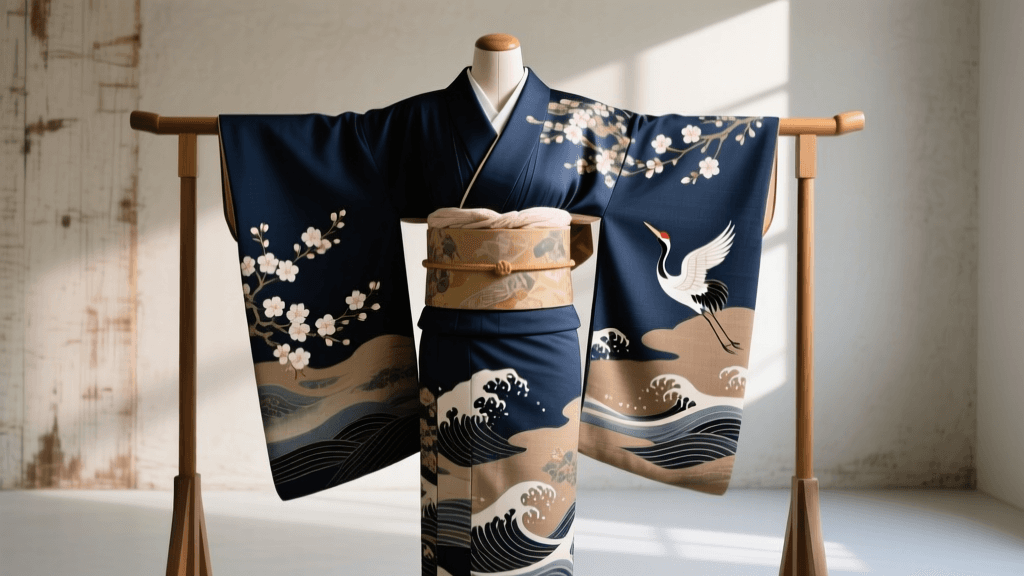
| Seigaiha (Waves) | All Seasons | Merchants, Travelers | Resilience, good fortune, peaceful seas |
Identifying Social Status Through Layering and Textiles
The way a kimono was layered and tied in ukiyo-e prints immediately identified the subject's profession and rank. The most striking contrasts are seen between high-ranking courtesans (oiran) and the wives of wealthy merchants. Courtesans were the undisputed fashion icons of the Edo period. In prints by artists like Utagawa Toyoharu, oiran are depicted wearing up to five or six layers of heavily brocaded silk, with the collars pulled back to expose the nape of the neck. Their obi (sashes) were massively voluminous and tied in elaborate knots at the front—a practical choice for their profession, but also a symbol of their untouchable, elevated status within the pleasure quarters.
Conversely, merchant wives are depicted with refined restraint. Their beauty lay in the quality of the silk and the subtlety of the yuzen dyeing. Their obi were tied neatly at the back, signifying modesty and marital fidelity. The Victoria and Albert Museum highlights how the kimono's structure allowed for endless variations in formality, where the number of family crests (kamon) and the length of the sleeves (furisode for unmarried women, tomesode for married women) acted as a strict visual code that ukiyo-e artists rendered with meticulous accuracy.
'The kimono is not merely a garment; it is a canvas upon which the wearer's identity, aspirations, and societal position are painted for the world to read.' — Edo Period Sartorial Proverb
Practical Guide: Viewing and Collecting Ukiyo-e Fashion Prints
For collectors and historians, acquiring or viewing authentic ukiyo-e prints requires an understanding of print formats, conditions, and market values. The most common format for fashion prints is the oban size, measuring approximately 14.5 x 9.5 inches (37 x 25 cm). When building a collection or studying these garments, consider the following actionable advice:
Where to See Authentic Prints
- Major Museums: Institutions like the Metropolitan Museum of Art in New York, the British Museum in London, and the Tokyo National Museum hold extensive, climate-controlled collections. Many offer online digital archives where you can zoom in on the weave patterns depicted in the prints.
- Specialized Galleries: Galleries in Tokyo's Jimbocho district specialize in antique prints. When visiting, ask to see nikuhitsu-ga (hand-painted works) to see actual textile swatches attached to historical sketches.
Condition Checking for Collectors
If you are purchasing original Edo or Meiji period prints, condition drastically affects both value and historical readability. Use this checklist:
- Fading: Check for color loss, particularly in reds and purples, which were made from fugitive vegetable dyes that fade quickly in sunlight.
- Foxing: Look for small, brown age spots caused by fungal growth on the washi paper. Mild foxing is acceptable; heavy foxing obscures kimono patterns.
- Margins: Original prints often have trimmed margins. A print with full, untrimmed margins (showing the registration marks) commands a 30-50% premium.
- Centerfold: Many prints were originally bound into albums. A visible center crease is common but should not tear the paper or obscure the subject's face or primary kimono motifs.
Market Costs and Budgeting
Original Edo-period ukiyo-e prints by famous artists like Utamaro or Sharaku can range from $1,500 to over $20,000, depending on rarity and condition. However, prints by lesser-known students of the Utagawa school, which still feature highly detailed kimono patterns, can be acquired for $200 to $500. For those on a strict budget, high-quality museum reproductions (costing $30 to $80) are excellent for studying pattern geometry and color palettes without the risk of damaging fragile antique paper.
Translating Ukiyo-e Aesthetics to Modern Kimono Wear
Understanding the sartorial codes of ukiyo-e is not just an academic exercise; it provides a blueprint for sophisticated modern kimono styling. The Edo-period concept of iki remains highly relevant today. To channel the understated elegance of a wealthy Edo merchant's wife, modern wearers can opt for a subdued tsumugi (pongee silk) kimono in charcoal, navy, or olive green. The 'hidden luxury' can be introduced through the haneri (decorative collar) or the lining of the kimono, which flashes brightly when walking or sitting.
Furthermore, the seasonal motifs strictly observed in ukiyo-e prints should guide modern wardrobe choices. Wearing a wisteria motif in early summer, or a maple leaf motif in late autumn, demonstrates a deep respect for the traditional calendar. When selecting an obi, look for classic ukiyo-e patterns like the seigaiha (ocean waves) or asanoha (hemp leaf), which provide a timeless geometric contrast to more organic, floral kimono patterns. By applying these historical principles, modern practitioners can elevate their kitsuke (dressing) from mere clothing to a living continuation of Japanese art history.
Conclusion
The kimono depicted in ukiyo-e woodblock prints is far more than a historical garment; it is a meticulously coded text that reveals the complexities of Edo-period society. From the rebellious, hidden linings of the merchant class to the towering, brocaded layers of the pleasure quarters, these prints offer an unparalleled visual archive of Japanese textile history. By learning to decode these patterns, colors, and structural cues, we not only gain a deeper appreciation for Asian traditions but also acquire the tools to wear and collect these garments with historical mindfulness and authentic elegance.