Guide to Authentic Miao Silver Jewelry and Textiles
The Wearable Archive: Miao Clothing Traditions
The Miao people, known internationally as the Hmong, represent one of China's most culturally rich and diverse ethnic minority groups. Concentrated primarily in the mountainous regions of Guizhou, Hunan, and Yunnan provinces, the Miao have historically lacked a formal written language. Instead, they have encoded their history, mythology, and migratory patterns into their traditional garments. For collectors, textile enthusiasts, and cultural historians, Miao clothing and adornments are not merely decorative; they are wearable archives. According to Encyclopædia Britannica, the Miao's intricate craftsmanship serves as a vital link to their ancestral past, surviving centuries of migration and assimilation pressures.
This guide provides an in-depth, actionable look into the two most prominent pillars of Miao adornment: their world-renowned indigo-dyed embroidery and their staggering silver jewelry traditions. Whether you are a collector looking to source authentic antique jackets or a traveler planning to attend a regional festival, understanding the nuances of measurements, materials, and market pricing is essential.
Decoding Miao Embroidery Techniques and Motifs
Miao embroidery is celebrated globally for its complexity, vibrant color palettes, and structural ingenuity. As noted by the Victoria and Albert Museum, Chinese ethnic minority textiles often feature techniques that predate modern sewing methods, relying on intricate counting stitches and complex loom weaving.
Key Techniques and Measurements
Authentic Miao embroidery is predominantly executed on a base of hand-woven cotton or hemp, which is repeatedly dyed in natural indigo until it achieves a deep, lustrous navy or black. The embroidery itself utilizes silk threads dyed with botanical pigments. Key stitches include the seed stitch (creating a textured, raised surface), the braid stitch, and the flat stitch.
One of the most iconic garments is the Miao pleated skirt (bai zhe qun). Creating a single authentic skirt is a monumental task:
- Material Requirements: A traditional skirt requires between 15 to 20 meters of hand-woven, indigo-dyed cotton.
- Pleating Process: The massive yardage is meticulously pleated by hand and bound tightly with hemp string, then steamed to set the pleats permanently.
- Final Measurements: The 20 meters of fabric are compressed into a waistband measuring just 70 to 90 cm in circumference, while the skirt length typically falls between 45 cm (mini) to 80 cm (midi), depending on the specific sub-branch of the Miao people.
Mythological Motifs
When authenticating a piece, look for the "Butterfly Mother" (Mais Bangx Mais Lief). According to Miao creation myths, the Butterfly Mother laid twelve eggs, which hatched into humans, dragons, and tigers. This motif is central to Miao identity and is almost always present on the back panels of festival jackets. Other common motifs include the water buffalo (symbolizing agricultural wealth) and stylized dragons, which in Miao culture are benevolent water spirits rather than the fearsome beasts of Western lore.
The Weight of Heritage: Miao Silver Jewelry
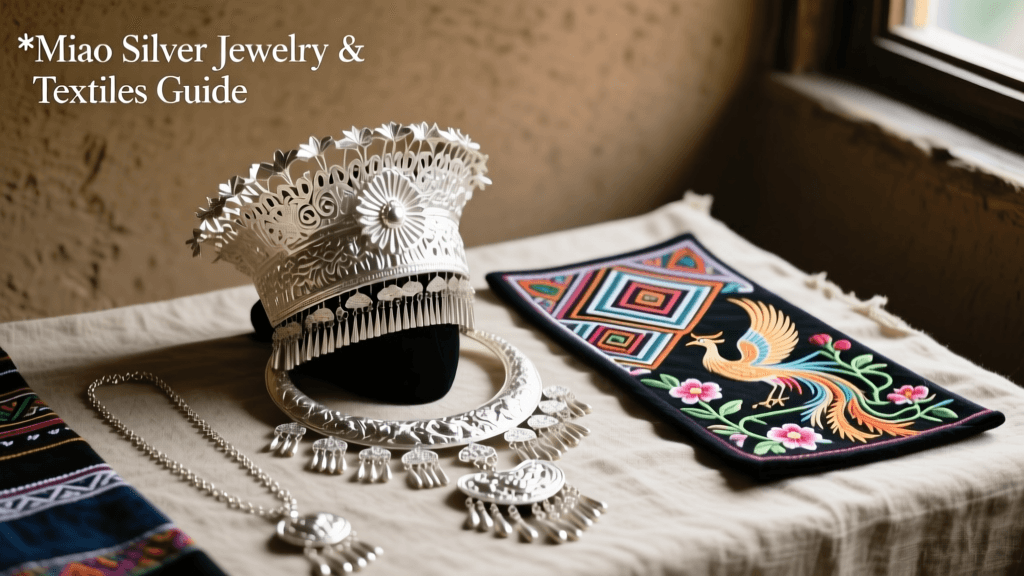
While embroidery records the past, silver represents a family's tangible wealth and social standing. Miao silversmithing is a highly specialized hereditary craft. During major festivals, a Miao woman may wear a silver headdress, neck rings, torques, hairpins, and chest plates that can collectively weigh between 5 to 10 kilograms.
Understanding Silver Purity and Craftsmanship
Historically, Miao silver was not pure sterling. It was often a mix of silver, copper, and sometimes white brass, referred to locally as baiyin (white silver). Today, modern pieces crafted for the tourist and export markets are typically made of 925 or 990 purity silver.
When evaluating Miao silver jewelry, consider the following actionable metrics:
- Weight: Authentic vintage torques (neck rings) are heavy, often weighing between 300 to 800 grams each. A full set of three nested torques can exceed 2 kilograms.
- Construction: Look for repoussé (hammered from the reverse side to create a raised design) and filigree work. Authentic vintage pieces will show slight asymmetries and tool marks, whereas modern cast pieces will be perfectly uniform and lightweight.
- Acoustics: Traditional Miao silver is designed to chime. The small conical bells attached to hairpins and chest plates should produce a clear, high-pitched ring when moved, a feature historically believed to ward off evil spirits.
Buyer's Guide: Sourcing Authentic Miao Garments
Sourcing authentic Miao textiles and silver requires a keen eye and an understanding of regional variations. The Metropolitan Museum of Art frequently highlights the regional disparities in Asian ethnic textiles, noting that village-specific styles can vary dramatically within a single province. Below is a structured comparison chart to guide collectors and buyers in the current market.
| Item Type | Authenticity Markers | Estimated Cost (USD) | Primary Sourcing Locations |
|---|---|---|---|
| Antique Festival Jacket (Taijiang Style) | Hand-spun silk thread, flat-stitch embroidery, natural indigo base, slight fading on cuffs. | $800 - $2,500+ | Shidong Market, Guizhou; Specialist dealers in Beijing/Shanghai. |
| Modern Silver Headdress (Horn Style) | 990 pure silver, hand-chased repoussé, adjustable copper wire core, weighs 1.5 - 3 kg. | $400 - $900 (Priced by gram + labor) | Xijiang Miao Village, Leishan County. |
| Vintage Indigo Pleated Skirt | Deep indigo sheen (calendered with ox blood or egg white), hundreds of micro-pleats, hemp waistband. | $250 - $600 | Kaili Sunday Market, Guizhou. |
| Antique Silver Torque (Neck Ring) | Heavy cast silver mix, tapered ends with fish or dragon motifs, natural dark patina in crevices. | $150 - $450 | Panghai Market, Rongshui County. |
Timing Your Purchase: The best time to view and source these items in their full cultural context is during the Lusheng Festival (typically held in autumn post-harvest) or the Miao New Year (November/December). During these times, local markets are flooded with both family heirlooms being traded and master artisans showcasing their latest silverwork.
Care and Maintenance for Collectors
Preserving Miao textiles and silver requires specific environmental controls, as the organic dyes and mixed metals are highly susceptible to degradation.
Textile Preservation
Never wash antique indigo-dyed Miao textiles in water. The natural indigo dye is not colorfast and will bleed, destroying the contrast of the silk embroidery.
- Storage: Store jackets and skirts flat in acid-free archival boxes. Do not hang heavy pleated skirts, as the weight will stretch the hemp waistband and pull out the steamed pleats.
- Pest Control: Use natural cedar blocks or dried lavender sachets. Avoid mothballs, as the chemicals can react with the metallic threads sometimes used in Miao embroidery, causing them to tarnish or snap.
- Environment: Maintain a relative humidity of 45-55%. High humidity will cause the natural indigo base to bloom with mildew, while low humidity will make the hand-spun silk threads brittle.
Silver Maintenance
- Patina vs. Polish: For antique pieces, preserve the dark patina in the recessed areas; it highlights the repoussé work and proves the piece's age. Only gently polish the raised high-points with a dry, soft microfiber cloth.
- Deep Cleaning (Modern Silver Only):strong> If you purchase modern 990 silver festival pieces that have heavily tarnished, use a mild baking soda and aluminum foil bath. Line a bowl with aluminum foil, add hot water and two tablespoons of baking soda, and submerge the silver for 3-5 minutes. Rinse thoroughly and dry immediately to prevent water spots.
Conclusion
The clothing traditions of the Miao people represent a masterclass in wearable art, combining profound mythological storytelling with staggering technical skill. Whether you are acquiring a heavily embroidered Taijiang jacket or a chiming silver headdress, understanding the material realities—from the 20 meters of cotton in a single skirt to the specific acoustic properties of silver bells—ensures that you are not just buying an object, but preserving a vital piece of Asian cultural heritage.