The Ultimate Hanfu Care Guide: Washing and Storing Silk
Introduction to Hanfu Fabric Care
The global resurgence of hanfu (traditional Han Chinese clothing) has brought exquisite garments like the flowing ruqun (blouse and skirt ensembles) and the structured mamianqun (horse-face skirts) into modern wardrobes. However, investing in these beautiful pieces is only the first step; maintaining their structural integrity, vibrant dyes, and delicate fabrics requires specialized knowledge. Unlike modern fast fashion, traditional garments often utilize natural fibers like mulberry silk, linen, and intricate synthetic blends that demand meticulous care.
Improper washing can lead to irreversible damage, such as dye bleeding, silk degradation, and the loss of crisp pleats. According to the Victoria and Albert Museum's textile conservation guidelines, silk fibers are highly sensitive to alkaline substances, excessive heat, and prolonged exposure to direct sunlight. This comprehensive guide will walk you through the exact products, measurements, and techniques required to wash, dry, and store your hanfu collection, ensuring these cultural garments last for generations.
Decoding Hanfu Fabrics: Silk vs. Synthetic Blends
Before submerging your garments in water, it is crucial to identify the fabric composition. Modern hanfu manufacturers typically use three main categories of fabric:
- 100% Mulberry Silk (Sang Can Si): Used in high-end, premium hanfu. It is luxurious, breathable, and historically accurate, but highly prone to water spotting, alkaline damage, and heat shrinkage.
- Silk Blends (Silk/Cotton or Silk/Rayon): Offers a balance of historical drape and modern durability. Slightly more forgiving than pure silk but still requires gentle handling.
- Synthetic Blends (Polyester/Chiffon/Jacquard): The most common fabrics for everyday and entry-level hanfu. They are durable, hold pleats exceptionally well, and are generally machine-washable on delicate settings.
Fabric Care Comparison Chart
| Fabric Type | Wash Method | Water Temp | Detergent Type | Ironing / Steaming |
|---|---|---|---|---|
| 100% Mulberry Silk | Hand-wash only | Cold (Max 30°C / 86°F) | Neutral pH (e.g., Eucalan) | Low heat (110°C) with press cloth |
| Silk Blends | Hand-wash preferred | Cool (Max 30°C / 86°F) | Mild liquid detergent | Medium-low heat with press cloth |
| Polyester / Chiffon | Machine (Delicate bag) | Cold to Warm (Max 40°C) | Standard mild detergent | Low heat or steam (150°C max) |
| Cotton / Linen | Machine (Gentle cycle) | Cold (Max 30°C / 86°F) | Standard mild detergent | Medium-high heat with steam |
Step-by-Step Washing Guide for Delicate Hanfu
Hand-Washing Mulberry Silk Ruqun
When washing pure silk garments, the goal is to clean the fibers without stripping their natural sericin proteins. Avoid standard laundry detergents, which are highly alkaline (pH 9-10) and will cause silk to become brittle and lose its luster.
- Preparation: Fill a clean basin with cold water, strictly not exceeding 30°C (86°F). Add a capful (approx. 15ml) of a neutral pH detergent specifically formulated for delicates, such as Eucalan Woolwash ($12 for 16oz) or The Laundress Delicate Wash ($24 for 16oz).
- Soaking: Submerge the silk ruqun gently. Let it soak for exactly 3 to 5 minutes. Do not exceed 10 minutes, as prolonged soaking can cause natural dyes to bleed.
- Agitation: Gently swish the garment through the water. Never rub, twist, or scrub the fabric, as wet silk is highly vulnerable to tensile tearing.
- Rinsing: Drain the soapy water and refill the basin with fresh cold water. Repeat until the water runs completely clear. If using a no-rinse formula like Eucalan, you can skip this step.
- Drying (The Towel Roll Method): Never wring out silk. Lay the wet garment flat on a clean, white cotton towel. Roll the towel and garment together tightly, like a sleeping bag, and press gently to absorb excess moisture. Unroll and lay the hanfu flat on a mesh drying rack in a shaded, well-ventilated area. Direct sunlight will yellow and degrade silk fibers within hours.
Machine-Washing Synthetic Blends
Polyester and jacquard hanfu are much hardier. Turn the garments inside out to protect embroidered motifs and metallic threads. Place them in a fine mesh laundry bag to prevent snagging on the machine drum. Use the "Delicate" or "Hand Wash" cycle with cold water and a low spin speed (maximum 600 RPM). Remove immediately after the cycle ends to prevent deep-set wrinkles.
Mastering the Mamianqun: Pleat Maintenance
The mamianqun (horse-face skirt) is iconic for its flat front and back panels flanked by intricate, sharp knife pleats. Maintaining these pleats is the most challenging aspect of hanfu care. As noted by the American Institute for Conservation (AIC), structural elements in historic and traditional textiles require specialized support to prevent permanent deformation over time.
Washing and Re-Setting Pleats
If your mamianqun is made of synthetic blends, the pleats are likely heat-set at the factory and will survive gentle washing. However, if the pleats become loose, you must re-set them:
- Alignment: Lay the skirt flat on an ironing board. Carefully align the inner and outer edges of each pleat, working from the waistband down to the hem.
- Clipping: Use specialized hanfu pleat clips (available online for $5–$12 for a set of 10 silicone-padded metal clips) or standard binder clips lined with felt to prevent rust and indentations. Clip the pleats securely in place.
- Steaming: Use a handheld garment steamer ($40–$60). Hold the steamer nozzle exactly 2 inches (5 cm) away from the fabric and steam down the length of the pleats. Allow the skirt to cool and dry completely before removing the clips.
Proper Storage and Moth Prevention
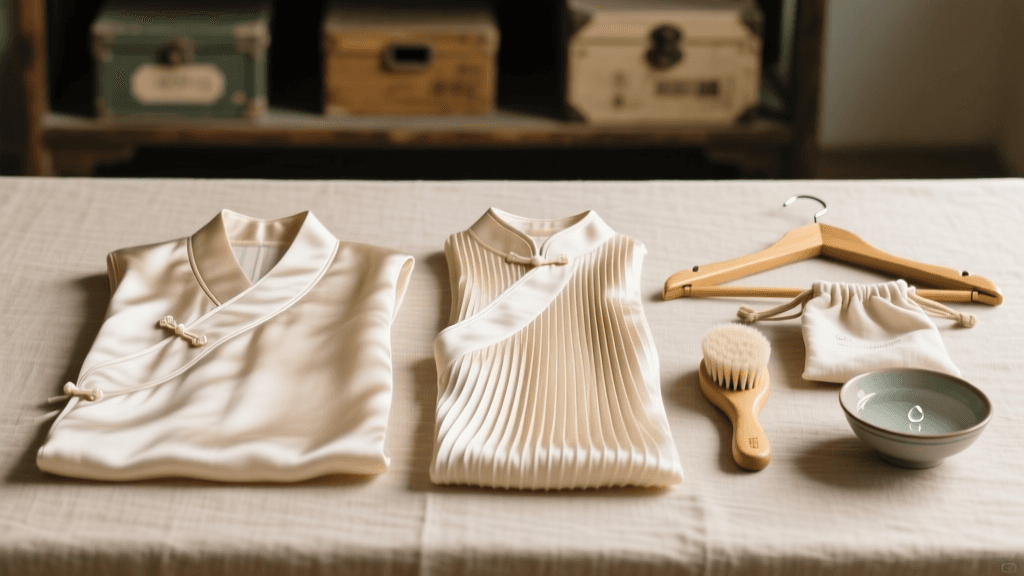
How you store your hanfu during the off-season is just as critical as how you wash it. The Canadian Conservation Institute strongly recommends storing delicate textiles in acid-free environments to prevent chemical degradation and yellowing.
Hanging vs. Folding
- Hanging: Only hang lightweight ruqun tops or beizi (open-front jackets). Always use padded velvet or satin hangers ($20–$30 for a set of 6) to support the shoulders without creating stress points. Never hang heavy, multi-layered silk skirts or fully embroidered garments, as the weight will distort the warp and weft threads over time.
- Folding: Heavy skirts, cloaks (doupeng), and pure silk garments should be folded. To prevent hard creases that can eventually snap silk fibers, pad the folds with acid-free tissue paper ($15–$20 for a 240-sheet pack). Store them in breathable cotton garment bags or acid-free archival storage boxes.
Moth Prevention Without Chemicals
Traditional mothballs contain naphthalene or paradichlorobenzene, which release toxic gases that can permanently stain silk and degrade metallic embroidery threads. Instead, use natural alternatives:
- Cedar Blocks: Place natural cedar wood blocks ($10–$15 for a set of 12) in your storage drawers. Sand them lightly every few months to refresh the natural oils that repel insects.
- Lavender Sachets: Dried lavender is an excellent, historically appropriate deterrent that also keeps your garments smelling fresh. Ensure the sachets do not directly touch silk fabrics to avoid oil transfer.
Conclusion
Caring for hanfu is a practice of cultural preservation. By understanding the specific needs of mulberry silk, utilizing neutral pH detergents, meticulously maintaining the structural pleats of the mamianqun, and storing your garments in acid-free, moth-free environments, you ensure that these beautiful pieces remain vibrant and wearable. Treat your traditional garments with the respect they command, and they will serve as a timeless bridge between historical elegance and modern expression.