Vintage Silk Kimono Preservation & Archival Storage Guide 2026
The Delicate Science of Vintage Silk
Preserving a vintage silk kimono, haori, or intricately woven obi is not merely about keeping the garment clean; it is an exercise in applied chemistry and environmental control. Silk is a natural protein fiber composed primarily of fibroin, which is held together by sericin. Over decades, exposure to ultraviolet light, fluctuating humidity, and acidic environments causes the protein chains to break down. This degradation manifests as the dreaded "silk shattering," where the fabric becomes brittle and tears under its own weight, or severe yellowing of the pristine white silk linings.
As we navigate the preservation landscape in 2026, the approach to Asian traditional garment care has evolved significantly. Modern conservation science prioritizes preventive care and eco-friendly interventions over harsh chemical treatments. Whether you are a private collector, a museum curator, or an enthusiast who has inherited a family heirloom, understanding the current standards for archival storage and restoration is essential to ensure these masterpieces survive for future generations.
2026 Eco-Friendly Cleaning Protocols
Historically, dry cleaning vintage silk involved perchloroethylene (perc), a harsh solvent that, while effective at removing oils, often stripped the fabric of its natural luster and accelerated the degradation of delicate metallic threads and hand-painted dyes. As of 2026, environmental regulations and advancements in textile chemistry have largely phased out perc in favor of greener, safer alternatives.
The current gold standard for cleaning vintage silk kimonos is liquid silicone dry cleaning (often branded as GreenEarth Cleaning) or specialized professional wet cleaning. Liquid silicone is a gentle, non-toxic solvent that does not swell the silk fibers, thereby preventing dye bleeding and protecting fragile embroidery. Professional wet cleaning, when performed by certified textile specialists, uses computer-controlled washing machines with neutral pH surfactants and precise temperature controls to safely lift stains without agitating the fibers.
Before sending any vintage garment to a cleaner, verify that they utilize these modern 2026 eco-friendly methods. The average cost for specialized kimono cleaning currently ranges from $85 to $150 per garment, depending on the complexity of the obi and the presence of intricate metallic leaf (surihaku) or tie-dye (shibori) elements that require spot-treatment.
Museum-Grade Archival Storage Solutions
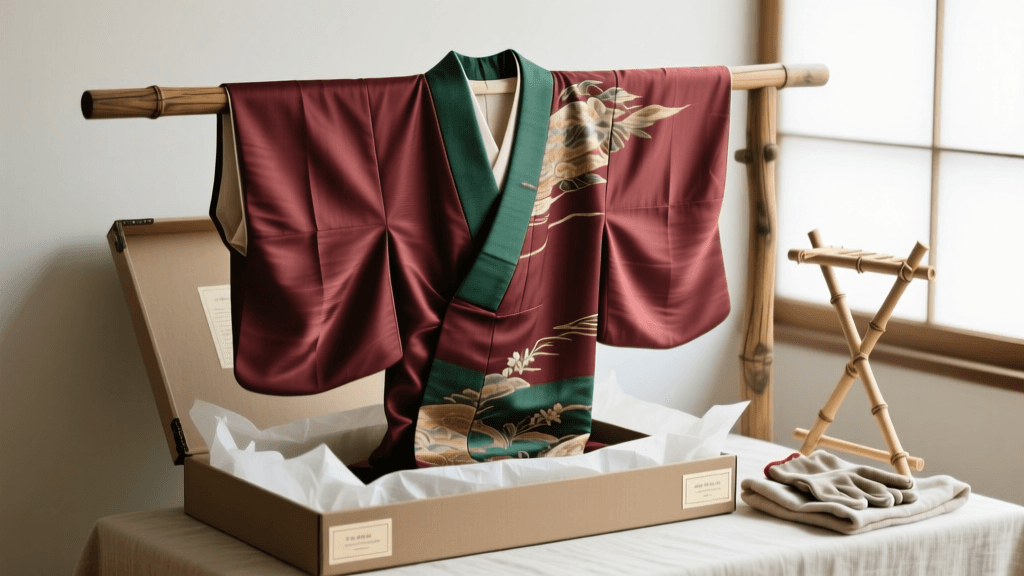
Proper storage is the most critical factor in garment preservation. The traditional Japanese method of storing kimonos involves wrapping the garment in a tatoushi (an unbleached cotton or linen paper wrapper) and placing it inside a kiribako (a box made from paulownia wood). Paulownia wood is highly prized because it naturally regulates humidity, breathes well, and contains natural tannins that repel insects.
However, in 2026, sourcing high-quality, properly cured paulownia boxes outside of Japan can be challenging and expensive. Furthermore, modern urban apartments often lack the space for large wooden chests. This has led to the widespread adoption of archival-grade polypropylene (PP) storage boxes combined with micro-climate silica gel cassettes. Unlike standard plastic bins that can off-gas harmful plasticizers, museum-grade PP is chemically inert and safe for long-term protein fiber storage.
Storage Material Comparison Chart
| Storage Material | Moisture Regulation | Pest Resistance | 2026 Avg Cost | Best Use Case |
|---|---|---|---|---|
| Paulownia Wood (Kiribako) | Excellent (Natural) | High (Natural tannins) | $250 - $450 | Long-term heirloom storage, traditional collections. |
| Archival Polypropylene (PP) | Good (Requires silica) | Moderate (Needs monitoring) | $45 - $80 | Urban apartments, space-saving, modern archives. |
| Acid-Free Cardboard | Poor | Low | $20 - $35 | Temporary transit, short-term budget storage. |
Environmental Controls: Mastering Climate and Light
Even the best archival box cannot protect a kimono if the room's environment is hostile. According to guidelines supported by the Getty Conservation Institute, protein fibers like silk require a stable environment to prevent hydrolysis and mold growth. In 2026, the ideal parameters for textile preservation remain strictly defined:
- Relative Humidity (RH): Maintain between 45% and 55%. Fluctuations cause the silk fibers to expand and contract, leading to mechanical stress and shattered threads.
- Temperature: Keep the storage area between 65°F and 70°F (18°C - 21°C). Avoid attics and basements where temperature swings are extreme.
- Light Exposure: Ultraviolet and visible light cause irreversible photo-oxidation. If displaying a kimono, keep light levels below 50 lux and rotate the garment every three months. In storage, absolute darkness is mandatory.
Modern smart hygrometers with Bluetooth capabilities allow collectors to monitor the micro-climate inside their storage boxes directly from their smartphones, sending alerts if the humidity drops below safe thresholds.
The Art of Folding: Preventing Permanent Creases
Improper folding is a leading cause of damage in vintage kimonos. When silk is left folded along the same lines for years, the fibers weaken and eventually split at the crease. The traditional Japanese folding method, known as hon-datami, is designed to align with the garment's structural seams, minimizing stress.
Step-by-Step Folding and Padding:
- Lay the kimono face down on a clean, flat surface. Fold the left front panel over the back, then fold the right front panel over the left, aligning the seams perfectly.
- Fold the sleeves back so they do not overlap the main body, preventing thick layers that cause hard creases.
- Fold the garment in thirds lengthwise. Always fold along the existing seam lines, never across the middle of a fabric panel.
- Crucial 2026 Conservation Rule: Use unbuffered, acid-free tissue paper (pH 7.0) to pad the folds. Roll the tissue into soft "sausages" and place them inside the folds of the sleeves and the hem. This prevents sharp creases. Never use buffered tissue paper (which contains calcium carbonate) on silk; the alkaline buffer will chemically degrade the protein fibers over time. Buffered tissue is strictly for plant-based fibers like cotton and linen.
Once folded and padded, wrap the kimono in a fresh, unbleached cotton tatoushi or an acid-free archival tissue wrapper before placing it in your chosen storage container.
Sourcing Professional Restorers in 2026
While preventive care can halt degradation, active restoration is required when a kimono suffers from shattering, severe staining, or structural tears. Restoration of traditional Asian garments requires highly specialized skills, including knowledge of historical dyeing techniques, metallic leaf application, and traditional stitching methods like kake-tsugi (invisible re-weaving).
It is vital to distinguish between a commercial tailor and a certified textile conservator. A conservator adheres to the ethical principle of reversibility—meaning any repair or stabilization they perform can be undone in the future without harming the original artifact. For authoritative guidance on conservation ethics and to locate certified experts, the Textile Society of America remains an invaluable resource for connecting with specialists who understand the nuances of Asian silk textiles.
Additionally, the Victoria and Albert Museum's conservation department provides extensive public resources on the ethics of textile preservation, emphasizing minimal intervention. When seeking a restorer in 2026, always request a detailed condition report and a treatment proposal before allowing any work to commence. Expect to pay between $300 and $1,500 for professional stabilization, depending on the extent of the silk shattering and the historical significance of the garment.
Conclusion
Preserving vintage silk kimonos and obis is a profound responsibility that bridges the gap between historical artistry and modern science. By embracing the eco-friendly cleaning protocols, utilizing chemically inert archival storage, and strictly controlling the environmental climate, collectors can ensure these magnificent examples of Asian traditional fashion remain vibrant and intact. The techniques and materials available in 2026 make it easier than ever to achieve museum-quality preservation right in your own home, safeguarding the legacy of these extraordinary garments for the centuries to come.