Hanfu Coming of Age Rites: Ji Li & Guan Li Guide 2026
The Resurgence of Traditional Milestones in 2026
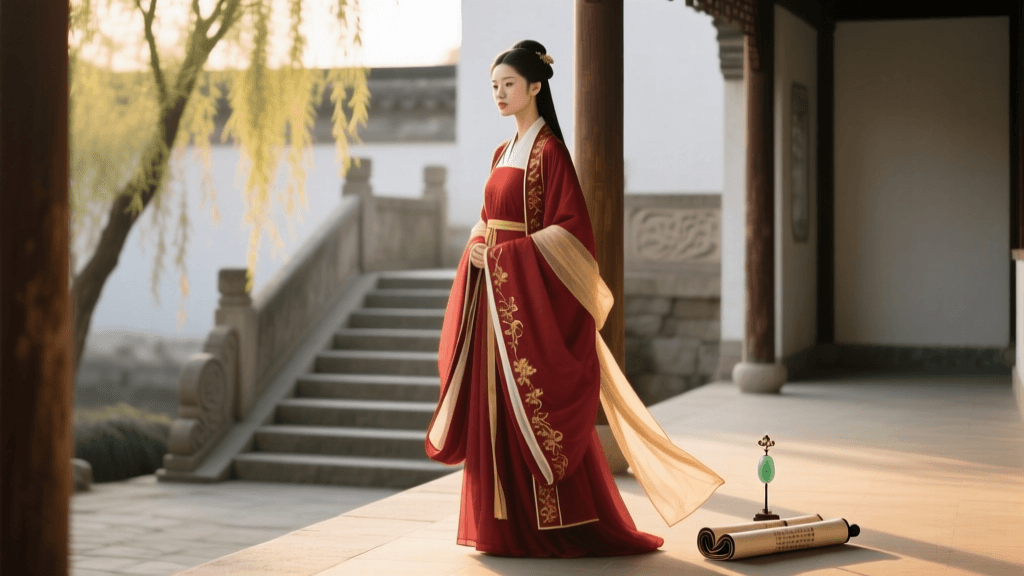
The year 2026 marks a pivotal moment in the Asian cultural renaissance, where traditional garments have transcended street fashion to become deeply integrated into profound life milestones. Among the most significant of these milestones are the Ji Li (笄礼) for young women and the Guan Li (冠礼) for young men. Originating in the Zhou Dynasty, these coming-of-age ceremonies symbolize the transition from childhood to adulthood, carrying the weight of societal responsibility, familial respect, and cultural continuity. As noted in extensive cultural reporting by BBC Culture, the modern Hanfu movement has evolved from a niche hobby into a mainstream cultural practice, with 2026 seeing a record number of families and university students organizing formalized, historically accurate rites of passage.
Understanding Ji Li and Guan Li
Historically, the Ji Li (Hair Pinning Ceremony) was held for women around the age of 15, signifying her readiness for marriage and her new role as an adult member of society. The Guan Li (Capping Ceremony) was held for men at age 20, marking his eligibility to serve in government, manage family affairs, and participate in ancestral rites. Today, in 2026, these ages are often adapted to align with modern life stages, such as high school graduation (age 18) or university graduation (age 21-22). The core philosophy remains unchanged: it is a moment of profound reflection, honoring one's parents, and stepping into the world with dignity and purpose.
The Three Stages of the Ceremony (San Jia / San Ji)
The most visually and symbolically striking element of the ceremony is the Three Additions (San Jia). The initiate changes garments three times, each outfit representing a different stage of life and a deeper level of societal responsibility. Sourcing these garments in 2026 requires an understanding of historical dynastic accuracy, with the Ming and Song dynasties being the most popular choices for formal ceremonies due to the survival of extensive textile records.
1. The First Addition (Chu Jia / Chu Ji)
The first garment represents childhood purity and the foundational teachings of the family. For women, this is typically a simple Ruqun (襦裙) or a modest Beizi (褙子) ensemble in light, pastel colors. For men, it is a basic Shenyi (深衣) or a simple cross-collared robe. The hair is styled simply, and the headpiece added is a modest wooden or jade hairpin (for women) or a simple cloth cap (for men).
2. The Second Addition (Zai Jia / Zai Ji)
The second garment signifies youth, education, and the readiness to learn and contribute. Women transition into a more structured Aoqun (袄裙) or a layered Song-style ensemble, often featuring subtle embroidery of bamboo or orchids. Men don a Lanshan (襕衫), the traditional garment of the scholar-official class, representing academic pursuit and moral integrity. The hair accessories become more refined, incorporating silver or gold-plated metals.
3. The Third Addition (San Jia / San Ji)
The final garment represents full adulthood, authority, and readiness to participate in formal societal and ancestral rites. This is the most extravagant layer. Women wear a grand Ming-style formal court dress (such as a heavily embroidered Xiapei (霞帔) and Yuanlingpao (圆领袍)), featuring intricate motifs of phoenixes, clouds, and peonies. Men wear a formal Daoshan (道衫) or a high-ranking official's court robe, complete with a structured formal hat (Guan). The final hairpiece is a grand, elaborate hairpin or a formal ceremonial crown.
| Ceremony Stage | Women's Garment (Ji Li) | Men's Garment (Guan Li) | Symbolic Meaning |
|---|---|---|---|
| First Addition | Simple Ruqun / Beizi | Basic Shenyi | Childhood purity and family foundation |
| Second Addition | Song-style Aoqun | Scholar's Lanshan | Youth, education, and moral integrity |
| Third Addition | Ming-style Xiapei / Court Dress | Formal Daoshan / Court Robe | Full adulthood, authority, and societal duty |
Planning Your 2026 Hanfu Coming-of-Age Ceremony
Organizing a traditional ceremony in 2026 requires careful coordination of historical consultants, venue logistics, and garment sourcing. The modern Hanfu industry has matured significantly, offering both bespoke tailoring and high-end rental services.
Budgeting and Sourcing in 2026
The cost of a Hanfu coming-of-age ceremony varies wildly based on whether you purchase bespoke garments or utilize the booming 2026 rental market in cultural hubs like Xi'an, Hangzhou, and Chengdu.
- Bespoke High-End (e.g., Minghuatang, Xianhan Pavilion): Expect to pay between $800 and $2,500 USD for a complete, historically accurate three-stage wardrobe. These brands utilize authentic silk brocades, traditional Xiangyunsha dyeing techniques, and hand-embroidery.
- Mid-Tier Market (e.g., Shisanyu, Zhongzheng Hanfu): A complete set of three garments typically ranges from $250 to $600 USD. These are often made from high-quality synthetic blends or machine-embroidered cotton-silk blends, offering a beautiful aesthetic at a fraction of the cost.
- Full-Service Rental & Planning Packages: In 2026, many cultural tourism boards and specialized Hanfu studios offer all-inclusive packages (venue, three garment changes, professional hair/makeup, photography, and a ceremonial officiant) ranging from $500 to $1,200 USD.
When commissioning custom pieces or verifying the historical accuracy of rental garments, enthusiasts frequently consult digital archives and institutions like the Victoria and Albert Museum's Asian collections to ensure that textile patterns, collar alignments, and sleeve proportions strictly adhere to historical precedents.
Key Ceremonial Roles
A proper Ji Li or Guan Li cannot be performed alone. It requires a specific cast of participants:
- The Initiate (Ziren): The young adult undergoing the ceremony.
- The Host (Zhuren): Usually the parents or grandparents, representing the family lineage.
- The Guest of Honor (Zhengbin): A highly respected elder, teacher, or community leader chosen to perform the actual hair-pinning or capping. This person must possess good moral character and a respected social standing.
- The Assistant (Zanli): A close friend or sibling who assists the Guest of Honor in handling the hairpins, caps, and robes during the transitions.
Step-by-Step Ceremony Checklist
To ensure a flawless and emotionally resonant event, follow this 2026 planning timeline:
6 Months Prior
- Select the specific dynastic era you wish to emulate (Ming and Song are highly recommended for formal rites).
- Secure your venue. Traditional botanical gardens, Confucian temples, and heritage courtyards book up quickly in the spring and autumn.
- Commission or reserve your three sets of Hanfu. Custom tailoring requires precise measurements and at least 3-4 months for embroidery and silk weaving.
3 Months Prior
- Formally invite your Zhengbin (Guest of Honor) and Zanli (Assistant) with traditional invitation cards.
- Hire a specialized Hanfu hair and makeup artist (Zaoxing Shi) who understands historical hairstyles, such as the complex Ming-style Di Ji (狄髻) hair bases.
- Begin practicing the ceremonial bows, postures, and walking paces required during the ritual.
1 Month Prior
- Conduct a full dress rehearsal to ensure the layering of the three garments is seamless and that the quick changes can be managed within the allotted time.
- Prepare the ceremonial offerings (tea, wine, and traditional pastries) and the ritual washing basin.
- Finalize the script for the Zhengbin's blessing, which is traditionally read aloud during the final capping/pinning.
The Day of the Ceremony
- The Welcome: The Host welcomes the guests and the Zhengbin.
- The First Addition: The initiate enters in childhood clothing. The Zhengbin washes their hands, adds the first hairpin/cap, and offers a brief blessing.
- The Second Addition: The initiate changes into the scholar's robe. The Zhengbin adds the second accessory and offers a blessing regarding education and virtue.
- The Third Addition: The initiate emerges in full formal court wear. The final, grand accessory is placed, accompanied by the longest and most profound blessing regarding societal duty.
- The Tea Ceremony & Ancestral Veneration: The newly minted adult serves tea to their parents and bows to the ancestral tablets or family elders, cementing their new status.
Conclusion
The revival of the Ji Li and Guan Li in 2026 is far more than a sartorial trend; it is a profound reclamation of cultural identity and personal milestone marking. By carefully selecting historically accurate garments, understanding the deep philosophical symbolism of the Three Additions, and honoring the traditional roles of family and community, young adults today are forging a powerful bridge between ancient wisdom and their modern futures. Whether you are planning a grand temple ceremony or an intimate garden gathering, the Hanfu coming-of-age rite remains one of the most beautiful and transformative traditions in Asian culture.