Kimono Life Stages 2026: Japanese Milestones & Costs
The Cultural Calendar of Japanese Life
The Japanese kimono is far more than a beautiful garment; it is a profound cultural marker that traces the arc of human life. From the first shrine visits of early childhood to the solemn elegance of later years, traditional Japanese clothing encapsulates the transitions, responsibilities, and celebrations of each life stage. As we navigate 2026, the kimono industry has beautifully balanced deep-rooted traditions with modern sensibilities, sustainable practices, and evolving social milestones. While daily wear of traditional garments has naturally declined in favor of Western clothing, milestone wear remains a vibrant, multi-million-dollar sector of the Japanese textile economy.
Whether you are a cultural enthusiast, a traveler planning an immersive Japanese experience, or a family preparing for a major life event, understanding the specific garments tied to these age milestones is essential. In 2026, artisans and rental houses alike are seeing a surge in demand for historically accurate, high-quality silk garments, driven by a renewed interest in cultural preservation among younger generations.
Childhood Milestones: Shichi-Go-San (Ages 3, 5, 7)
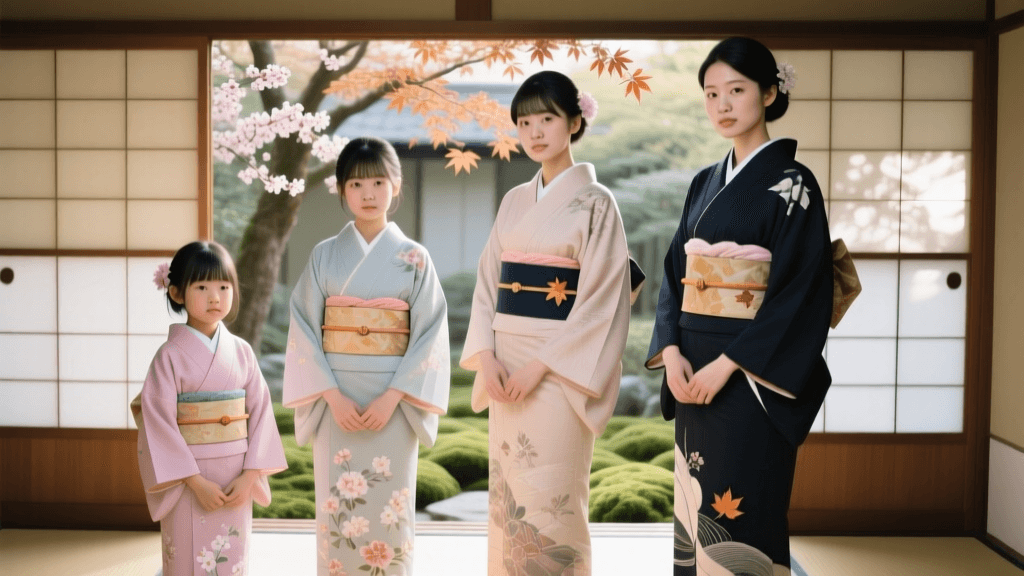
One of the most endearing traditions in Japan is Shichi-Go-San (Seven-Five-Three), celebrated annually in November. This rite of passage prays for the health and growth of young children. According to Japan Guide's comprehensive overview of the tradition, the festival specifically honors girls at ages three and seven, and boys at age five, reflecting historical beliefs about these being critical, vulnerable years of early childhood development.
For three-year-old girls, the 2026 trend heavily favors the hifu style. The child wears a standard kimono, but instead of a tightly bound, restrictive obi sash, a soft, padded vest-like garment called a hifu is tied over the kimono. This ensures the child remains comfortable throughout the long day of shrine visits and photography. By age seven, girls transition into wearing a more adult-like kimono with a proper, albeit simplified, obi sash, often featuring vibrant Yuzen dyeing techniques depicting cranes, pine trees, or modern floral motifs.
Five-year-old boys traditionally wear a haori (a short jacket) and hakama (pleated trousers) adorned with family crests (kamon). In 2026, rental shops in major cities like Tokyo and Kyoto report that parents are increasingly opting for bespoke, hand-woven silk hakama rather than synthetic blends, prioritizing breathability and authentic texture for their children's once-in-a-lifetime photographs.
Coming of Age: Seijin no Hi in 2026
Seijin no Hi (Coming of Age Day) is held on the second Monday of January, celebrating those who have reached the age of maturity. Following the legal redefinition of adulthood in Japan to age 18, the landscape of this holiday has shifted. However, as noted by cultural observers and Coming of Age Day resources, the vast majority of municipalities in 2026 continue to hold the official ceremonies and celebrations for 20-year-olds. This practical decision prevents the ceremony from clashing with the intense university entrance examination period that 18-year-olds face.
For young women, the undisputed star of Seijin no Hi is the furisode, characterized by its long, swinging sleeves that historically signaled an unmarried status. In 2026, the chufurisode (medium-length sleeves, approximately 100cm) remains the most popular choice due to its perfect balance of dramatic elegance and practical mobility. The garments are often heavily embroidered with gold and silver threads (shishu) and feature auspicious motifs like peonies, cherry blossoms, and flowing water. The styling is completed with elaborate hair ornaments (kanzashi) and premium zori sandals.
Young men traditionally wear a dark montsuki haori hakama (a crested jacket and trousers), though 2026 sees a continuing trend of young men opting for tailored Western suits with subtle traditional accessories, such as a silk haori worn over a modern waistcoat.
Weddings: Shiromuku, Uchikake, and Montsuki
Japanese weddings are a masterclass in sartorial transformation, with brides often changing outfits multiple times to reflect different phases of the ceremony. The most traditional and formal garment is the shiromuku, an entirely white ensemble including the kimono, obi, and accessories. White symbolizes purity and the bride's willingness to be "dyed" in the colors of her new family. The ensemble is paired with a tsunokakushi (a white hood that playfully "hides the horns" of jealousy) or a wataboshi (a white silk hat).
For the reception, brides typically change into an iro-uchikake, a heavily brocaded, colorful outer robe worn over a base kimono. In 2026, deep crimson, rich emerald, and even black uchikake with vibrant gold Nishijin-ori weaving are highly sought after. Grooms complement the bride's formality by wearing a black montsuki kimono featuring five family crests, paired with a striped hakama and a white haori jacket.
The Golden Years: Kanreki and Beyond
As individuals enter their later years, specific milestones are celebrated with distinct garments. The most famous is Kanreki, the 60th birthday, which marks the completion of one full cycle of the traditional sexagenary calendar. The celebrant traditionally wears a red chanchanko (a padded, sleeveless vest) and a red boshi (cap). The color red is deeply significant in Japanese folklore, believed to ward off evil spirits and symbolize a return to the innocence of infancy.
Subsequent milestones include Koki (70th birthday), Kiju (77th birthday), and Beiju (88th birthday). For these advanced milestones, families in 2026 often gift luxurious, lightweight silk kimonos in auspicious colors like deep purple or gold, prioritizing comfort, ease of dressing, and temperature regulation for elderly wearers.
Solemn Transitions: Mofuku and Mourning
At the end of life's journey, the mofuku (mourning kimono) is worn by close family members during funerals and subsequent memorial services. A formal mofuku is entirely black, made from matte silk, and bears five family crests. It is worn with a black obi, black tabi socks, and black zori. In 2026, while many attendees at Japanese funerals wear conservative black Western suits and dresses, the immediate family still strictly adheres to the mofuku tradition, maintaining a solemn, unbroken link to ancestral respect.
2026 Kimono Milestone Cost & Rental Comparison
Understanding the financial commitment of these milestones is crucial for families and travelers. The 2026 market reflects a premium on authentic, hand-crafted silk, alongside a robust and convenient rental infrastructure. Below is a comparison of average costs in Japanese Yen (JPY) for major life stage garments.
| Life Milestone | Typical Age | Primary Garment | 2026 Avg. Rental (JPY) | 2026 Bespoke Purchase (JPY) |
|---|---|---|---|---|
| Shichi-Go-San | 3, 5, 7 | Hifu / Hakama | ¥10,000 - ¥18,000 | ¥60,000 - ¥150,000 |
| Seijin no Hi | 20 | Furisode | ¥50,000 - ¥90,000 | ¥300,000 - ¥800,000+ |
| Wedding (Bride) | Varies | Shiromuku / Uchikake | ¥150,000 - ¥250,000 | ¥1,000,000 - ¥3,000,000+ |
| Kanreki | 60 | Red Chanchanko | ¥3,000 - ¥5,000 | ¥15,000 - ¥30,000 |
| Mourning | Varies | Mofuku (5-crest) | ¥15,000 - ¥25,000 | ¥250,000 - ¥400,000 |
Note: Rental packages in 2026 typically include professional dressing services (kitsuke), hair styling, and necessary accessories like tabi and zori.
Preservation, Sustainability, and Modern Heirlooms
As the Agency for Cultural Affairs, Government of Japan continues to promote the safeguarding of intangible cultural properties, the preservation of heirloom kimonos has become a significant focus for families in 2026. Traditional tansu (wooden chests) made from paulownia wood are still valued for their natural humidity-regulating properties, which protect delicate silk from mold and insect damage.
However, modern preservation also involves professional maruarai (a specialized technique where the kimono is taken apart, washed in water, and restretched). In 2026, eco-friendly, water-recycling maruarai facilities are gaining popularity, allowing families to clean decades-old furisode and tomesode without the harsh environmental impact of traditional chemical solvents. Furthermore, the "remake" movement—where damaged or stained heirloom kimonos are upcycled into modern dresses, jackets, or luxury bags—ensures that the textiles and the memories woven into them continue to be cherished by younger generations who may not wear traditional garments daily.
Ultimately, the kimono remains a living, breathing archive of Japanese life. Through every stitch, dye, and weave, it honors the past while gracefully adapting to the realities of 2026 and beyond.