Sustainable Japanese Indigo & Kakishibu Dyeing 2026
The Renaissance of Kusaki-Zome in 2026
As the global textile industry adapts to stringent new environmental regulations and circular fashion mandates in 2026, the ancient Japanese art of kusaki-zome (plant dyeing) has transitioned from a niche heritage craft to a cornerstone of sustainable apparel production. Modern artisans and eco-conscious brands are moving away from synthetic petrochemical dyes, turning instead to the profound botanical wisdom of Japan. According to the Ellen MacArthur Foundation's circular fashion framework, the elimination of toxic effluent and the adoption of biodegradable inputs are no longer optional but essential for market survival. In this landscape, Japanese natural dye plants—specifically Persicaria tinctoria (Japanese Indigo) and Diospyros kaki (Persimmon Tannin, or Kakishibu)—offer unparalleled sustainability, zero-waste potential, and breathtaking aesthetic depth.
This guide explores the 2026 methodologies for cultivating, extracting, and applying these two powerhouse botanical dyes. By integrating traditional Edo-period techniques with modern closed-loop water systems and bio-digital monitoring, today's dyers can achieve vibrant, colorfast textiles without harming local watersheds.
Persicaria Tinctoria: Mastering Cold-Water Indigo
Unlike tropical Indigofera tinctoria, which requires high heat and extensive chemical reduction to extract its blue pigment (indigotin), Japanese indigo (Persicaria tinctoria) thrives in temperate climates and can be processed using eco-friendly cold-water extraction. In 2026, the most sustainable approach to Japanese indigo involves the traditional sukumo (composted leaf) method, augmented by modern precision tools to eliminate guesswork and chemical waste.
The Sukumo Fermentation Process
The journey to a sustainable indigo vat begins in the late summer harvest. The leaves of the Persicaria tinctoria plant are separated from their stems, dried, and then composted over a 90-day period. During this time, the leaves are turned weekly and lightly moistened. This microbial fermentation breaks down the plant's cellular structure, converting the precursor indican into indigotin. The resulting sukumo is a dark, soil-like material that can be stored indefinitely, providing a highly concentrated, low-carbon-footprint dye source that requires no synthetic preservatives.
Building the Zero-Waste Alkaline Vat
To extract the pigment, the sukumo must be introduced to an alkaline environment. Historically, this was achieved using aku (wood ash lye). In 2026, sustainable studios utilize hardwood ash sourced from local, certified sustainable forestry operations or upcycled from artisan bakeries and pizza ovens. By leaching the ash with rainwater, dyers create a natural, chemical-free alkaline solution with a pH between 10.5 and 11.5.
To reduce the indigo and make it water-soluble, natural fructose or organic rice bran is added as a nutrient source for the indigo-reducing bacteria. Modern eco-studios now rely on affordable, waterproof digital ORP (Oxidation-Reduction Potential) meters. Maintaining an ORP between -750mV and -900mV ensures the vat remains active without the need for toxic synthetic hydrosulfite reducers. This biological reduction method keeps the vat alive for months, producing zero hazardous waste.
Kakishibu: Persimmon Tannin for Textile Longevity
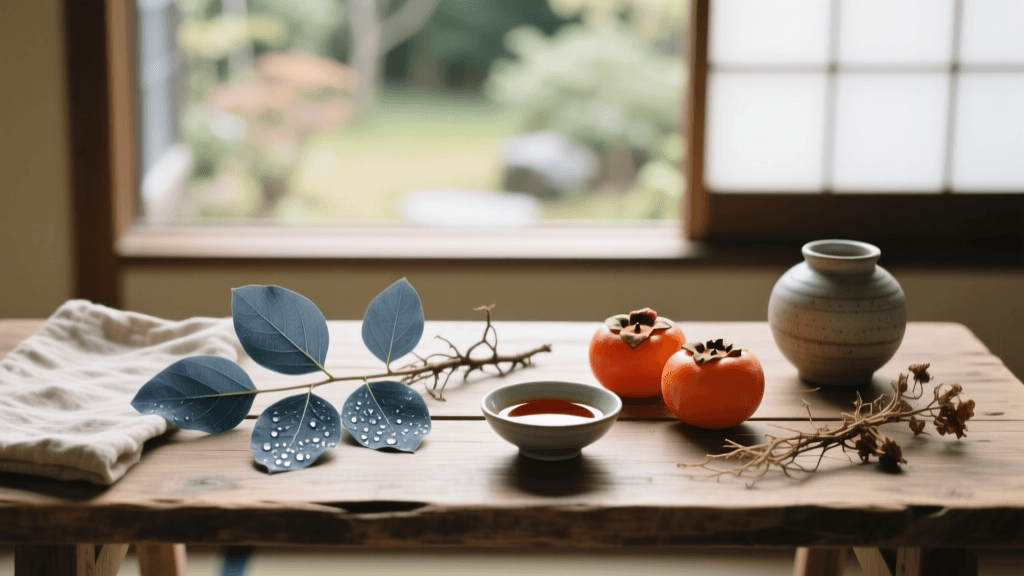
While indigo provides iconic color, Kakishibu (persimmon tannin) provides structural integrity and functional sustainability. Harvested from unripe, astringent persimmons in early summer, the fruit is crushed and fermented for two to three years. The resulting dark, amber liquid is rich in condensed tannins that polymerize when exposed to ultraviolet light and oxygen.
Replacing Toxic Water Repellents
One of the most significant sustainability breakthroughs in 2026 is the widespread use of Kakishibu as a natural bio-resin to replace PFAS (per- and polyfluoroalkyl substances) and fluorocarbon-based water repellents, which are now heavily restricted globally. When applied to organic cotton, hemp, or linen, the tannins bind to the cellulose fibers. Upon sun-curing, they form a microscopic, breathable, and water-resistant film. This not only imparts a beautiful, earthy brown hue that deepens over time but also significantly increases the tensile strength and rot-resistance of the fabric.
Artisans applying Kakishibu today utilize solar-assisted curing chambers. By exposing the treated textiles to concentrated UV light for 48 hours, the polymerization process is accelerated, locking the tannins into the fiber matrix and ensuring the garment remains naturally water-resistant through dozens of wash cycles.
Zero-Waste Mordants and Bio-Fixatives
A critical component of eco-friendly dyeing is the mordant—the substance used to bind the dye to the fiber. Historically, heavy metals like chrome and copper were used, but these are entirely incompatible with 2026's zero-toxin mandates. Today's Japanese natural dye practitioners rely on bio-mordants and upcycled mineral solutions that nourish the soil rather than poison it.
| Mordant Type | Source & Preparation | Environmental Impact | Best Used With |
|---|---|---|---|
| Soy Milk Protein | Organic, non-GMO soybeans blended and strained into milk. | 100% Biodegradable; adds nitrogen to composted effluent. | Cellulose fibers (cotton, hemp, linen) to bind tannins and indigo. |
| Oak Gall Tannin | Foraged oak galls simmered in water to extract tannic acid. | Wild-harvested; supports local forest ecosystems. | Pre-mordanting cellulose fibers for deep, complex botanical colors. |
| Rusted Iron Water | Upcycled scrap steel soaked in water and vinegar for 4 weeks. | Upcycles waste metal; iron is a natural soil micronutrient. | Saddening (darkening) kakishibu, madder, and logwood dyes. |
| Alum (Potassium Aluminum Sulfate) | Mined mineral salt, used in strictly controlled, low-dose baths. | Low toxicity; effluent can be neutralized with baking soda. | Protein fibers (silk, wool) and bright botanical yellows/reds. |
Designing a Closed-Loop Dye Studio
To truly honor the Japanese philosophy of mottainai (a sense of regret concerning waste), modern dye studios in 2026 are designed as closed-loop ecosystems. The Japan's Ministry of Economy, Trade and Industry (METI) has increasingly highlighted traditional crafts that integrate with modern environmental tech, and water reclamation is at the forefront of this movement.
Greywater Filtration via Biochar and Mycelium
After a dye bath is exhausted, the remaining water—rich in plant sugars, tannins, and trace minerals—must be treated before it can be reused or returned to the earth. Contemporary eco-studios utilize multi-stage bio-filters. The effluent is first passed through a chamber of activated biochar, which absorbs residual pigment and neutralizes pH fluctuations. Next, the water flows through a mycelium network (fungi) cultivated on agricultural straw. The mycelium breaks down complex organic compounds, effectively purifying the water. The resulting greywater is entirely safe for irrigating the very indigo and persimmon orchards that supplied the dye, completing a perfect biological circle.
Sourcing Regenerative Fibers
The sustainability of the dye is only as strong as the canvas it is applied to. In 2026, the gold standard for Japanese natural dyeing involves pairing Persicaria tinctoria and Kakishibu with regenerative agricultural fibers. Hemp and flax (linen) grown in cover-cropped, no-till soils absorb the botanical dyes with remarkable clarity. Because these fibers require significantly less water and zero pesticides compared to conventional cotton, the entire lifecycle of the garment—from seed to dye vat to final wear—operates in deep ecological harmony.
Conclusion: Heritage as the Future of Fashion
The integration of Japanese natural dye plants into modern, sustainable textile production is not merely a nostalgic retreat to the past; it is a highly sophisticated, scientifically grounded approach to the future of fashion. By mastering the cold-water extraction of Persicaria tinctoria, harnessing the bio-resin properties of Kakishibu, and utilizing zero-waste mordants and closed-loop water systems, artisans and brands in 2026 are proving that true luxury lies in ecological responsibility. As resources continue to shift and environmental awareness deepens, the profound wisdom of kusaki-zome offers a vibrant, enduring blueprint for the global textile industry. For further reading on botanical dye chemistry and historical techniques, Maiwa's comprehensive botanical dye archives remain an invaluable resource for both novice and master dyers alike.