Vintage Silk Kimono Preservation & Archival Care 2026
Introduction to Vintage Silk Kimono Preservation
Owning a vintage silk kimono from the Taisho or early Showa era is akin to holding a piece of living history. However, as we navigate the preservation landscape in 2026, collectors and enthusiasts face unprecedented environmental challenges. Fluctuating global humidity levels, increased ultraviolet exposure, and the natural aging of protein fibers demand a rigorous, museum-grade approach to garment care. This comprehensive guide outlines the most current, scientifically backed methods for preserving, storing, and restoring antique Japanese silk garments, ensuring they survive for future generations.
The Science of Silk Degradation
To properly care for a kimono, one must first understand the material. Silk is composed primarily of fibroin, a structural protein held together by peptide bonds. Over decades, these bonds weaken due to hydrolysis (reaction with water), photodegradation (UV light exposure), and oxidation. When you notice vintage silk shattering or becoming brittle, you are witnessing the catastrophic failure of the fibroin polymer chain. According to the Canadian Conservation Institute, protein fibers are particularly susceptible to alkaline environments and high humidity, which accelerate hydrolytic degradation. Therefore, the foundational rule of 2026 kimono preservation is strict environmental stabilization.
Ideal Climate Control for Archival Storage
The days of simply tossing a kimono into a cedar chest in an uninsulated attic are over. Modern preservation requires precise climate control. For 2026, the consensus among textile conservators is to maintain a stable temperature between 18°C and 20°C (64°F to 68°F) with a relative humidity (RH) strictly held between 45% and 55%.
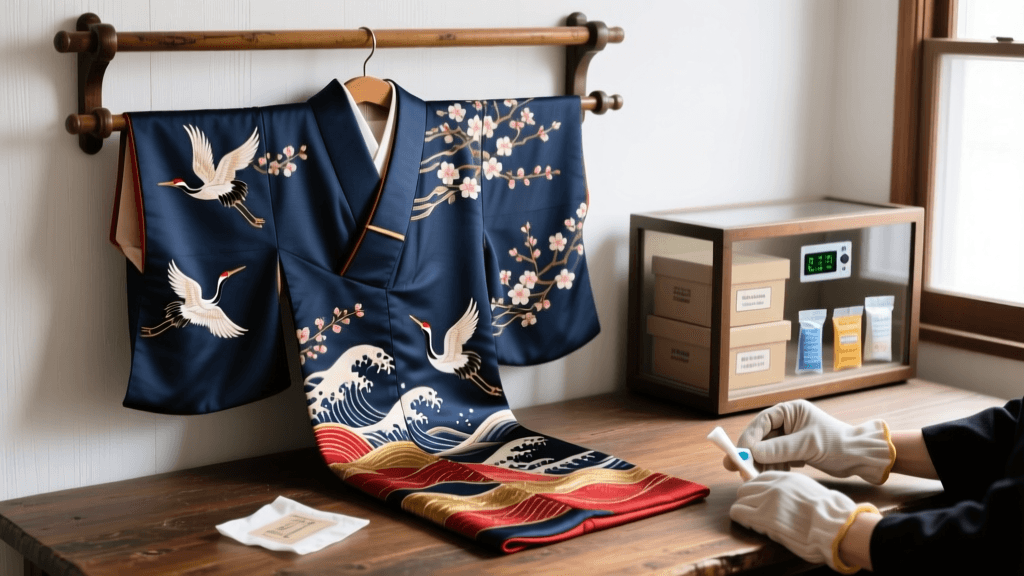
If the RH drops below 40%, the silk fibers desiccate and become prone to mechanical fracture during folding and unfolding. If the RH exceeds 60%, you risk the proliferation of mold spores, which feed on the sericin (silk gum) and organic dyes. Investing in a smart, Wi-Fi-enabled thermo-hygrometer is no longer optional for serious collectors. Place these sensors directly inside your storage enclosures to monitor micro-climates, ensuring your HVAC or localized dehumidification systems are performing adequately throughout seasonal shifts.
Step-by-Step Archival Folding and Wrapping
Traditional kimono folding, known as the tato method, is designed to align the seams and distribute the fabric evenly. However, traditional folding creates hard, permanent creases that can lead to fiber breakage over decades. In 2026, museum professionals advocate for a modified archival folding technique.
The Modified Archival Fold
- Surface Preparation: Lay the kimono face down on a clean, flat surface covered with unbleached, washed muslin or a clean cotton sheet. Ensure your hands are clean and free of lotions, or wear powder-free nitrile gloves.
- Tissue Padding: Use unbuffered, acid-free archival tissue paper. (Note: Buffered tissue contains calcium carbonate, which is excellent for cotton and linen but can damage protein fibers like silk and wool over time). Roll the tissue paper into loose, cigar-shaped tubes.
- Crease Mitigation: Place the tissue tubes along the major fold lines of the kimono before folding. This creates a soft, rounded roll at the crease rather than a hard, sharp edge, drastically reducing stress on the fibroin structure.
- The Final Wrap: Once folded into the traditional rectangular shape, wrap the entire garment in a sheet of unbuffered acid-free tissue or a custom-washed, unbleached muslin cloth. Never use standard plastic dry-cleaning bags, as they trap off-gassed chemicals and moisture, leading to localized micro-climates that encourage mold.
Storage Enclosures: Material Comparison
Choosing the right outer enclosure is critical. While the traditional Japanese kiribako (paulownia wood box) has been used for centuries, modern collectors have several options. Below is a comparison of the most common storage solutions available in 2026.
| Storage Material | Pros | Cons | Best Use Case |
|---|---|---|---|
| Traditional Paulownia Wood (Kiribako) | Naturally regulates humidity; repels insects; culturally authentic; beautiful aesthetic. | Expensive; requires periodic sanding; wood can become acidic over many decades if unsealed. | High-value, display-worthy antique kimonos in stable indoor environments. |
| Archival Corrugated Polypropylene | Chemically inert; lightweight; affordable; completely acid-free and moisture-resistant. | Lacks aesthetic appeal; offers no natural humidity buffering; bulky to store. | Long-term deep storage, off-site archiving, and large collections. |
| Cedar Chests | Readily available; natural aromatic pest deterrent. | Cedar oils can stain silk and degrade metallic threads; wood acidity can transfer to textiles. | Not recommended for direct contact. Use only if lined with a heavy moisture barrier and muslin. |
| Standard Plastic Bins | Cheap; waterproof; easily stackable. | Traps moisture; off-gasses volatile organic compounds (VOCs); high risk of condensation and mold. | Emergency transport only. Never use for long-term textile preservation. |
Stain Triage: Handling Shimi and Metallic Tarnish
Vintage kimonos often present with shimi (age spots, water stains, or oxidized organic dyes) and tarnished metallic threads (surihaku or koma-nui). The instinct to aggressively clean these garments is a common pitfall. The Metropolitan Museum of Art Textile Conservation Department emphasizes that historical stains are sometimes part of the garment provenance and should only be treated if they pose an active chemical threat to the surrounding fibers.
Dealing with Organic Stains
If a stain is actively acidic and degrading the silk (often seen as a brown spot surrounded by brittle, shattering fabric), intervention is required. However, aqueous cleaning of vintage silk is highly risky due to the potential for dye bleeding and water-ring formation. In 2026, professional conservators utilize specialized, non-polar solvents and localized suction tables to extract degrading compounds without immersing the garment. For the home collector, the golden rule is: do not apply water, club soda, or commercial stain removers. Seek a textile conservator who specializes in Japanese historical garments.
Preserving Metallic Threads
Gold and silver threads in vintage kimonos are rarely solid metal; they are typically thin strips of lacquered paper or synthetic film wrapped around a silk or cotton core. Tarnish on these threads is often actually the degradation of the lacquer or the underlying paper. Attempting to polish these threads with silver polish or abrasive cloths will strip the metallic layer entirely, causing irreversible loss. Store garments with heavy metallic embroidery flat if possible, or pad the folds heavily to prevent the metallic strips from cracking and flaking off at the crease points.
Pest Management Without Toxic Chemicals
Silverfish, carpet beetles, and clothes moths are the natural enemies of protein fibers. Historically, collectors relied on naphthalene or paradichlorobenzene (traditional mothballs) and camphor. In 2026, these chemicals are widely condemned in the conservation community. Not only are they hazardous to human health, but their aggressive off-gassing can chemically alter silk dyes and accelerate the oxidation of metallic threads.
Modern pest management relies on Integrated Pest Management (IPM) strategies:
- Pheromone Traps: Use sticky traps baited with specific insect pheromones to monitor for the presence of male moths and beetles. This acts as an early warning system rather than a primary eradication method.
- Diatomaceous Earth: Apply food-grade diatomaceous earth in the crevices of your storage room (never directly on the garment). This natural powder destroys the exoskeletons of crawling insects without introducing toxic fumes.
- Anoxic Treatment: If an active infestation is discovered, the safest eradication method is anoxic (oxygen-free) treatment. Conservators place the infested garment in a specialized barrier film envelope, flush it with argon or nitrogen gas, and seal it for 21 days. This safely suffocates all life stages of the pest without leaving toxic residues or harming the silk.
- Freezing: While freezing is a common museum tactic for pest eradication, it must be done with extreme caution on vintage silk. Rapid temperature drops can cause moisture condensation and shock brittle fibers. If you must use a freezer, seal the kimono in a vapor-proof barrier, freeze it rapidly to -20°C for 72 hours, and allow it to thaw slowly to room temperature before opening the seal to prevent condensation.
Handling and Display Protocols
When it is time to appreciate your collection, proper handling is paramount. Never hang a vintage silk kimono on a standard wooden or wire hanger. The weight of the wet or even dry silk, combined with the heavy lining and decorative elements, will cause catastrophic stretching and tearing at the shoulders.
For short-term display, use a specialized kimono stand (iko) with wide, padded horizontal bars. If you must display the garment on a mannequin, ensure the mannequin is padded with polyester batting and covered in a neutral cotton jersey to support the weight of the sleeves and body evenly. Limit display time to a maximum of three to six months, and ensure the display area is entirely devoid of direct sunlight, utilizing UV-filtering window films and LED lighting with zero ultraviolet emission.
Conclusion
Preserving a vintage silk kimono in 2026 requires a departure from outdated household habits and an embrace of scientific conservation principles. By controlling the micro-climate, utilizing unbuffered archival materials, modifying traditional folding techniques, and abandoning toxic pest deterrents, collectors can halt the march of time on these magnificent textiles. Whether you possess a fragile Meiji-era uchikake or a vibrant Taisho-era haori, treating these garments with museum-level respect ensures that the artistry of Asian textile traditions remains vibrant and intact for the centuries to come.