Vintage Silk Kimono Preservation: 2026 Archival Storage Guide
The Delicate Reality of Heirloom Silk in 2026
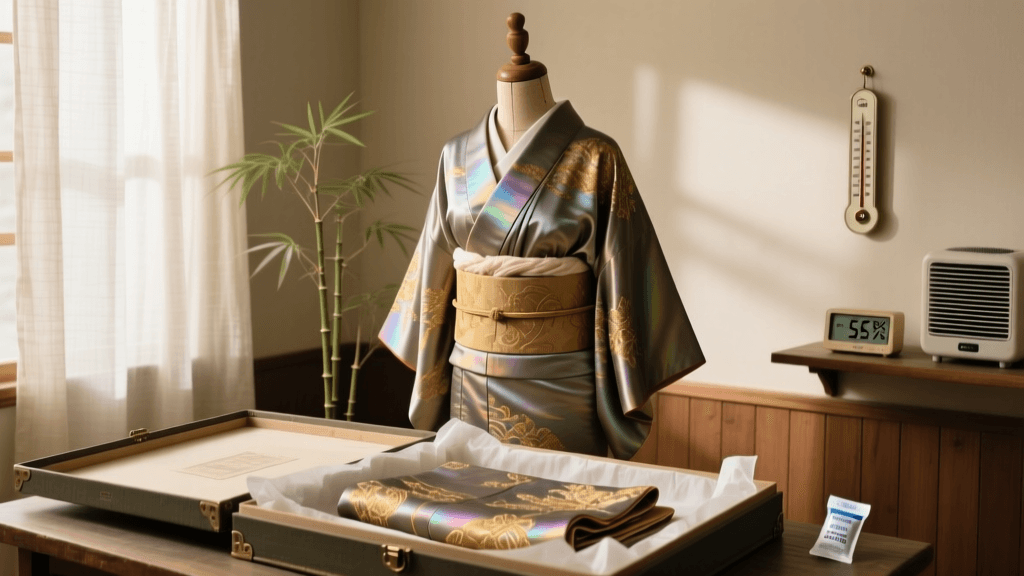
Owning a vintage silk kimono from the Meiji, Taisho, or early Showa eras is akin to holding a piece of living history. However, as we navigate the climate fluctuations of 2026, preserving these protein-based textiles has become more challenging than ever. Extreme weather patterns, unpredictable indoor humidity spikes, and evolving pest behaviors demand a rigorous, science-backed approach to garment care. Whether you possess a heavily embroidered uchikake (wedding kimono) or a delicate yuzen-dyed everyday garment, improper storage can lead to irreversible damage within a single season.
Unlike modern synthetic blends, traditional Japanese silk is highly susceptible to environmental stressors. The dyes used in antique garments are often fugitive, meaning they fade rapidly when exposed to ultraviolet light or shift in color when exposed to alkaline substances. To ensure your collection survives for future generations, you must adopt museum-grade archival storage techniques tailored specifically for Asian textile conservation.
The Chemistry of Silk: Why Unbuffered is Non-Negotiable
One of the most common mistakes collectors make is using the wrong type of acid-free tissue paper. In the archival world, there are two main categories: buffered and unbuffered. Buffered tissue contains an alkaline reserve, usually calcium carbonate, designed to neutralize acids that naturally emanate from degrading cellulose fibers like cotton and linen.
Silk, however, is a protein fiber composed of fibroin. Protein fibers are naturally slightly acidic and are highly sensitive to alkaline environments. Storing a vintage silk kimono in buffered tissue will cause a chemical reaction that weakens the fibroin structure, leading to brittleness and eventual disintegration. According to guidelines published by the Canadian Conservation Institute (CCI), protein fibers such as silk and wool must always be stored in unbuffered, pH-neutral archival materials to prevent alkaline hydrolysis.
Essential Archival Storage Materials for 2026
To build a proper preservation environment for your kimono, you must invest in specialized materials. Standard plastic bins and cardboard boxes off-gas volatile organic compounds (VOCs) and trap moisture, creating a breeding ground for mold. Here is your 2026 shopping list for museum-quality storage:
- Unbuffered Acid-Free Tissue Paper: Brands like Lineco or Gaylord Archival offer unbuffered tissue specifically formulated for protein fibers. Purchase sheets that are at least 20 x 30 inches to minimize seams when wrapping.
- Metal-Edge Archival Storage Boxes: Avoid plastic entirely. Archival corrugated board boxes with metal edges provide structural rigidity and allow the textile to "breathe" while blocking light and dust. Ensure the box is large enough to accommodate the kimono with minimal folding.
- Renewable Silica Gel Cassettes: To combat 2026's humidity spikes, place indicator silica gel cassettes (such as Eva-Dry) inside the storage boxes. These can be recharged in a microwave or oven when the indicator beads change color, ensuring a stable microclimate.
- Unbleached Cotton Muslin: For an extra layer of protection, wrap the tissue-bound kimono in washed, unbleached muslin before placing it in the archival box.
The Archival Folding and Padding Technique
The traditional Japanese method of folding a kimono is known as the tato fold. While this method is geometrically elegant, it creates hard, sharp creases. Over decades, the weight of the folded silk pressing against these sharp creases causes the fibers to snap—a phenomenon known as "shattered silk."
To adapt the tato fold for long-term archival storage, you must introduce padding to create soft, rolled folds rather than sharp creases.
Step-by-Step Padding Protocol:
- Prepare the Surface: Lay a clean sheet of unbleached muslin over a large, flat table. Ensure your hands are clean, dry, and free of lotions. Cotton gloves are recommended, but ensure they are snug; loose gloves can catch on delicate metallic threads.
- Align the Garment: Lay the kimono face down. Smooth out any wrinkles gently with your fingertips, never pulling the fabric.
- Create Tissue Rolls: Take several sheets of unbuffered tissue paper and roll them into loose cylinders, about the thickness of a pool noodle.
- Pad the Folds: As you execute the traditional tato folding steps (folding the sleeves in, then folding the body in thirds), place a tissue roll inside every major fold. This prevents the silk from creasing sharply against itself.
- Wrap and Seal: Once folded, wrap the entire bundle in two layers of unbuffered tissue, followed by the muslin cloth. Place it gently into your metal-edge archival box.
Pest Prevention: Ditching the Toxic Chemicals
Historically, collectors relied on mothballs containing naphthalene or paradichlorobenzene to protect textiles. In 2026, these chemicals are strictly avoided in professional conservation. Not only are they hazardous to human health, but the gases they emit can react with the metallic threads (often used in obi sashes and formal kimono embroidery), causing them to tarnish and blacken irreversibly.
Instead, modern preservation relies on exclusion and environmental control. The American Institute for Conservation (AIC) strongly advises against the use of chemical pesticides directly on or near historical textiles. If you suspect an active infestation of webbing clothes moths or carpet beetles, the safest eradication method is the freezing protocol:
- Seal the kimono in a polyethylene bag, removing as much air as possible.
- Place the bag in a deep freezer set to at least -20°C (-4°F) for 72 hours.
- Remove the bag and let it thaw at room temperature for 24 hours without opening it (to prevent condensation from forming on the silk).
- Repeat the freezing cycle once more to ensure all eggs and larvae are eradicated.
For passive deterrence, you may place small sachets of dried lavender or untreated cedar blocks in the storage room, but never allow these botanicals to touch the silk directly, as their natural oils can stain the fabric.
Environmental Monitoring: The 2026 Standards
Maintaining a stable microclimate is the cornerstone of textile preservation. Fluctuations in temperature and relative humidity (RH) cause silk fibers to expand and contract, leading to mechanical fatigue. Use a digital datalogger inside your storage space to monitor these metrics continuously.
| Parameter | Ideal Archival Range | Acceptable Residential Range | Danger Zone |
|---|---|---|---|
| Temperature | 65°F - 68°F (18°C - 20°C) | 60°F - 72°F (15°C - 22°C) | Above 80°F (27°C) |
| Relative Humidity | 45% - 50% | 40% - 55% | Below 30% or Above 65% |
| Light Exposure | 0 Lux (Total Darkness) | Under 50 Lux (Brief Display) | Direct Sunlight or >150 Lux |
"The greatest enemy of antique silk is not time, but fluctuation. A stable 55% humidity is vastly superior to a humidity level that bounces between 40% and 60% on a weekly basis." — Textile Conservation Best Practices, 2026.
Identifying and Managing "Shattered Silk"
If you are acquiring or restoring kimonos from the late 19th to early 20th centuries, you must be aware of "weighted silk." During this era, manufacturers treated silk with metallic salts (like tin chloride) to increase its weight, improve its drape, and make it more profitable to sell by the pound. Over time, these metallic salts catalyze the degradation of the silk, causing it to become brittle, crack, and literally shatter into dust along the fold lines.
Unfortunately, the chemical degradation of weighted silk cannot be reversed. If you notice a kimono that sounds like crisp paper when handled, or if you find fine black or brown dust in the storage box, the garment is actively shattering. At this stage, stop handling the garment immediately. Do not attempt to clean, wash, or iron it. The only viable preservation strategy is to consult a professional textile conservator who can stabilize the garment by mounting it onto a supportive, custom-dyed archival backing using specialized, non-invasive stitching techniques.
Conclusion: A Commitment to the Future
Preserving a vintage silk kimono is an act of cultural stewardship. By abandoning outdated, toxic storage methods and embracing the unbuffered, climate-controlled archival standards of 2026, you ensure that the intricate artistry of Asian textile heritage remains vibrant and intact. Invest in the proper materials, monitor your environment diligently, and treat every fold with the respect that a century-old masterpiece deserves.