Advanced Kimono Storage Preservation Guide for 2026
Introduction to Kimono Preservation in 2026
The kimono is far more than a traditional Japanese garment; it is a woven canvas of cultural history, meticulous craftsmanship, and artistic expression. As we navigate through 2026, the global appreciation for vintage and antique kimonos has surged, with collectors and museums alike seeking to preserve these delicate textiles for future generations. However, managing a kimono collection requires much more than simply hanging these garments in a closet. Silk, the primary fiber used in high-quality kimonos, is a protein-based material that is inherently vulnerable to environmental fluctuations, light exposure, and biological threats.
Effective kimono storage preservation and collection management demand a synergy of traditional Japanese wisdom and modern archival science. In this comprehensive guide, we will explore the most current, museum-grade preservation techniques available in 2026, ensuring your collection remains vibrant, structurally sound, and historically intact.
The Science of Silk Degradation
To properly preserve a kimono, one must first understand the material. Silk is composed of fibroin proteins held together by sericin. When exposed to high humidity, the hydrogen bonds within the silk can break down, leading to a loss of tensile strength. Conversely, excessively dry environments cause the fibers to become brittle, resulting in 'shattering'—a catastrophic failure where the silk literally cracks along fold lines.
Furthermore, the dyes used in traditional kimonos, whether botanical or early synthetic, are highly susceptible to photo-oxidation. Ultraviolet (UV) and even intense visible light can cause irreversible fading. According to the Victoria and Albert Museum's conservation guidelines, light damage is cumulative and cannot be reversed, making dark, controlled storage an absolute necessity for long-term preservation.
2026 Smart Climate Control for Textile Archives
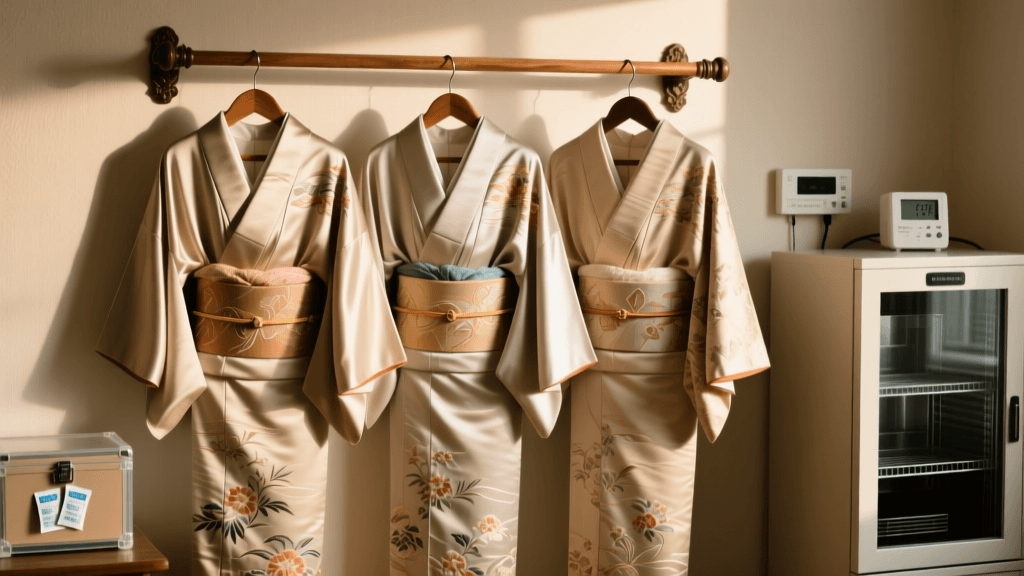
The cornerstone of any textile preservation strategy is strict climate control. For silk kimonos, the ideal storage environment is a stable temperature of 18°C to 20°C (64°F to 68°F) with a relative humidity (RH) maintained strictly between 45% and 55%. In 2026, achieving this level of precision in a residential or private archive setting is easier than ever, thanks to advancements in smart home environmental sensors.
Modern collectors are moving away from basic analog hygrometers and integrating Wi-Fi-enabled smart sensors, such as the latest iterations of SensorPush or Govee Wi-Fi Gateway systems, directly into their storage rooms or archival cabinets. These devices offer real-time data logging, pushing instant alerts to your smartphone if the RH fluctuates by even 2%. Rapid fluctuations in humidity are often more damaging than a steady, slightly sub-optimal baseline, as the constant expansion and contraction of the silk fibers induce mechanical stress.
For dedicated collection rooms, investing in a commercial-grade desiccant dehumidifier paired with a smart humidifier ensures that the environment remains perfectly balanced, regardless of the seasonal weather changes outside.
Archival Materials: Tansu, Tatou, and Acid-Free Alternatives
Historically, kimonos were stored in tansu (traditional Japanese chests) crafted from paulownia wood. Paulownia is highly prized in Asian traditions because it is lightweight, resistant to warping, and possesses natural hygroscopic properties that help buffer humidity changes. It also contains natural compounds that deter certain pests.
However, sourcing authentic, high-quality antique paulownia tansu in 2026 can be prohibitively expensive, and not all modern reproductions meet archival standards. Today's collectors often utilize a hybrid approach, combining traditional aesthetics with modern archival science. According to the American Institute for Conservation's Textile Wiki, any material coming into direct contact with historic textiles must be chemically stable and free of acidic off-gassing.
Storage Material Comparison Chart
| Storage Material | Pros | Cons | Best Use Case in 2026 |
|---|---|---|---|
| Antique Paulownia Tansu | Traditional, natural humidity buffering, pest-resistant. | Expensive, heavy, may harbor old pests if not treated. | Display rooms and high-end private collections. |
| Archival Corrugated Blue Board | Acid-free, lightweight, customizable, affordable. | Lacks aesthetic appeal, offers no humidity buffering. | Long-term deep storage and museum archives. |
| Unbleached Cotton (Sarashi) | Breathable, traditional, washable, soft. | Does not block light or dust completely. | Wrapping individual kimonos inside boxes. |
| Plastic Bins (Polypropylene) | Waterproof, pest-proof, inexpensive. | Traps moisture, risks mold, off-gasses if not pure PP. | Only for short-term transport or flood-prone areas. |
When wrapping the kimono, avoid the glossy, commercially printed tatou (wrapping papers) often provided by modern retailers, as the inks and clay coatings can transfer to the silk or introduce acidity. Instead, wrap each garment in washed, unbleached cotton muslin or acid-free, unbuffered archival tissue paper.
The Hon-Datami Folding Method and Crease Prevention
Unlike Western garments, kimonos are designed to be folded, not hung. Hanging a heavy silk kimono, especially one with intricate embroidery or metallic threads, places immense stress on the shoulder seams and can lead to permanent distortion of the fabric. The traditional folding method, known as hon-datami, aligns the seams perfectly to distribute the weight evenly.
However, the primary enemy of folded silk is the hard crease. Over time, a sharp fold will cause the silk fibers to break. To combat this in 2026, preservationists employ a technique called 'padding the folds.' After folding the kimono according to the hon-datami method, small, loosely rolled 'sausages' of acid-free tissue paper are placed inside every fold line. This creates a gentle curve rather than a sharp crease, drastically reducing mechanical stress on the fibroin proteins.
Additionally, the wrapped and padded kimono should never be stored at the bottom of a heavy stack. The weight of multiple garments will compress the folds and negate the padding. Store kimonos in single layers within shallow archival boxes or dedicate specific, shallow drawers in your tansu to individual pieces.
Modern Pest Management: Beyond Chemical Mothballs
The larvae of the webbing clothes moth (Tineola bisselliella) and the carpet beetle are the natural predators of silk. Historically, collectors relied on naphthalene or paradichlorobenzene mothballs. In 2026, these toxic chemicals are strongly discouraged by conservation professionals. Not only are they hazardous to human health, but the volatile organic compounds (VOCs) they release can actually accelerate the degradation of silk dyes and metallic threads.
Modern integrated pest management (IPM) for kimono collections relies on prevention and non-toxic monitoring:
- Pheromone Traps: Sticky traps baited with species-specific pheromones are placed in the storage room to monitor and intercept male moths, disrupting the breeding cycle without introducing chemicals to the textiles.
- Natural Repellents: Blocks of untreated Japanese cedar (sugi) or camphor wood can be placed in the room (not touching the garments) to provide a mild, natural deterrent.
- Anoxia Treatment: If an active infestation is suspected, the affected kimono should be sealed in an oxygen-impermeable barrier film with an oxygen scavenger. Depriving the pests of oxygen for 21 days will eradicate all life stages of the insect without harming the silk.
Mushiboshi: The Traditional Airing Ritual
Preservation is not a passive act; it requires active, routine management. In Japanese tradition, the practice of mushiboshi (literally 'bug airing') involves taking kimonos out of storage to air them out, inspect them for damage, and refold them to shift the crease lines.
The ideal time for mushiboshi is during the dry, crisp days of late autumn (typically late October to November in the Northern Hemisphere). During this process, the kimonos are laid flat on clean cotton sheets in a shaded, well-ventilated room. Direct sunlight must be strictly avoided. This annual ritual allows trapped moisture to escape, gives the collector a chance to inspect the silk for early signs of mold or pest activity, and ensures that the garments remain a living, cared-for part of your cultural collection.
Conclusion
Preserving a kimono collection in 2026 requires a delicate balance of respecting Asian traditions and embracing modern archival science. By maintaining strict climate control, utilizing chemically stable storage materials, padding folds, and practicing non-toxic pest management, collectors can ensure that these magnificent silk garments survive to tell their stories for centuries to come.