Chinese Fashion History Academic Programs & Digital Archives 2026

The Evolution of Chinese Fashion History Education in 2026
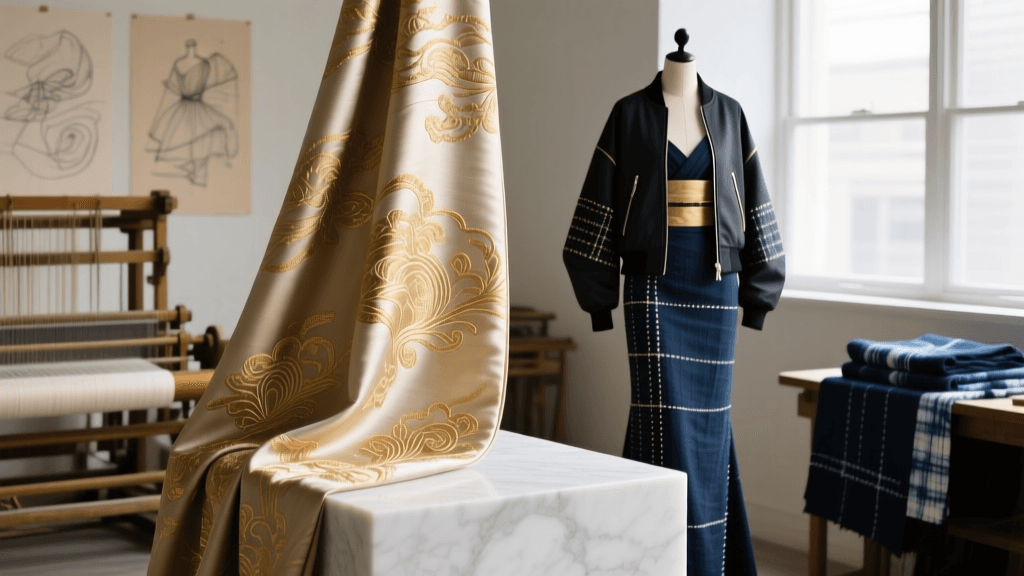
The academic study of Chinese fashion history has undergone a radical transformation over the last decade. In 2026, the discipline is no longer confined to the quiet corners of art history departments or the dusty archives of textile museums. Today, it represents a vibrant, interdisciplinary field where material science, digital humanities, and advanced 3D simulation converge. Driven by the massive commercial and cultural success of the Xin Zhongshi (新中式) or 'New Chinese Style' movement, universities and research institutes are pouring unprecedented resources into the study of ancient Chinese garments, weaving techniques, and sartorial customs.
For students, historians, and digital fashion designers, understanding the structural engineering of a Ming dynasty Mamianqun (horse-face skirt) or the complex fluid dynamics of Han dynasty Luo (silk gauze) requires more than just reading historical texts. It requires access to specialized academic programs, high-fidelity digital archives, and advanced fabric drape analysis software. This comprehensive guide explores the premier academic institutions, digital resources, and research methodologies defining Chinese fashion history education in 2026.
Leading Academic Institutions for Chinese Dress Research
When pursuing advanced degrees or research fellowships in Asian traditional garments, a few key institutions stand at the global forefront. These universities have established dedicated laboratories that blend historical scholarship with cutting-edge textile engineering.
Donghua University (Shanghai)
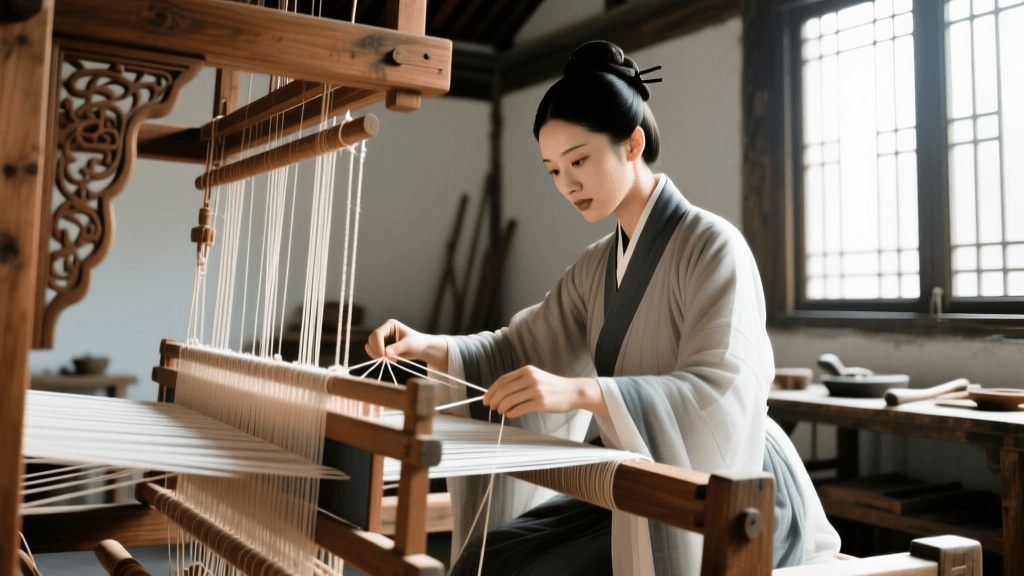
Donghua University remains the undisputed vanguard of textile and fashion research in China. Home to the Key Laboratory of Textile Science & Technology, Donghua's 2026 curriculum heavily emphasizes the digital reconstruction of historical textiles. Their Master's and Ph.D. programs in Fashion History and Theory require students to engage in physical textile replication alongside digital archiving. Researchers here frequently utilize AI-driven pattern recognition to decode fragmented weaving structures from the Silk Road, specifically focusing on Tang dynasty Kesi (silk tapestry) and Song dynasty Zhuanghua brocades.
Tsinghua University (Beijing)
The Academy of Arts & Design at Tsinghua University approaches Chinese fashion history from a sociological and aesthetic perspective. In 2026, their research labs are deeply invested in the semiotics of traditional dress and how ancient color theories (such as the Five Elements color system) are being algorithmically mapped for modern Xin Zhongshi design. Tsinghua is an excellent destination for researchers interested in the intersection of ancient imperial dress codes and contemporary cultural identity.
China National Silk Museum (Hangzhou)
While primarily a museum and research institute rather than a degree-granting university, the China National Silk Museum (CNSM) offers some of the most prestigious postdoctoral fellowships and visiting scholar programs in the world. Their Conservation and Research Department is pioneering the use of non-invasive spectroscopy to analyze the degradation of ancient dyes, providing invaluable data for historians attempting to accurately colorize digital reconstructions of historical garments.
Digital Archiving and 3D Fabric Drape Analysis
One of the most significant academic breakthroughs in recent years is the application of 3D fabric drape analysis to historical garments. Ancient Chinese textiles, particularly the ultra-lightweight silk gauzes unearthed from the Mawangdui tombs, possess unique physical properties that behave differently from modern commercial fabrics. In 2026, academic researchers use advanced physics engines to simulate the exact drape, shear, and tensile strength of these historical weaves.
By inputting precise physical data—such as the thread count, warp-to-weft ratio, and gram-per-square-meter (GSM) weight of a replicated historical textile—into simulation software, researchers can observe how a Han dynasty Shenyi (deep robe) would have moved in real-time. This methodology has debunked several long-held art historical assumptions, proving that certain painted folds in ancient scroll paintings were highly accurate representations of specific regional weaving techniques rather than mere artistic stylization.
Software Comparison for Historical Garment Research
Choosing the right software is critical for academic accuracy. Below is a comparison of the primary 3D simulation tools used in Chinese fashion history research programs in 2026.
| Software Platform | Primary Academic Use Case | Drape Accuracy for Historical Silks | Learning Curve |
|---|---|---|---|
| CLO 3D (v8.2) | Pattern drafting, structural analysis of flat-cut garments like the Ruqun. | Exceptional; allows custom physical property mapping for Xiangyunsha (gambiered silk). | Moderate |
| Marvelous Designer | High-fidelity visual rendering for museum displays and digital exhibitions. | High; excellent for visualizing the volumetric drape of heavily embroidered Ming robes. | Moderate |
| Blender (Cloth Sim) | Open-source academic research, integrating garments into 3D scanned historical environments. | Variable; requires manual node-based physics tweaking to simulate ancient Luo gauze accurately. | Steep |
Essential Digital Archives and Databases
Primary source access is the lifeblood of academic research. Fortunately, the digitization of Asian textile collections has accelerated, providing global scholars with high-resolution, multi-spectral imaging of fragile garments.
- The Metropolitan Museum of Art's Asian Art Department: The Metropolitan Museum of Art's Asian Art Department offers an unparalleled open-access database. Their high-resolution downloads of Qing dynasty court robes and early Buddhist textile fragments are essential for researchers studying the migration of motifs across the Silk Road.
- Bunka Gakuen Library (Tokyo): Though located in Japan, this institution holds one of the world's most significant collections of Ming and Qing dynasty textiles. Their digital portal provides detailed macro-photography of weave structures, which is invaluable for textile engineering students attempting to replicate historical looms.
- Digital Silk Road Project: An international collaborative database that maps the exchange of textile technologies, motifs, and raw materials across Eurasia. It is heavily utilized by Ph.D. candidates tracing the evolution of the Mamianqun from nomadic riding skirts to Han Chinese urban fashion.
The Impact of the Xin Zhongshi Movement on Academia
The commercial explosion of the Xin Zhongshi (New Chinese Style) movement has had a profound, symbiotic impact on academic research. As global luxury brands and domestic Chinese labels rush to incorporate authentic historical elements into their 2026 collections, they are increasingly funding university research grants to ensure historical accuracy and avoid cultural appropriation.
'The commercial demand for authentic New Chinese Style has effectively subsidized the digital preservation of endangered weaving techniques. We are seeing a renaissance in the academic study of regional looms that were on the verge of being forgotten.' — Journal of Asian Textile Humanities, Spring 2026 Issue
This influx of private funding has allowed universities to purchase advanced 3D scanning equipment and hire master weavers as resident scholars, bridging the gap between intangible cultural heritage and modern digital archiving.
Actionable Guide: Enrolling and Accessing Resources in 2026
For prospective students and independent researchers looking to enter this field in 2026, strategic preparation is essential. Here is a practical roadmap to accessing these elite academic circles:
1. Build a Technical and Historical Portfolio
Admissions committees at institutions like Donghua and Tsinghua look for candidates who demonstrate both historical literacy and technical aptitude. Your portfolio should include at least one project that combines historical research with digital execution. For example, draft a historically accurate flat pattern for a Song dynasty Beizi (jacket), simulate it in CLO Virtual Fashion using custom silk parameters, and write a 2,000-word thesis defending your structural choices based on primary visual sources.
2. Language and Certification Requirements
While many Master's programs offer English-taught modules, deep archival research requires reading classical and modern Chinese. Aim for an HSK Level 5 or 6 certification before applying. Additionally, familiarize yourself with specialized textile terminology in Mandarin, such as pingwen (plain weave), xiewen (twill weave), and duanwen (satin weave), as these are critical for navigating museum databases and communicating with lab technicians.
3. Leverage Open-Source Data for Independent Research
If you are not enrolled in a formal university program, you can still conduct high-level research. Download open-access CSV datasets from global museum APIs, import the weave-structure metadata into Blender, and utilize community-driven physics plugins to test the drape of historical garments. Many independent researchers publish their findings on platforms like Academia.edu or present them at the annual International Textile and Apparel Association (ITAA) conferences, which have dedicated 2026 tracks for Asian digital heritage.
Conclusion
The academic study of Chinese fashion history in 2026 is a dynamic, technologically advanced discipline that honors the past while pushing the boundaries of digital humanities. Whether you are analyzing the tensile strength of ancient silk gauze in a Shanghai laboratory or tracing the Silk Road migration of a specific brocade motif through open-access museum databases, the resources available today are unprecedented. By leveraging the right academic programs, mastering 3D drape analysis software, and engaging with global digital archives, researchers can ensure that the rich, complex legacy of Asian traditional garments is preserved, understood, and celebrated for generations to come.