2026 Global Collabs: Japanese Textiles Meet Haute Couture
The 2026 Landscape: Heritage Luxury and Global Collaborations
In 2026, the global fashion industry's pivot towards heritage, sustainability, and artisanal integrity has placed traditional Japanese textiles at the absolute forefront of international design collaborations. Moving far beyond the superficial appropriation of Eastern motifs seen in previous decades, today's premier European and American fashion houses are engaging in deep, structural partnerships with Japanese artisans. These collaborations are not merely aesthetic; they are vital economic lifelines that preserve centuries-old weaving and dyeing techniques while introducing them to a new generation of global consumers. According to the Kyoto Costume Institute, the integration of traditional Asian garments into Western silhouettes represents one of the most significant cross-cultural exchanges in modern fashion history. This article explores the specific techniques, current market valuations, and collaborative dynamics defining Japanese fashion in international design for 2026.
Nishijin-ori: Kyoto Brocade in Parisian Haute Couture
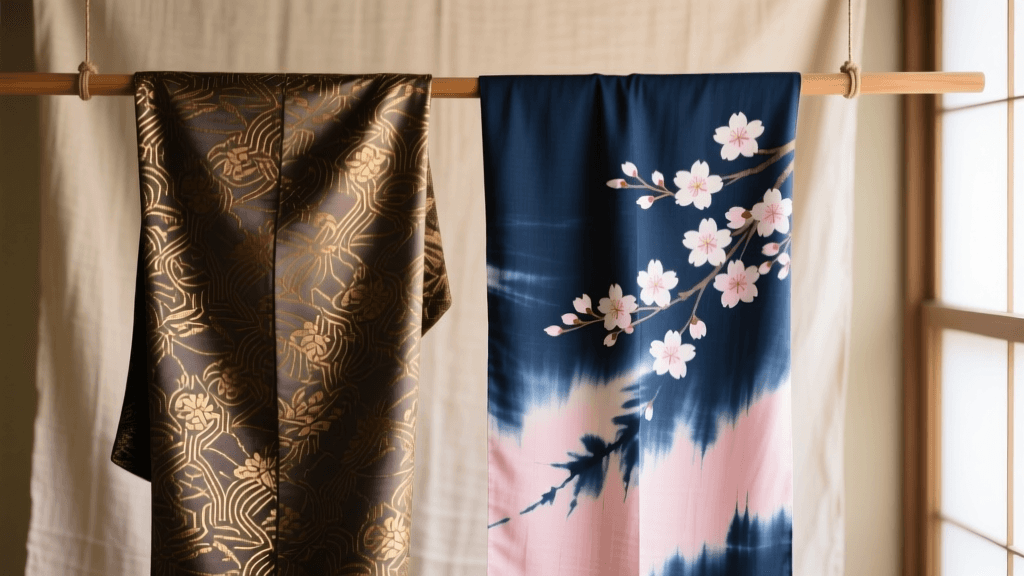
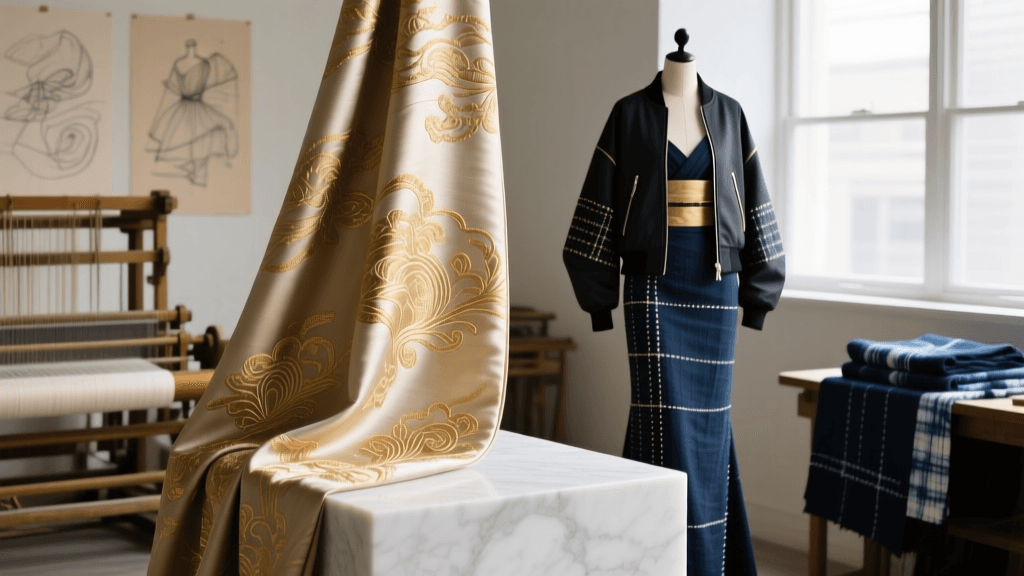
Nishijin-ori, the intricate, multi-layered brocade weaving tradition originating from Kyoto's Nishijin district, has become the most sought-after textile for 2026 haute couture collaborations. Historically reserved for the obi sashes of elite kimono and aristocratic garments, Nishijin-ori is characterized by its use of dyed silk threads interwoven with metallic gold and silver leaf (kinran and ginran). In 2026, major Parisian fashion houses are commissioning Kyoto-based weaving studios to produce custom, wider-loom variations of Nishijin-ori specifically tailored for Western structured outerwear and evening gowns. The challenge lies in adapting the traditional 30-centimeter obi width to the 140-to-150-centimeter widths required for Western tailoring, a feat achieved by modifying antique Jacquard looms and employing master weavers who specialize in tension control across broader warps. A collaborative Nishijin-ori tailored blazer from a 2026 European capsule collection typically retails between $6,500 and $18,000, reflecting the hundreds of hours required to program the loom and weave the dense, heavy fabric.
Sashiko and Boro: The Evolution of Rural Workwear into Global Streetwear
While Nishijin-ori dominates the upper echelons of haute couture, the rural, utilitarian traditions of Sashiko (decorative running stitch) and Boro (patchwork mending) have profoundly influenced the 2026 luxury streetwear and premium denim markets. Originating in the harsh climates of the Tohoku region, these techniques were born of necessity, using indigo-dyed cotton to reinforce and repair garments. Today, international streetwear brands are collaborating directly with artisan cooperatives in Aomori and Iwate prefectures. The 2026 collaborative pieces emphasize authentic Ai-zome (natural indigo fermentation using sukumo leaves from Tokushima) rather than synthetic chemical dyes. The natural indigo provides a living color that fades uniquely with the wearer's body chemistry and environment. High-end collaborative Sashiko denim jackets and modular work-pants in 2026 are priced between $850 and $2,400. The value is driven by the hand-stitched nature of the garments; a single collaborative jacket may feature over 40,000 individual hand-stitches, requiring a master artisan up to three weeks to complete.
2026 Collaborative Textile Matrix: Techniques and Market Positioning
To understand the breadth of these international partnerships, it is essential to categorize the primary textiles being exported and adapted for global markets in 2026. The following table outlines the key traditional techniques, their origins, and their current positioning in the collaborative fashion sector.
| Textile Technique | Region of Origin | 2026 Primary Collab Sector | Average Price Range (USD) | Key Material |
|---|---|---|---|---|
| Nishijin-ori | Kyoto | Haute Couture / Outerwear | $6,500 - $18,000 | Silk, Metallic Threads |
| Sashiko / Boro | Tohoku (Aomori/Iwate) | Luxury Streetwear / Denim | $850 - $2,400 | Indigo-Dyed Cotton |
| Kyo-Yuzen | Kyoto | Evening Wear / Bridal | $12,000 - $45,000+ | Resist-Dyed Silk |
| Kurume Kasuri | Fukuoka | Contemporary Ready-to-Wear | $400 - $1,200 | Ikat-Woven Cotton |
Kyo-Yuzen and Kaga-Yuzen: Hand-Painted Silk in Contemporary Evening Wear
Yuzen dyeing, a resist-dyeing technique that allows for the creation of highly detailed, painterly designs on silk, is experiencing a massive resurgence in 2026 international evening wear collaborations. Kyo-Yuzen (from Kyoto) is known for its vibrant, stylized patterns and extensive use of gold leaf, while Kaga-Yuzen (from Kanazawa) favors realistic, nature-inspired motifs and a distinct five-color palette (kaga-gosai). Italian and French evening wear designers are partnering with Yuzen masters to apply these techniques to modern bias-cut silk slip dresses and flowing capes. The process involves applying a rice-paste resist (itome-nori) by hand to outline the design, followed by meticulous brush-dyeing within the boundaries. Because the 2026 collaborative garments often feature asymmetrical, non-traditional cuts, the artisans must adapt their spatial planning, ensuring the continuous flow of the painted narrative across complex seams and darts. These bespoke, hand-painted collaborative gowns command prices starting at $12,000, with fully customized bridal or red-carpet pieces exceeding $45,000.
Actionable Guide: Investing in and Authenticating 2026 Collaborative Pieces
For collectors, archivists, and fashion investors looking to acquire these 2026 collaborative garments, authentication and proper care are paramount. The market has seen an influx of mass-produced items that mimic traditional Japanese aesthetics without the artisanal substance. To ensure you are purchasing a genuine collaborative piece, look for the official Traditional Craft Product (Dento Sangyo) certification mark, a gold-foil sticker issued by Japan's Ministry of Economy, Trade and Industry (METI). This mark guarantees that the item was handcrafted in its designated region using traditional materials and techniques. Furthermore, genuine collaborative pieces often include a wooden authentication box (tomobako) signed and stamped with the artisan's personal seal (hanko), alongside the international brand's provenance documentation.
When it comes to care, these textiles demand specialized maintenance. Nishijin-ori and Yuzen silks must never be exposed to moisture or dry-cleaned with standard chemicals; they require specialized spot-cleaning by textile conservators. Ai-zome indigo garments should be washed sparingly, using only pH-neutral, cold water, and must never be dried in direct sunlight, as UV rays will rapidly degrade the natural indigo molecules. For long-term storage, collaborative pieces should be kept in breathable, acid-free garment bags or traditional paulownia wood boxes (kiribako), which naturally regulate humidity and repel insects. For more information on the preservation of these vital cultural artifacts, the Japan National Tourism Organization (JNTO) provides extensive resources on regional artisan cooperatives and certified ateliers.
The Future of the Loom: Sustainability and Artisan Preservation
The ultimate success of these 2026 international design collaborations lies in their economic impact on the preservation of Japanese artisan communities. The aging population in Japan has led to a severe shortage of successors for traditional weaving and dyeing crafts. By integrating these textiles into the high-margin, globally distributed luxury and streetwear markets, international brands are providing the financial stability required for master artisans to take on apprentices. Organizations and institutions like the Victoria and Albert Museum (V&A) have frequently highlighted how cross-cultural fashion collaborations serve as a living archive, ensuring that techniques like Kurume Kasuri and Nishijin-ori are not relegated to museum displays, but remain dynamic, evolving practices. As we move through 2026, the fusion of Japanese heritage and global design stands as a testament to the enduring power of craftsmanship in an increasingly automated world.