Vintage Silk Kimono Preservation & Archival Storage 2026
The Evolution of Kimono Preservation in 2026
The preservation of vintage silk kimono, haori, and intricately woven obi has entered a highly refined era in 2026. As collectors and cultural institutions seek to protect Meiji, Taisho, and early Showa era garments, the focus has shifted dramatically away from harsh chemical interventions toward sustainable, museum-grade archival care. Silk is a protein fiber composed of fibroin and sericin, making it uniquely vulnerable to alkaline degradation, light exposure, and mechanical stress. In 2026, modern textile conservators emphasize a holistic approach that merges traditional Japanese garment care philosophies with advanced, eco-friendly material science.
Whether you are safeguarding a family heirloom or managing a private collection of yuzen-dyed silk, understanding the current standards for storage, cleaning, and climate control is essential. This guide outlines the most effective, up-to-date methodologies for preserving the structural integrity and vibrant aesthetics of vintage Asian silk garments.
Archival Storage: The Unbuffered Tissue Standard
One of the most critical mistakes collectors make is using standard acid-free tissue paper for silk storage. While buffered acid-free tissue (treated with calcium carbonate to maintain an alkaline pH of around 8.5) is excellent for plant-based fibers like cotton and linen, it is highly detrimental to protein fibers. The alkalinity in buffered tissue can accelerate the degradation of silk, causing it to become brittle and shatter over time.
In 2026, the gold standard for wrapping vintage kimono is unbuffered, acid-free tissue paper with a neutral pH of 7.0. Leading archival suppliers, such as University Products and Gaylord Archival, now offer nano-cellulose reinforced unbuffered tissues that provide superior tear resistance while maintaining strict chemical neutrality. When storing a garment, every fold must be padded with crumpled ropes of this unbuffered tissue to prevent sharp creases, which can lead to permanent fiber breakage along the fold lines.
Furthermore, garments should never be stored in direct contact with wooden drawers or standard cardboard boxes, as these materials off-gas acidic compounds and lignins. Instead, utilize archival-quality storage boxes made from inert polypropylene or lined with Marvelseal, an aluminum-nylon barrier film that completely blocks moisture and volatile organic compounds (VOCs).
Eco-Friendly Cleaning and the Revival of Arai-Hari
When a vintage silk kimono requires cleaning, modern 2026 conservation guidelines strongly advise against traditional perc (perchloroethylene) dry cleaning. The harsh solvents used in conventional dry cleaning can strip the silk of its natural luster, degrade metallic threads, and cause hand-painted yuzen dyes to bleed or fade.
Instead, the traditional Japanese method of arai-hari (wash and stretch) has seen a major revival, now enhanced by eco-friendly botanical surfactants. In this meticulous process, the kimono is carefully unsewn into its original flat fabric panels. These panels are then washed using specialized, plant-based saponin solutions that gently lift dirt without altering the silk's pH. According to the American Institute for Conservation's Textile Wiki, protein fibers like silk require strictly neutral, non-ionic detergents to prevent irreversible alkaline hydrolysis.
After washing, the damp silk panels are stretched taut on wooden boards using hundreds of tiny brass pins—a technique that realigns the fibers and removes creases without the need for destructive heat ironing. Once dry, the panels are re-sewn by a skilled artisan. In 2026, professional arai-hari services typically range from $180 to $350 per garment, depending on the complexity of the lining and the presence of delicate metallic embroidery. It is a worthwhile investment for high-value pieces, ensuring the garment's longevity without the use of toxic chemicals.
Climate Control and Non-Toxic Pest Deterrents
Silk is highly hygroscopic, meaning it readily absorbs and releases moisture from the surrounding air. Fluctuating humidity causes the fibers to expand and contract, leading to mechanical fatigue. The National Park Service Museum Handbook emphasizes that fluctuating humidity causes severe mechanical stress on weighted silks, particularly those from the early 20th century that were treated with metallic salts to increase their drape and weight.
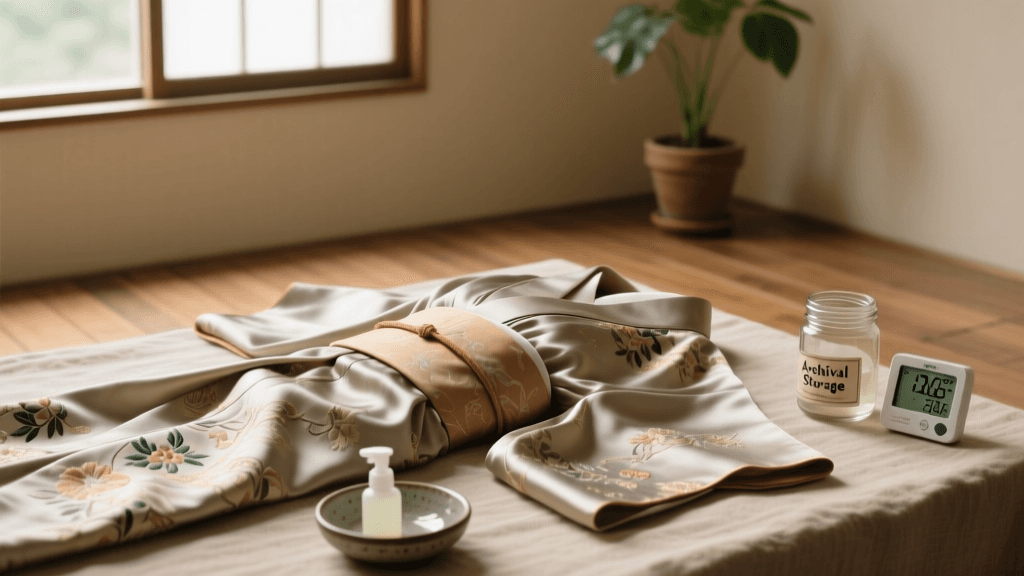
To mitigate this, maintain a strict climate-controlled environment. The ideal parameters for 2026 archival storage are a stable temperature of 65°F (18°C) and a relative humidity (RH) of 45% to 55%. Collectors are increasingly relying on smart Bluetooth hygrometers, such as the latest SensorPush models, which provide real-time alerts to your smartphone if the microclimate inside an archival closet deviates from the safe zone.
Pest prevention has also moved away from toxic naphthalene mothballs and paradichlorobenzene (PDB), which leave lingering odors and can chemically react with silk dyes. Today, conservators recommend natural, non-toxic deterrents. Sustainably harvested Hinoki cedar blocks and dried neem leaves are highly effective at repelling carpet beetles and clothes moths. These botanical deterrents should be placed in breathable muslin bags and refreshed or lightly sanded every six months to maintain their aromatic efficacy.
2026 Archival Material Comparison Chart
Selecting the right materials for your storage ecosystem is paramount. Below is a comparison of the most common archival materials used for Asian silk garments in 2026:
| Material | pH Level | Best Use Case | Precautions |
|---|---|---|---|
| Unbuffered Acid-Free Tissue | 7.0 (Neutral) | Padding folds, wrapping garments, interleaving embroidery | Must be replaced every 3-5 years as it absorbs ambient acids |
| Archival Cotton Muslin | 6.5 - 7.5 | Outer dust covers, garment bags for hanging storage | Must be unbleached and scoured; wash before first use |
| Tyvek Envelopes | Neutral | Storing loose obi accessories, obijime, and obidome | Can generate static electricity; handle in humidified rooms |
| Marvelseal Barrier Film | Neutral | Lining wooden drawers or non-archival storage boxes | Seams must be heat-sealed or taped with archival foil tape |
The Traditional Tato Folding Method
Improper folding is one of the leading causes of damage to vintage textiles. Research from the Smithsonian Museum Conservation Institute highlights that improper folding leads to permanent crease memory and eventual shattering in degraded silk. To prevent this, kimono should be folded using the traditional tato method, which distributes stress evenly across the garment's seams rather than the delicate fabric panels.
- Preparation: Lay the kimono face down on a clean, unbleached cotton sheet. Ensure your hands are clean and free of lotions or oils; wearing unbleached cotton archival gloves is recommended.
- Sleeve Alignment: Fold the left sleeve back over the body of the kimono, aligning the edge with the center back seam. Repeat with the right sleeve.
- Side Folds: Fold the left side of the garment toward the center back seam. Then, fold the right side over the left, creating a long, narrow rectangle.
- Bottom Hem: Fold the bottom hem up toward the collar, stopping just below the neckline. Pad this horizontal fold with a thick rope of unbuffered tissue paper.
- Final Fold: Fold the collar section down over the bottom hem. Pad all remaining vertical and horizontal folds with tissue ropes.
- Wrapping: Wrap the folded garment entirely in a large sheet of unbuffered tissue paper or an unbleached muslin cloth, and secure it with a flat, unbleached cotton twill tape. Never use rubber bands, adhesive tapes, or synthetic strings.
By adhering to these 2026 preservation standards, collectors and historians can ensure that these magnificent examples of Asian textile artistry survive for future generations to study, admire, and wear. Proper care is not merely about halting decay; it is an active practice of honoring the immense skill and cultural heritage woven into every thread of the garment.