Styling Vintage Silk Haori Jackets for 2026 Smart-Casual Workwear
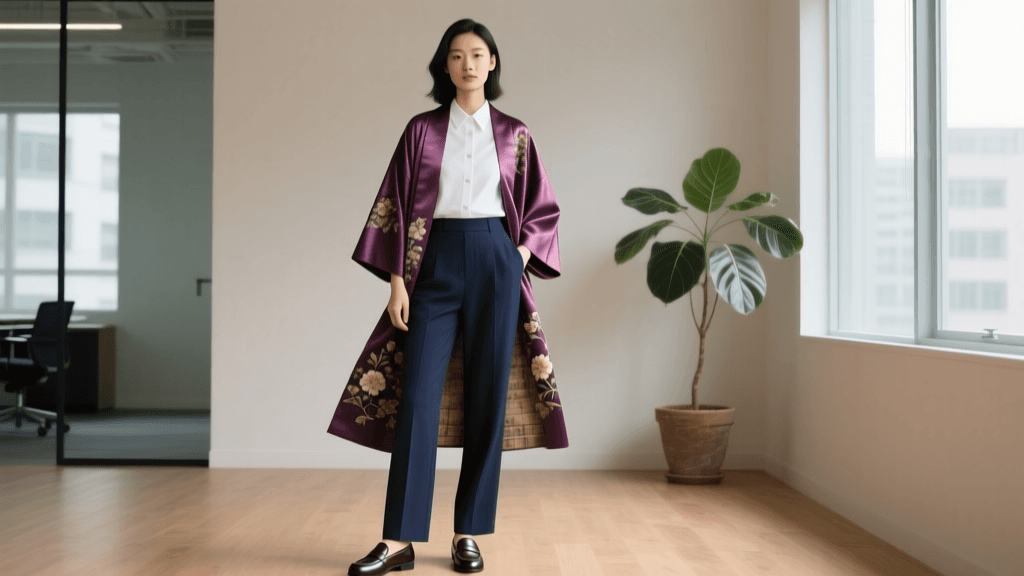
The Renaissance of the Haori in 2026 Workwear
As the global fashion landscape continues to pivot away from rigid, traditional suiting, the 2026 smart-casual office has embraced fluid, heritage-inspired layering. At the forefront of this movement is the Japanese haori—a traditional hip- or thigh-length jacket originally worn over the kimono. Once reserved strictly for formal ceremonies or traditional arts, the vintage silk haori has been reimagined by contemporary stylists as a sophisticated, culturally rich alternative to the modern blazer. Mixing traditional Asian garments with Western tailoring requires a nuanced understanding of silhouette, proportion, and textile care. This guide explores how to authentically and respectfully integrate vintage silk haori jackets into your 2026 professional wardrobe, balancing heritage craftsmanship with modern minimalist aesthetics.
Decoding the Silhouette: Measurements and Drape
To successfully mix a traditional haori with contemporary workwear, one must first understand its unique architectural properties. Unlike a 2026 structured blazer, which relies on padded shoulders, darting, and a set-in sleeve to create a sharp V-shape torso, the haori is constructed from straight panels of fabric. This results in a T-shaped silhouette with a drop-shoulder and wide, flowing sleeves.
When shopping for vintage women’s haori jackets, you will typically encounter the following standard measurements:
- Length (Back hem to collar base): 30 to 32 inches (76 to 81 cm). This hits elegantly at the mid-thigh, offering excellent coverage over modern midi skirts or wide-leg trousers.
- Width (Pit-to-pit / Yuki): 48 to 52 inches (122 to 132 cm) when laid flat. The generous width allows for effortless layering over chunky knits or thick poplin shirts without restricting movement.
- Sleeve Drop: The sleeves are attached at a right angle, creating a deep, draped underarm that provides a relaxed, avant-garde drape highly sought after in 2026 high-fashion workwear.
Because the haori lacks a traditional lapel or collar stand, it lays flat against the collarbone, creating a clean, unbroken vertical line that elongates the torso. This makes it an exceptional layering piece for professionals seeking a commanding yet approachable presence in the boardroom.
Top 3 Haori Pairings for the Contemporary Office
Integrating a highly patterned or richly textured heritage garment into a modern wardrobe requires grounding it with contemporary, minimalist basics. Here are three expert-approved styling formulas for the 2026 workweek.
1. The Architectural Contrast
Pair a heavy silk crepe (chirimen) haori featuring a subtle geometric komon pattern with wide-leg, high-waisted wool trousers. Brands like Lemaire and Theory have popularized the pooling, floor-grazing trouser in 2026, and the cropped, boxy hem of the haori sits perfectly at the natural waist, preventing the outfit from looking overwhelming. Ground the look with a fitted, fine-gauge merino wool turtleneck in a neutral tone like charcoal or oatmeal to let the jacket’s artistry take center stage.
2. The Monochromatic Power Layer
For high-stakes meetings, opt for a vintage black silk haori with subtle crest (mon) detailing. Wear it open over a sleek, modern slip dress or a tailored column skirt and silk camisole. The fluid drape of the haori mimics the movement of a cape or duster coat, offering a dramatic, authoritative silhouette that respects traditional modesty while feeling distinctly modern.
3. The Street-to-Office Transition
For creative industries or casual Fridays, utilize a lighter, unlined summer silk (sha or ro) haori. Layer it over a crisp, oversized white poplin button-down shirt and straight-leg, dark-wash denim. The contrast between the rigid cotton poplin, the sturdy denim, and the ethereal, semi-sheer silk of the haori creates a masterclass in textural mixing.
Sourcing Authentic Haori in 2026: What to Look For
The market for authentic, vintage Japanese textiles has matured significantly by 2026, driven by a consumer demand for sustainable, circular fashion. When sourcing a haori for professional wear, condition and textile integrity are paramount.
- Vintage Silk (1950s-1990s): Expect to pay between $80 and $250 on specialized export platforms, Etsy, or curated Tokyo-based vintage dealers. Look for rinzu (silk damask) or high-quality chirimen (crepe). Avoid pieces with severe fading on the shoulders or brittle lining, as these indicate improper storage.
- Modern Artisan Reproductions: For those who prefer unworn garments, contemporary Kyoto-based brands offer modern haori tailored slightly narrower for Western proportions. These typically range from $400 to $1,200 and often utilize ethically sourced, machine-washable silk blends.
- Condition Check: Always inspect the haori himo (the front ties). Vintage ties are often frayed or mismatched. In 2026 styling, it is highly acceptable to remove the traditional ties entirely, opting instead for minimalist lapel pins, hidden magnetic clasps, or simply wearing the jacket open to emulate a modern duster coat.
Comparison Chart: Traditional Haori Types for Modern Styling
Understanding the formality of different haori types is crucial for appropriate office styling. The following table breaks down the most common varieties and their best applications in a 2026 professional setting.
| Haori Type | Pattern & Formality | Best Modern Office Pairing | Styling Note for 2026 |
|---|---|---|---|
| Komon | Repeating, all-over micro-patterns. Semi-formal to casual. | Tailored trousers, denim, crisp cotton shirting. | The safest choice for daily office wear; patterns are subtle enough not to clash with modern prints. |
| Iromuji | Solid color (excluding black), often with subtle woven texture. Formal. | Midi skirts, monochromatic suits, silk blouses. | Acts as a direct replacement for a standard colored blazer. Excellent for client-facing roles. |
| Kurotomesode | Black silk with patterns only below the waist and family crests. Highly formal. | Column dresses, wide-leg evening trousers, gala wear. | Best reserved for executive dinners, galas, or high-stakes evening networking events. |
| Sha / Ro | Sheer, woven summer silk. Casual to semi-formal. | Linen blends, lightweight cotton, summer resort wear. | Perfect for summer offices; provides a layer of modesty without adding thermal weight. |
Fabric Care and Preservation for Heritage Silk
Maintaining vintage silk requires specialized care to ensure these garments survive for future generations. The harsh chemical solvents used in standard 20th-century dry cleaning can strip vintage silk of its natural luster and cause the delicate inner linings to shatter.
In 2026, the gold standard for heritage textile care is liquid CO2 cleaning or specialized eco-friendly wet cleaning offered by master conservators. If your haori requires freshening between professional cleans, utilize a handheld steamer on the lowest setting, keeping the nozzle at least six inches away from the fabric to prevent water spotting. Never iron a haori directly; if pressing is required, use a press cloth and a low-heat setting. For storage, abandon wire hangers immediately. The weight of the silk will cause the shoulders to stretch and tear over time. Instead, use wide, padded wooden hangers and store the garment in a breathable cotton canvas bag, away from direct sunlight which will rapidly degrade the natural dyes.
Cultural Appreciation and Mindful Styling
As traditional Asian garments become more visible in global fashion, the line between appreciation and appropriation must be navigated with respect and intentionality. The Victoria and Albert Museum's landmark 'Kimono: Kyoto to Catwalk' exhibition beautifully illustrates how Japanese dress has historically engaged in cross-cultural exchange, yet it also emphasizes the deep symbolic weight these garments carry.
When wearing a vintage haori, take the time to understand the motifs woven or dyed into the silk. Cranes represent longevity and good fortune; cherry blossoms (sakura) signify the fleeting nature of spring and life; bamboo denotes resilience. Acknowledging these meanings transforms the garment from a mere fashion accessory into a wearable piece of art history. Furthermore, support the preservation of these crafts by purchasing from verified vintage dealers, direct-from-artisan cooperatives, or reputable cultural exporters listed by organizations like the Japan National Tourism Organization, rather than buying mass-produced, fast-fashion knockoffs that exploit traditional designs without supporting the originating communities.
For those looking to deepen their understanding of textile history and construction, the Metropolitan Museum of Art's Department of Asian Art offers extensive digital archives detailing the evolution of Japanese weaving and dyeing techniques. By educating yourself on the provenance and craftsmanship of your haori, you ensure that your 2026 wardrobe is not only stylish and sophisticated but also deeply respectful of the rich Asian traditions it celebrates.
Final Thoughts on the 2026 Heritage Wardrobe
Mixing traditional Asian pieces with modern wardrobes is not about creating a costume; it is about creating a dialogue between eras, cultures, and silhouettes. The vintage silk haori, with its masterful construction, rich textile history, and effortless drape, stands as one of the most versatile and striking outerwear pieces available to the modern professional. By honoring its proportions, caring for its delicate fibers, and styling it with contemporary intentionality, you can elevate your 2026 workwear into a profound expression of global sartorial heritage.