Miao Silver Jewelry and Embroidery: A Buyer's Guide
The Living Textiles of the Miao People
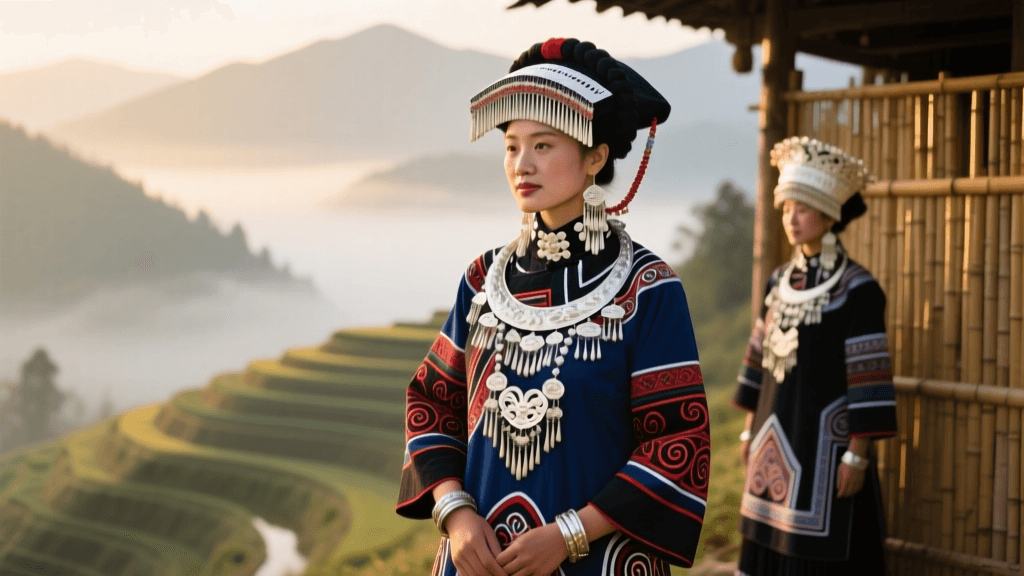
The Miao people, an indigenous ethnic group primarily residing in the mountainous regions of southern China (particularly Guizhou, Hunan, and Yunnan provinces), possess one of the most visually striking and culturally profound sartorial traditions in Asia. Historically lacking a formal written language, the Miao turned to their garments to record their history, mythology, and migratory patterns. Today, Miao embroidery and silver jewelry are not merely decorative; they are wearable archives. For collectors, cultural enthusiasts, and sustainable fashion advocates, acquiring authentic Miao garments and jewelry requires a deep understanding of regional variations, craftsmanship techniques, and market realities.
According to the Metropolitan Museum of Art's textile archives, Miao garments are celebrated for their structural complexity and symbolic density. This guide will provide you with actionable advice on identifying, sourcing, and preserving authentic Miao silver and embroidered textiles.
Decoding Miao Embroidery: Techniques and Motifs
Miao embroidery (Miao Xiu) is renowned for its staggering diversity. The UNESCO Intangible Cultural Heritage lists recognize several regional textile traditions in China, and Miao needlework is frequently highlighted for its preservation of ancient mythological narratives. A single festival jacket can take a master artisan between one to three years to complete.
Key Embroidery Styles and Measurements
- Pingxiu (Flat Stitch): The most common technique, used to create smooth, vibrant surfaces. Artisans use hand-spun silk or cotton threads, often dyeing them with natural indigo and plant-based mordants.
- Shuangxiu (Twisted Stitch): A highly specialized technique where threads are tightly twisted before being laid onto the fabric, creating a raised, 3D corded effect. This is predominantly found in the Xiangxi (Western Hunan) region.
- Appliqué and Brocade: Often used for structural reinforcement on jacket collars and cuffs, integrating hand-woven hemp or cotton bases.
Mythological Motifs to Look For
When evaluating a piece, look for the Mais Bangx Mais Lief (The Butterfly Mother). According to Miao creation myths, the Butterfly Mother laid twelve eggs, which hatched into humans, dragons, buffaloes, and tigers. Authentic vintage pieces will feature stylized, abstract representations of these creatures, whereas modern tourist-market items often feature literal, commercially derived dragon or phoenix designs borrowed from Han Chinese aesthetics.
The Weight of Tradition: Miao Silver Craftsmanship
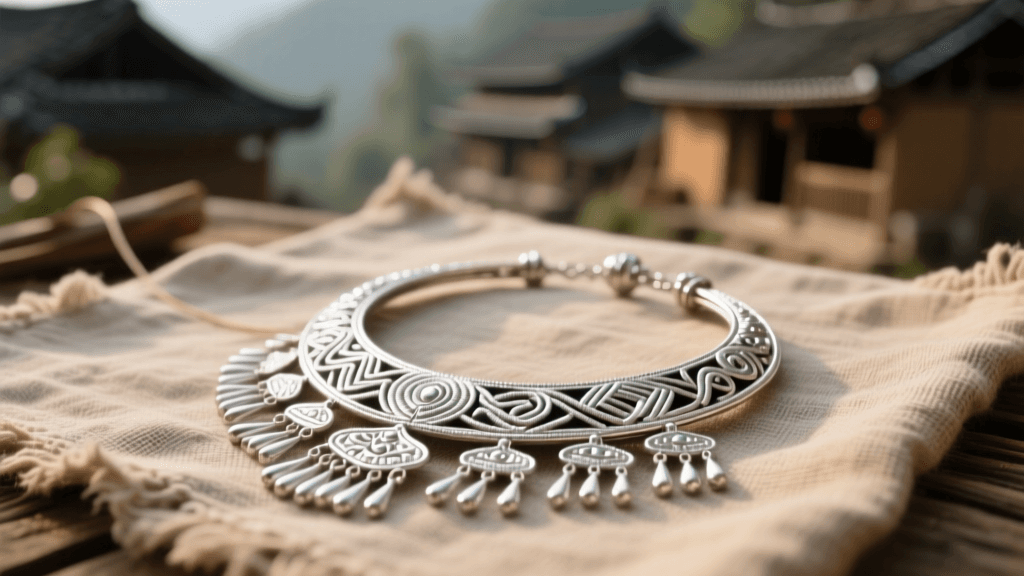
Silver jewelry is the crowning glory of Miao festival attire, symbolizing light, purity, and the warding off of evil spirits. The village of Shidong in Guizhou is historically recognized as the epicenter of Miao silversmithing. The creation of a full festival silver set involves over 30 distinct processes, including smelting, wire-drawing, filigree weaving, and repoussé hammering.
Iconic Silver Pieces and Measurements
- The Silver Horn Headdress (Yinjiao): The most iconic piece, mimicking the horns of the revered water buffalo. A traditional headdress spans 60 to 80 centimeters in width and weighs between 1.5 kg and 3 kg. It is constructed from multiple interlocking silver sheets and dangling pendants that create a melodic chiming sound during the traditional Lusheng festival dances.
- The Silver Collar (Xiangquan): A heavy, rigid neckpiece that rests on the collarbones, often weighing 1 to 2 kg. It is usually decorated with repoussé motifs of fish, dragons, and flora.
- Pleated Skirts (Baizhequn): While not silver, the skirts worn with the silver are marvels of engineering. A traditional indigo-dyed pleated skirt requires 15 to 20 meters of hand-woven cotton, meticulously folded into 100 to 200 permanent pleats using egg white and heat, weighing up to 3 kg.
'Our clothing is our history book. Every stitch is a word, every silver motif is a chapter. When we dance, the silver speaks the voices of our ancestors.'
— Miao Artisan Proverb, Qiandongnan Prefecture
Buyer’s Guide: Sourcing, Pricing, and Authenticity
The market for Miao textiles and silver is flooded with mass-produced replicas. Reports from Sixth Tone on rural artisan economies highlight the struggle of genuine Miao silversmiths and embroiderers to compete with factory-made alloys and machine-embroidered patches. Here is how to navigate the market.
Cost Breakdown and Timing
When budgeting for authentic pieces, expect the following market rates (prices in USD):
- Vintage Festival Jackets (1940s–1980s): $1,200 to $4,500. Sourcing these requires working with specialized textile dealers in Guiyang or international antique textile fairs. Timing: Allow 3–6 months to source a piece in good structural condition.
- Modern Bespoke Embroidered Jackets: $600 to $1,500. Commissioning directly from artisans in villages like Xijiang or Shidong takes 6 to 12 months.
- Authentic Silver Sets (Artisan Forged): $1,500 to $5,000+. Pricing is strictly tied to the daily spot price of silver plus a 20% to 40% artisan markup for labor. A full set (headdress, collar, bracelets, and hairpins) typically contains 2 to 4 kilograms of pure silver.
- Commercial 'Tourist' Silver: $50 to $150. Usually made of copper-nickel alloys or brass with a thin silver wash. Avoid these if you are a serious collector.
How to Test Authenticity on the Ground
If you are buying silver in Guizhou or Yunnan, carry a strong neodymium magnet. Authentic silver is non-magnetic. Furthermore, genuine Miao silver is typically 99% pure (foot silver), making it softer and more malleable than sterling silver (92.5%). If a complex filigree piece feels overly rigid or springs back when gently pressed, it likely contains copper or nickel alloys.
Comparison Chart: Authentic Artisan vs. Commercial Silver
Use this structured comparison to evaluate pieces before purchasing.
| Feature | Authentic Artisan Miao Silver | Commercial / Mass-Produced Silver |
|---|---|---|
| Material | 99% Pure Silver (highly malleable) | Copper, Brass, or Nickel Alloy with silver plating |
| Weight (Horn Headdress) | 1.5 kg – 3.0 kg | 300g – 600g (hollow or thin-stamped) |
| Joinery Technique | Soldered with silver-wire and borax flux; no glue | Industrial spot-welding or chemical adhesives |
| Motif Details | Hand-carved repoussé; asymmetrical, organic lines | Machine-stamped; perfectly symmetrical, flat relief |
| Crafting Time | 2 to 6 weeks per master silversmith | Mass-cast in factories in under 1 hour |
| Price Range | $1,500 – $5,000+ (based on silver weight) | $50 – $150 |
Regional Variations: What to Collect
Understanding regional differences will elevate your collection from a random assortment to a curated archive.
- Qiandongnan (Southeast Guizhou): Famous for the 'Shidong' silver style and heavy, bright indigo-dyed pleated skirts. The embroidery here often features the 'Shuibian' (water ripple) stitch, representing the rivers crossed during ancient migrations.
- Xiangxi (Western Hunan): Silver is more subdued, often limited to hairpins and smaller collars. The focus is entirely on the textiles, featuring dense, geometric cross-stitch patterns in deep reds, blacks, and indigos.
- Yunnan Province: Miao groups here (often overlapping with Hmong populations) integrate cowrie shells, beads, and coins into their textiles. Silver is used sparingly, usually in the form of small, intricate bodice clasps and hair combs.
Preservation and Care Instructions
Proper care is essential to maintain the structural integrity and historical value of Miao garments and silver.
Caring for Miao Embroidery and Textiles
- Cleaning: Never machine wash or aggressively hand-wash vintage Miao textiles. The natural indigo will bleed, and the silk threads will fray. Use a specialized textile conservator for deep cleaning. For surface dust, use a soft, natural-bristle brush.
- Storage: Store jackets flat in acid-free archival tissue paper. Hanging heavy, embroidered garments will cause the hand-woven hemp or cotton base to stretch and tear under the weight of the embroidery and attached silver coins.
- Environment: Keep textiles in a climate-controlled environment (45-55% humidity) away from direct sunlight, which will rapidly fade natural plant dyes.
Caring for Miao Silver
Because traditional Miao silver is 99% pure, it is highly susceptible to scratching and bending. Store pieces in individual anti-tarnish flannel bags. To clean, avoid harsh chemical dips which can destroy the dark, intentional oxidation (patina) that artisans use to highlight repoussé details. Instead, gently polish only the raised areas with a dry, untreated microfiber cloth, leaving the dark crevices intact to preserve the three-dimensional contrast of the motifs.
Collecting Miao silver and embroidery is an investment in human history. By prioritizing authentic craftsmanship, understanding the profound symbolism of the motifs, and properly caring for these artifacts, collectors play a vital role in sustaining the living heritage of the Miao people.