Styling Silk Haori Jackets for 2026 Minimalist Workwear
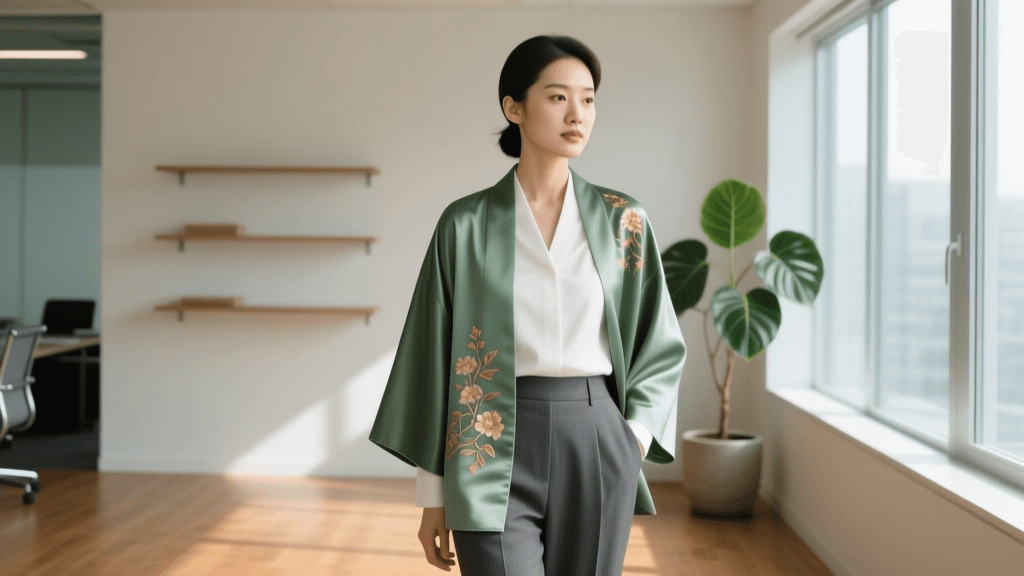
The landscape of professional fashion in 2026 has undergone a radical transformation, moving away from rigid corporate uniformity toward a deeply personal, heritage-infused 'quiet luxury.' At the forefront of this movement is the integration of traditional Asian garments into everyday Western wardrobes. Among these, the Japanese haori—a traditional hip- or thigh-length kimono-style jacket—has emerged as the ultimate statement piece for the modern professional. When styled correctly, a silk haori bridges the gap between historical reverence and cutting-edge 2026 minimalism, offering an unparalleled silhouette that commands respect in any boardroom or creative studio.
The Haori’s Evolution into 2026 Quiet Luxury
Historically worn over the kimono to provide warmth and display family crests (kamon) or intricate artistic motifs, the haori was traditionally secured at the front with braided silk cords known as haori himo. Today, the garment has transcended its ceremonial roots. According to the Victoria and Albert Museum's extensive archives on Japanese dress, the haori's unstructured, T-shaped silhouette and open front make it uniquely adaptable to modern layering. In 2026, top-tier fashion houses and independent stylists alike are championing the haori as a sustainable, circular fashion investment, aligning perfectly with the contemporary ethos of buying fewer, but vastly superior, heritage garments.
Decoding the Haori: Fabric, Motif, and Structure
To successfully integrate a haori into a modern wardrobe, one must first understand its construction and textile heritage. The most coveted vintage and contemporary haori are crafted from Rinzu (a heavy, lustrous silk damask) or Chirimen (a crepe silk that drapes beautifully and resists wrinkling). The exterior often features Yuzen resist-dyeing, showcasing hand-painted landscapes, flora, or abstract geometric patterns, while the interior lining (hakkake) frequently hides a secondary, vibrant masterpiece visible only when the wearer moves.
When selecting a haori for the 2026 workplace, the structural integrity of the shoulders is paramount. Traditional haori feature a straight, drop-shoulder seam that creates a boxy, architectural profile. This is precisely what makes it pair so well with modern tailored pieces; the contrast between the fluid, unstructured silk of the haori and the sharp, precise lines of contemporary workwear creates a visually striking tension.
3 Rules for Integrating Haori into Corporate Minimalism
Rule 1: The Monochrome Anchor
The most common mistake when styling traditional Asian textiles is competing with the garment's inherent artistry. In 2026, the golden rule of minimalist styling is to let the haori serve as the sole focal point. Anchor the jacket with a monochrome base—think a charcoal turtleneck and matching wide-leg wool trousers, or an ivory silk blouse with cream tailored denim. Brands like Lemaire, The Row, and Toteme have popularized this tonal dressing approach, providing the perfect blank canvas for a vibrant, patterned silk haori.
Rule 2: Proportion and the 'Drop-Shoulder' Balance
Because the haori is naturally boxy and voluminous in the sleeves, your lower half must provide visual balance. Avoid skinny trousers or pencil skirts, which can make the silhouette look top-heavy and dated. Instead, opt for high-waisted, wide-leg trousers that pool slightly at the shoe, or structured midi skirts with a slight A-line flare. This elongates the body and harmonizes with the sweeping lines of the traditional Japanese silhouette.
Rule 3: Hardware and Accessory Restraint
Traditional haori himo (the decorative front ties) can sometimes look overly costumey in a strict corporate environment. In 2026, stylists recommend removing the cords and allowing the haori to hang open, mimicking the lapel-less drape of a modern duster coat. If closure is necessary for warmth, use a single, minimalist geometric brooch in brushed gold or matte silver at the collarbone, or have a tailor add hidden interior magnetic snaps to maintain a seamless, hardware-free exterior.
2026 Outfit Formulas: The Haori in the Modern Workplace
To provide actionable guidance, we have broken down three distinct outfit formulas tailored for different professional environments in 2026. These combinations respect the cultural integrity of the garment while adhering to modern corporate dress codes.
| Aesthetic Profile | Modern Base Pieces | Haori Type & Motif | Footwear | Best For |
|---|---|---|---|---|
| The Architectural Executive | Black silk mock-neck top, charcoal high-waisted wool wide-leg trousers. | Mid-length black Rinzu silk haori with subtle tonal shibori (tie-dye) geometric patterns. | Pointed-toe leather loafers with a sculptural heel. | C-suite meetings, legal environments, formal presentations. |
| The Creative Director | Ivory oversized cotton poplin shirt, camel structured midi skirt. | Vintage 1960s Chirimen silk haori featuring vibrant Yuzen dyed autumn maple leaves. | Minimalist white leather sneakers or suede ankle boots. | Design studios, gallery openings, creative agency pitches. |
| The Tech-Minimalist | Crisp white ribbed knit tee, dark indigo straight-leg raw denim. | Short-length, solid navy or slate-grey haori with a contrasting silk damask lining. | Polished derby shoes or sleek Chelsea boots. | Tech campuses, casual Fridays, networking events. |
Sourcing Authentic Vintage vs. Modern Interpretations
The 2026 market for traditional garments is robust, driven by a global appreciation for circular fashion and artisanal craftsmanship. According to recent sustainability reports highlighted by the Metropolitan Museum of Art's timeline on Japanese dress, preserving and re-wearing historical garments is a vital part of cultural continuity. When sourcing a haori, you generally have two routes:
- Authentic Vintage (Pre-1980s): Sourced from specialized dealers in Tokyo's Shibuya district, Kyoto's antique markets, or reputable global online archives. Vintage pieces offer unparalleled hand-painted details and heavy silk weaves that are rarely produced today due to the loss of specialized artisanal looms. Look for pieces with intact linings and no discoloration along the fold lines.
- Contemporary Artisan Brands: Brands like Sou-Sou and Y. & Sons are producing modern haori in 2026 using traditional weaving techniques but adapted with slightly narrower sleeves and lighter, machine-washable silk blends for everyday ease. These are excellent for those who prefer brand-new garments with modern sizing metrics.
Garment Care: Preserving Silk in 2026
Owning a silk haori requires a commitment to proper garment care. The heavy silks and delicate dyes used in traditional Japanese textiles are highly susceptible to water spotting, UV fading, and harsh chemicals. As of 2026, the standard of care has evolved significantly:
- Liquid CO2 Cleaning: Avoid traditional perc (perchloroethylene) dry cleaning, which can strip the natural luster from Rinzu silk and cause the metallic threads in brocade haori to tarnish. Seek out eco-friendly cleaners that utilize Liquid Carbon Dioxide technology, a gentle, non-toxic solvent that preserves the integrity of vintage dyes and delicate weaves.
- UV Protection Storage: The indigo and crimson dyes used in Yuzen painting will fade if exposed to direct sunlight. When not in use, store your haori on a wide, padded wooden hanger inside a breathable cotton garment bag. Never use plastic, which traps moisture and encourages mildew.
- Airing and Refolding: To prevent permanent crease lines and fiber degradation, take your haori out of storage every three months. Air it in a shaded, well-ventilated room for a few hours, and gently shift the fold lines to distribute the stress on the silk fibers.
Conclusion: A Masterclass in Cultural Synthesis
Integrating a traditional silk haori into a 2026 minimalist wardrobe is more than a fashion choice; it is an exercise in cultural appreciation and sustainable styling. By respecting the garment's historical context, understanding its structural nuances, and pairing it with deliberate, modern minimalism, you elevate your professional presence. The haori proves that true style does not require shouting; rather, it whispers through the rustle of heavy silk, the flash of a hidden lining, and the quiet confidence of a wardrobe built on heritage and intention.