The Collector's Guide to Vintage Meisen Silk Kimono
The Allure of Taisho Roman and Meisen Silk
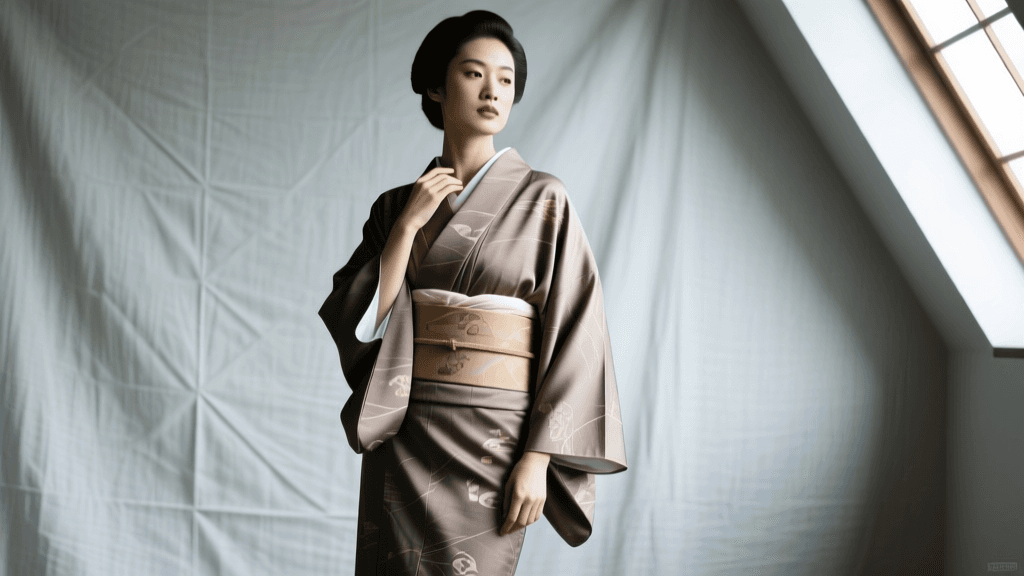
For vintage textile enthusiasts and collectors of Japanese garments, few items are as highly coveted as the Meisen silk kimono. Produced primarily during the Taisho (1912–1926) and early Showa (1926–1989) eras, Meisen represents a fascinating intersection of traditional Japanese craftsmanship and rapid modernization. Often described as the "fast fashion" of its day, Meisen was designed to be affordable, durable, and visually striking. Today, however, these garments are prized antiques, celebrated for their bold, Art Deco-inspired motifs and unique weaving techniques.
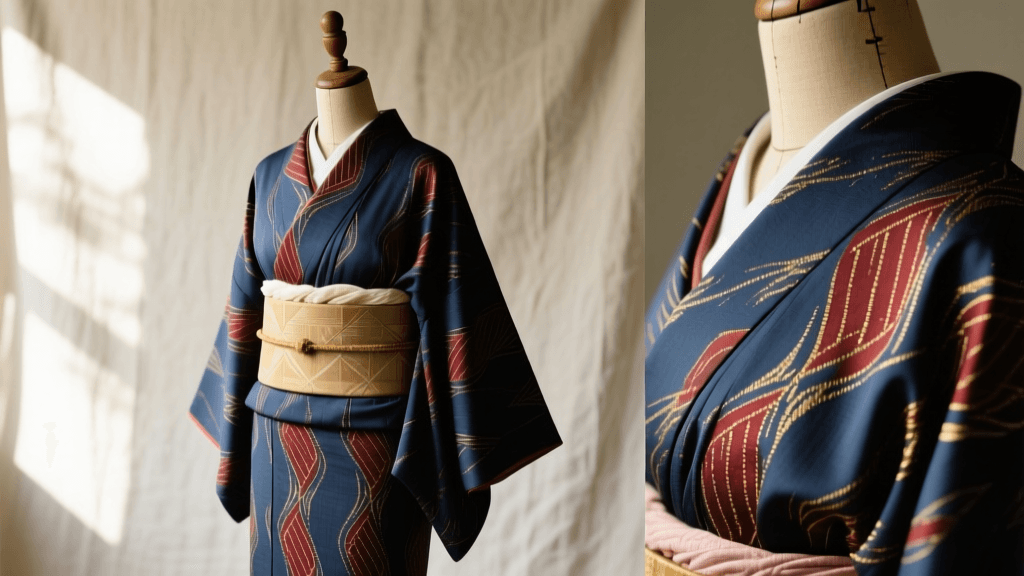
As highlighted by the Metropolitan Museum of Art's 'Kimono Style' exhibition, the Taisho era saw a massive influx of Western aesthetic influences, resulting in a cultural movement known as Taisho Roman. Japanese textile artisans began incorporating geometric patterns, modern florals, and even abstract cityscapes into their designs. Meisen silk became the canvas for this artistic revolution, allowing everyday women to wear avant-garde, modernist art on their sleeves. For the modern collector, acquiring a vintage Meisen kimono is not just about owning a piece of clothing; it is about preserving a tangible artifact of Japan's interwar cultural renaissance.
How to Authenticate True Meisen Weave
The secondary market for vintage kimono is flooded with mislabeled garments. Unscrupulous or uninformed sellers often label any vintage, patterned silk kimono as "Meisen." True Meisen is defined not by its pattern, but by its specific yarn-dyeing and weaving technique, primarily a variation of kasuri (ikat). To build a high-quality collection, you must know how to authenticate the weave.
The "Fuzzy Edge" and Reversibility Test
Authentic Meisen is created using a technique called hogushi-gasuri or yokoso-gasuri. The warp and weft threads are tightly bound and dyed before they are woven together. Because the alignment of the dyed threads is never mathematically perfect on the loom, the resulting pattern features a distinct, slightly blurred or "fuzzy" edge.
To verify a piece, perform these three authentication checks:
- The Fuzzy Edge: Look closely at the borders of the geometric or floral motifs. If the edges are perfectly crisp and sharp, the fabric is likely piece-dyed (stenciled or printed after weaving) and is not true Meisen.
- The Reversibility Test: Because Meisen is yarn-dyed, the pattern penetrates the core of the silk thread. Turn the garment inside out. A true Meisen kimono will show the exact same pattern on the reverse side, with only a slight loss of color vibrancy. If the inside is white or solid, it is a printed fake.
- The Tactile Test: Meisen silk has a distinctive crisp, slightly dry hand-feel compared to the buttery softness of rinzu (satin damask) or the slubby texture of tsumugi (pongee). It should feel sturdy, dense, and substantial.
Sizing and Measurements for the Modern Collector
One of the greatest challenges in collecting vintage Taisho and early Showa kimono is sizing. Women in Japan during the 1920s and 1930s were, on average, significantly shorter than modern women. Consequently, the mitake (back length) of a vintage Meisen kimono often measures between 130 cm and 145 cm, compared to the modern standard of 155 cm to 170 cm.
When purchasing for wearability rather than purely for display or study, collectors must pay close attention to the yuki (sleeve span, measured from the center back seam to the edge of the sleeve). A standard vintage yuki is often around 60 cm to 62 cm. If you plan to wear the kimono with a traditional ohashori (the waist fold), you will need a back length that is at least 20 cm longer than your actual hip-to-floor measurement. Many collectors opt to wear shorter vintage Meisen pieces without an ohashori, styling them with a wide, contrasting obi to hide the missing fold, or repurpose them into modern haori jackets.
Valuation and Market Pricing
The value of a vintage Meisen kimono is dictated by a matrix of condition, motif rarity, and colorway. While basic, worn Meisen can be found in Kyoto flea markets for as little as $30 to $50, museum-quality pieces featuring rare Taisho Roman motifs can command upwards of $1,500. The Victoria and Albert Museum's 'Kimono: Kyoto to Catwalk' exhibition notes that the structural integrity and historical significance of early 20th-century Japanese textiles have cemented their status in the global antique market.
Vintage Meisen Condition and Valuation Matrix
| Condition Grade | Defect Profile (Japanese Terms) | Estimated Market Value (USD) | Collector Demand |
|---|---|---|---|
| Mint / Deadstock | No shimi (stains), no yake (sun fading). Original basting threads intact. | $800 - $2,500+ | Extremely High (Museums & Serious Collectors) |
| Excellent | Minor, unnoticeable shimi. Slight collar wear. Fully wearable. | $350 - $750 | High (Enthusiasts & Vintage Wearers) |
| Good / Fair | Noticeable shimi, minor yake on shoulders, small tears (hoshiku). | $120 - $300 | Moderate (Upcyclers & DIY Crafters) |
| Poor / Fragment | Severe kabi (mold), widespread yake, structural rot. | $20 - $80 | Low (Textile Study & Patchwork) |
Sourcing Authentic Pieces Online and in Japan
While browsing the stalls at Kyoto's Toji Temple flea market (held on the 21st of every month) is a rite of passage, the most serious collectors source their pieces through Japanese online auctions. Using proxy bidding services like Buyee or ZenMarket, you can access Yahoo! Auctions Japan directly.
To find hidden gems, avoid English search terms. Instead, copy and paste these specific Japanese keywords into the auction search bars:
- 銘仙 (Meisen): The direct term for the textile.
- 大正ロマン (Taisho Roman): Filters for the highly desirable Art Deco, modernist aesthetic.
- 解き洗い済み (Toki-arai-zumi): A crucial term meaning "unpicked and washed." These garments have been professionally deconstructed, cleaned, and re-basted, saving you hundreds of dollars in restoration costs.
- 秩父銘仙 (Chichibu Meisen) / 伊勢崎銘仙 (Isesaki Meisen): Regional search terms. Chichibu and Isesaki were the historical epicenters of Meisen production, and pieces from these regions carry a premium.
Collector's Maxim: "Always ask the seller for photos of the inside of the garment, the hem, and the underarm seams. Stains in these hidden areas are often omitted from primary auction photos but will dictate the true cost of professional restoration."
Preservation: The Art of Tansu and Tatou
Acquiring a vintage Meisen kimono is only half the battle; preserving the century-old silk requires strict environmental control. Silk is a protein fiber, highly susceptible to moisture, light, and acidic off-gassing. Never store vintage kimono in plastic bins, as plastic traps humidity and emits volatile organic compounds (VOCs) that will yellow and shatter the silk over time.
The Traditional Storage Method
The gold standard for kimono preservation is the kiribako, a chest made of Paulownia wood. Paulownia is naturally hygroscopic, meaning it expands in high humidity to create an airtight seal, and contracts in dry conditions to allow the wood to breathe. Inside the chest, the kimono should be folded precisely along its original seams and wrapped in tatou—traditional, acid-free, unbleached Japanese washi paper.
The Biannual Airing Ritual (Mushiboshi)
Even in a Paulownia chest, silk must be aired out to prevent mold (kabi). In Japan, this ritual is called mushiboshi, traditionally performed during the dry, crisp weeks of late autumn and early spring.
- Choose a dry, overcast day with low humidity (ideally below 50%). Direct sunlight will cause instant yake (color fading) to Taisho-era chemical dyes.
- Lay the kimono flat on a clean, dry cotton sheet indoors, or hang it on a specialized, wide kimono hanger (emono-kake) in a shaded, well-ventilated room.
- Allow the garment to breathe for 4 to 6 hours, gently brushing away any surface dust with a soft, natural-bristle garment brush.
- Refold the kimono along its original creases to prevent permanent fiber memory distortion, wrap in fresh tatou paper, and return to the chest with natural camphor or cedar blocks to deter silverfish.
Conclusion
Collecting vintage Meisen silk kimono is a deeply rewarding pursuit that bridges the gap between fashion history, textile conservation, and cultural appreciation. By mastering the authentication of the kasuri weave, understanding the nuances of Taisho-era sizing, and committing to the rigorous preservation methods of the past, collectors ensure that these vibrant, Art Deco masterpieces will survive for another century. Whether you are hunting for a rare Chichibu fragment on Yahoo Auctions or carefully airing your collection during the autumn mushiboshi, you are actively participating in the stewardship of Japan's rich sartorial heritage.