Secondhand Hanfu Market 2026: Mamian Qun Resale Guide
The 2026 Boom in Secondhand Hanfu Collecting
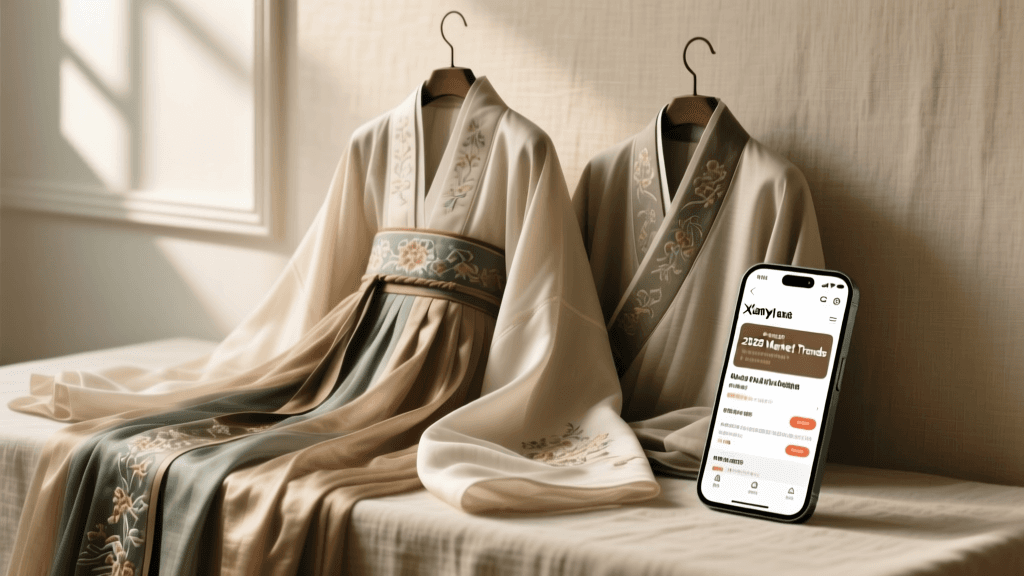
As we navigate the fashion landscape of 2026, the traditional Chinese garment movement has undergone a massive paradigm shift. The initial wave of mass-produced, fast-fashion Hanfu that saturated the market in the early 2020s has given way to a highly sophisticated, sustainability-driven secondhand market. Today, serious collectors, cultural historians, and eco-conscious enthusiasts are turning to vintage and secondhand Hanfu, seeking out superior craftsmanship, historical accuracy, and rare textiles. The resale market for iconic garments like the Ming-style Mamian Qun (horse-face skirt) and the Song-style Beizi (open-front jacket) has exploded, creating a lucrative ecosystem for both buyers and sellers.
For collectors, the secondhand market is no longer just about finding a bargain; it is about preserving cultural heritage and acquiring pieces that possess genuine artisanal value. Whether you are hunting for early 2010s revivalist pieces that pioneered the modern Hanfu movement or authentic late-Qing Han-ethnic textiles, understanding the nuances of the 2026 resale market is essential.
Navigating Resale Platforms in 2026
The digital infrastructure for buying and selling traditional garments has matured significantly. In China, Xianyu (Idle Fish) remains the undisputed king of secondhand fashion, but its 2026 algorithm updates have introduced AI-driven textile verification tools that help flag mass-produced knockoffs posing as artisanal vintage. To succeed on Xianyu, sellers must use specific keywords such as 'early revival' (zaoqi fuxing), 'hand-woven' (shougong zhihua), and 'antique textile' (gudong zhixiu).
For international collectors, platforms like Depop and Etsy have seen a surge in curated Hanfu vintage shops. However, the most prized pieces are often traded in closed, invitation-only WeChat mini-programs and specialized Discord servers dedicated to Asian textile preservation. These private channels allow for high-trust transactions, detailed macro-photography sharing, and direct communication with previous owners regarding the garment's provenance and storage history.
Authentication: Antique Textiles vs. Early Revival
The most critical skill for any Hanfu collector in 2026 is distinguishing between genuine antique textiles, early revivalist pieces, and modern commercial reproductions. True antique Han-ethnic garments are incredibly rare due to the historical disruptions of the 20th century. Most 'antique' skirts on the market are actually late-Qing or Republic-era Han-style Mamian Qun, which feature distinct construction differences from their Ming dynasty predecessors.
Understanding the historical baseline of Chinese silk weaving is crucial for authentication. According to the Metropolitan Museum of Art's Heilbrunn Timeline of Art History, the complexity of traditional drawloom weaving, particularly techniques like Zhuanghua (brocade) and Zhijin (gold weaving), requires a level of structural integrity that modern power looms struggle to replicate authentically. When examining a vintage Mamian Qun, collectors should inspect the reverse side of the fabric. Authentic hand-loomed Zhuanghua will show a relatively clean back with tight, continuous thread floats, whereas modern jacquard power-loom reproductions will often display messy, floating weft threads and synthetic metallic yarns that lack the warmth and depth of traditional gold leaf or silver-wrapped silk threads.
Furthermore, collectors must recognize the stylistic evolution of the garments. The Victoria and Albert Museum's extensive textile archives note that late Qing Han-style skirts often featured heavier, more rigid waistbands and distinct pleating structures compared to the fluid, drape-focused reconstructions of the Ming style popularized by modern Hanfu brands. Early revivalist pieces from 2008 to 2014 are highly sought after today because they were often handmade by pioneering enthusiasts who studied museum artifacts meticulously, resulting in unique, historically grounded garments that predate the commercialization of the industry.
2026 Hanfu Resale Pricing Guide
Pricing in the secondhand Hanfu market is highly volatile and depends heavily on the brand, the era of production, the weaving technique, and the condition of the silk. Below is a comprehensive pricing table reflecting the current market values for 2026.
| Garment Type | Era / Production Year | Condition | Estimated 2026 Resale Value (USD) |
|---|---|---|---|
| Late Qing Han-style Mamian Qun | 1880-1910 (Antique) | Museum/Fragile | $800 - $2,500+ |
| Early Revivalist Mamian Qun | 2008-2014 (Artisanal) | Excellent | $250 - $600 |
| Artisanal Song Dynasty Beizi | 2015-2019 (Independent Maker) | Very Good | $150 - $350 |
| Mass-Produced Zhijin Skirt | 2020-2023 (Commercial Brand) | Good | $40 - $90 |
| Vintage Silk Ao (Jacket) | 1920-1940 (Republic Era) | Restored/Wearable | $400 - $1,200 |
As demonstrated in the table, provenance and production methods dictate value. An early revivalist piece from a legendary, now-defunct independent studio can command prices far exceeding a brand-new, mass-produced skirt from a major commercial label. Collectors are paying a premium for the 'soul' and historical significance of the garment, rather than just its utility.
Caring for and Restoring Secondhand Silks
Acquiring a vintage Mamian Qun or an antique silk jacket is only the first step; preserving it requires specialized knowledge. Secondhand silks, particularly those that have been stored in less-than-ideal conditions, are prone to shattering, dye bleeding, and metallic thread oxidation.
Proper Storage Techniques
Never hang antique or heavy vintage Hanfu on standard wire or wooden hangers. The weight of the pleats and the density of the brocade will cause the warp threads to stretch and eventually tear. Instead, garments should be padded with acid-free tissue paper and stored flat in archival-quality textile boxes. For Mamian Qun, the pleats should be gently folded along their original lines, with tissue inserted between the folds to prevent the silk from creasing permanently or the metallic threads from rubbing against one another.
Washing and Maintenance
Under no circumstances should antique textiles be submerged in water. Dry cleaning is also highly risky, as the harsh chemicals used in standard commercial dry cleaning will strip the natural sericin from the silk and dissolve the adhesives used in traditional metallic threads. For light surface dusting, use a soft, natural-bristle brush or a low-suction vacuum with a fiberglass screen attachment. If a garment requires deep cleaning, it must be taken to a conservator who specializes in Asian historical textiles and utilizes aqueous, pH-neutral conservation washing techniques.
Expert Tips for Sellers in the 2026 Market
If you are looking to sell pieces from your collection, presentation and transparency are paramount. The modern Hanfu buyer is highly educated and will scrutinize your listings for accuracy.
- Macro Photography is Mandatory: Take high-resolution, well-lit photos of the fabric's weave, the selvedge edges, and the interior waistband. Buyers need to see the thread count and the condition of the metallic yarns to verify authenticity.
- Disclose All Flaws: Be upfront about any shattered silk, missing threads, or replaced waistbands. In the vintage market, a repaired garment is perfectly acceptable, provided the restoration is documented and disclosed.
- Provide Accurate Measurements: Hanfu sizing differs vastly from modern Western clothing. Always provide the flat waist measurement, the total length, and the width of the skirt hem. For Mamian Qun, the 'skirt door' (the flat, decorated front and back panels) width is a crucial metric for buyers trying to match the skirt to their specific body proportions.
- Include Provenance: If you know the original maker, the year of purchase, or the history of an antique piece, include it in the description. A documented history can increase the resale value by up to 30%.
Conclusion
The 2026 secondhand Hanfu market represents a beautiful intersection of cultural preservation, sustainable fashion, and historical appreciation. Whether you are a seasoned collector hunting for a pristine late-Qing silk artifact or a newcomer looking to acquire a beautifully crafted early-revival Mamian Qun, approaching the market with knowledge, patience, and respect for the textiles will ensure that these magnificent garments continue to be cherished for generations to come.