Neo-Chinese Fusion: Styling the Mamianqun Horse-Face Skirt
The Renaissance of the Mamianqun in Neo-Chinese Fashion
The intersection of heritage and contemporary streetwear has given rise to 'Xin Zhongshi' (New Chinese Style), a fashion movement that seamlessly integrates traditional Chinese garments into modern daily wardrobes. At the forefront of this sartorial revolution is the Mamianqun, or 'horse-face skirt.' Originally popularized during the Ming and Qing dynasties, the Mamianqun features a unique wrap-around construction with flat front and back panels (the 'horse faces') and intricately pleated sides. Today, fashion-forward individuals are reimagining this historical silhouette, pairing it with modern basics to create a striking fusion aesthetic.
According to cultural analysts at Sixth Tone, the New Chinese Style movement is not merely about costume; it is a deliberate reclamation of cultural identity through wearable, everyday fashion. By adapting the Mamianqun for modern life, wearers bridge the gap between museum archives and urban streetscapes.
Historical Roots: From Ming Dynasty Elegance to Modern Streets
To truly appreciate the Mamianqun in a modern context, one must understand its origins. The skirt reached its zenith during the Ming Dynasty (1368-1644), becoming a staple for Han Chinese women across various social strata. The term 'horse-face' does not refer to the animal, but rather to the architectural term for the flat, protruding sections of a defensive city wall. The two flat, unpleated panels at the front and back of the skirt mirror these structural elements, providing a smooth canvas for elaborate woven motifs, while the side pleats allow for ease of movement.
During the Qing Dynasty, the skirt's construction remained largely intact, though the decorative elements became more heavily embroidered. However, as China modernized in the early 20th century, Western clothing and the streamlined qipao largely replaced the voluminous Mamianqun in daily life. It wasn't until the Hanfu revival movement of the early 2000s, and the subsequent birth of 'Xin Zhongshi' (New Chinese Style) in the 2020s, that the horse-face skirt was resurrected. Today, the garment has transcended niche hobbyist circles to become a mainstream fashion staple, frequently spotted in the business districts of Shanghai and the street-style hubs of Chengdu.
Understanding the Modern Mamianqun: Construction and Sizing
Unlike Western skirts that rely on zippers and darts, the traditional Mamianqun is secured with ties and relies on precise overlapping panels to maintain modesty and structure. When sourcing a modern adaptation, understanding the mechanics of the skirt is crucial for a proper fit.
Measurement and Sizing Guide
Modern fusion brands often replace traditional tie-waists with side zippers or elasticized back panels for convenience. However, authentic wrap-around versions remain popular for their adjustability. Here is how to measure for a traditional wrap-style Mamianqun:
- Waist Measurement: Measure your natural waist (the narrowest part of your torso). For a traditional tie skirt, add 4-6 cm to this measurement to account for the necessary overlap that prevents the skirt from gapping open when walking.
- Skirt Length: The standard historical length grazes the ankles. For modern streetwear fusion, a mid-calf length (measuring from the natural waist to about 10 cm below the knee) is highly recommended to prevent the pleats from dragging on wet pavement or escalators.
- Pleat Width: Modern daily-wear skirts typically feature 2.5 cm to 3 cm wide knife pleats. Wider pleats offer a more structured, architectural look, while narrower pleats provide a fluid, flowing drape.
'The beauty of the Mamianqun lies in its kinetic energy. The flat panels provide a canvas for woven motifs, while the side pleats explode into motion with every step.' - Historical Textile Conservators, The Metropolitan Museum of Art.
Fusion Styling: Pairing the Horse-Face Skirt with Modern Apparel
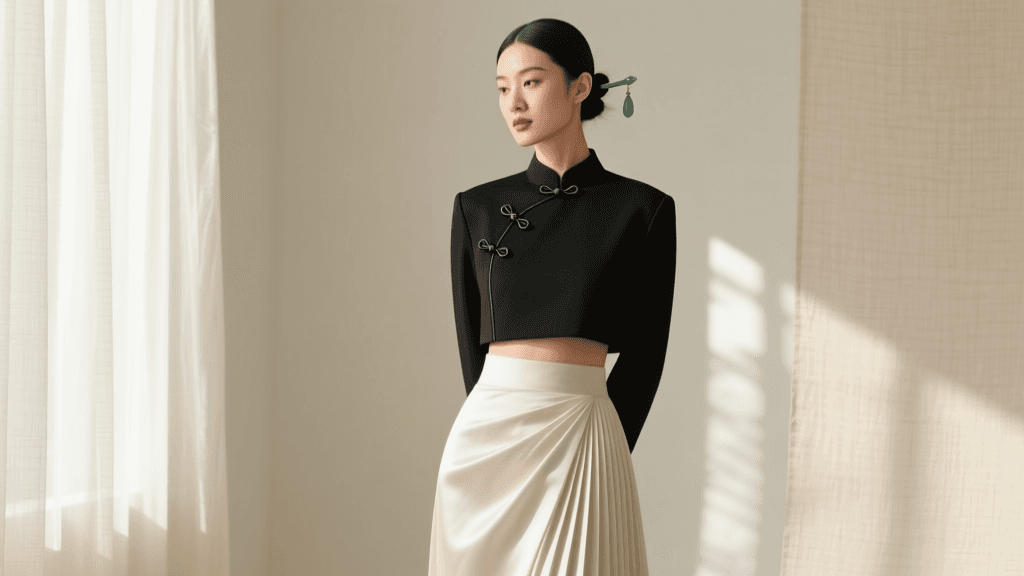
The key to mastering Neo-Chinese fashion is contrast. The Mamianqun is inherently ornate, often featuring jacquard weaves, metallic threads, or embroidered motifs like dragons, phoenixes, or floral patterns. To avoid looking like you are wearing a historical reenactment costume, the upper half of your outfit should be grounded in contemporary minimalism.
Comparison Chart: Traditional vs. Modern Fusion Pairings
| Garment Category | Traditional / Historical Pairing | Modern Neo-Chinese Fusion Pairing | Styling Tip |
|---|---|---|---|
| Tops | Ao (cross-collared jacket) or Shan | Fitted turtleneck, cropped leather jacket, or oversized graphic tee | Tuck tops in completely to highlight the waistband and maintain the skirt's A-line silhouette. |
| Outerwear | Pifeng (embroidered cape) or Bizi | Wool trench coat, denim jacket, or tailored blazer | Ensure the outerwear hem falls either exactly at the waist or mid-thigh to avoid cutting the pleats awkwardly. |
| Footwear | Cloud-toe shoes or embroidered flats | Chunky combat boots, classic white sneakers, or Mary Janes | Chunky boots add an edgy, cyberpunk-adjacent vibe that contrasts beautifully with delicate jacquard fabrics. |
| Accessories | Jade pendants, silk sashes | Minimalist metal hardware belts, modern crossbody bags | Use a thin leather belt over the tie-waist to secure it and add a modern hardware element. |
Color Theory and Motif Selection in Fusion Styling
When integrating a Mamianqun into a modern wardrobe, color and motif selection dictate the versatility of the piece. Traditional skirts often feature high-contrast color blocking, such as a crimson waistband paired with a navy blue skirt body, adorned with gold-foil woven dragons or peonies. While stunning, these can be challenging to style casually.
Building a Versatile Fusion Palette
- Monochromatic Elegance: For daily office wear or minimalist streetwear, opt for 'Tone-on-Tone' jacquard skirts. A matte black skirt with subtle, glossy black woven floral patterns catches the light beautifully without overwhelming a simple white button-down shirt or a charcoal turtleneck.
- Muted Earth Tones: Olive greens, rust oranges, and deep ochres bridge the gap between traditional Chinese aesthetics and modern workwear palettes. These colors pair exceptionally well with denim, leather, and suede outerwear.
- Motif Scale: Large, sprawling dragon or phoenix motifs are best reserved for evening wear or high-fashion editorial shoots. For everyday fusion, seek out micro-motifs like scattered plum blossoms, subtle geometric lattice patterns, or stylized clouds. These smaller patterns read as modern abstract prints from a distance, making them highly adaptable to contemporary tops.
Sourcing and Costs: Building Your Neo-Chinese Wardrobe
Acquiring a high-quality Mamianqun requires navigating both domestic Chinese e-commerce platforms and international boutiques. The market is segmented by price, material, and production timing.
- Entry-Level ($30 - $60 USD): Typically made from polyester jacquard. These are durable, machine-washable, and hold their pleats exceptionally well. Ideal for daily streetwear and beginners. Brands like 'Shisanyu' offer accessible entry points.
- Mid-Tier ($80 - $150 USD): Features blended fabrics (cotton-poly or rayon blends) with intricate woven patterns rather than printed designs. The waistbands are often reinforced with interfacing for better structure.
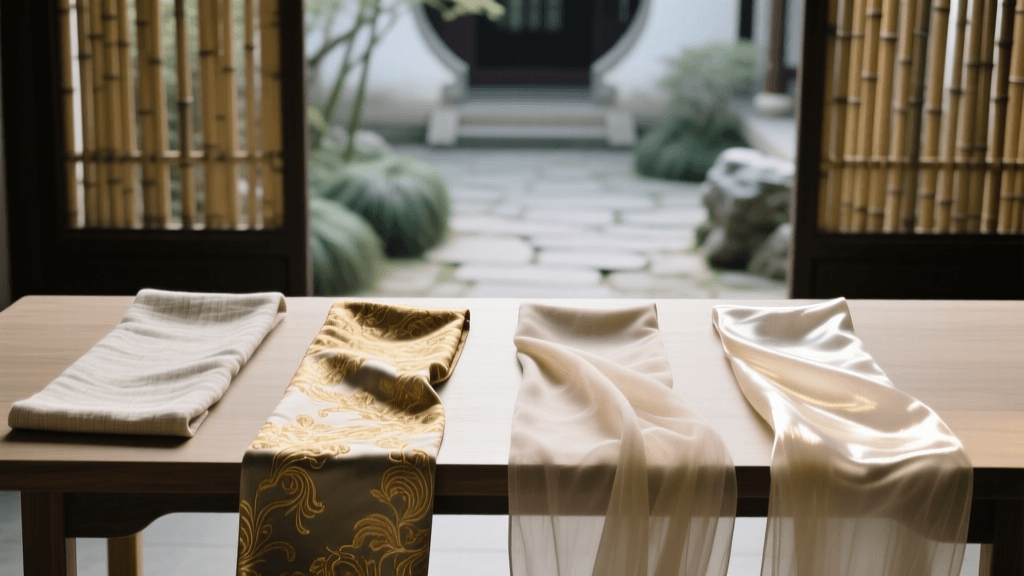
- High-End / Artisanal ($250 - $500+ USD): Crafted from pure mulberry silk, brocade, or Xiangyunsha (gambiered Canton silk). These require professional dry cleaning and are reserved for special occasions or high-fashion editorial looks.
Timing and Pre-orders: The Hanfu and Neo-Chinese market relies heavily on a pre-order model to minimize textile waste. When ordering from platforms like Taobao or specialized independent designers on Xiaohongshu, expect a production window of 30 to 45 days. Always factor this timing into your wardrobe planning, especially if sourcing for a specific event or seasonal transition.
Caring for Modern Fusion Textiles
Maintaining the crisp, architectural pleats of a Mamianqun is the most challenging aspect of ownership. Modern polyester-blend skirts are heat-set during manufacturing, but they still require careful handling.
- Washing: Never machine-wash a Mamianqun. Hand wash in cold water with a mild, pH-neutral detergent. Do not wring or twist the fabric, as this will permanently distort the knife pleats.
- Drying: Roll the skirt gently in a clean towel to absorb excess moisture, then hang it on a clip hanger. The weight of the wet fabric will naturally pull the pleats straight.
- Ironing and Storage: If pleats become loose, use a steam iron on a low setting, pressing along the original fold lines. For long-term storage, do not fold the skirt. Roll it loosely around a cardboard tube or hang it in a breathable garment bag to prevent permanent creasing across the 'horse face' panels.
Conclusion: The Future of Heritage Fashion
The modern adaptation of the Mamianqun proves that traditional garments are not static relics confined to glass display cases. Through the lens of Neo-Chinese fusion fashion, the horse-face skirt becomes a dynamic, versatile piece that speaks to both historical reverence and contemporary individuality. By understanding proper sizing, mastering the art of contrast in styling, and committing to proper textile care, anyone can integrate this masterpiece of Asian sartorial heritage into their everyday rotation.
For further reading on the evolution of Chinese dress and contemporary market trends, consult the extensive cultural archives at South China Morning Post (SCMP) Fashion and the historical textile collections documented in Wikipedia's Mamianqun Archives.