2026 Kimono Auction & Appraisal Guide: Value Vintage Silk
The 2026 Landscape of Vintage Kimono Auctions
The global market for vintage and antique Japanese garments has experienced a massive transformation by 2026. Driven by a worldwide pivot toward sustainable, circular fashion and a deep appreciation for slow-craft textiles, vintage kimono are no longer confined to local Japanese recycle shops. Today, collectors, fashion archivists, and interior designers actively compete in global online auctions and specialized heritage sales. Understanding how to accurately appraise these garments is essential for anyone looking to bid, invest, or resell in this highly nuanced market.
According to the Victoria and Albert Museum, the structural evolution and artistic significance of the kimono represent centuries of textile innovation. In 2026, auction houses utilize advanced digital cataloging, but the core principles of appraisal still rely on traditional metrics: silk quality, weave complexity, dyeing techniques, family crests, and structural integrity. Whether you are browsing Yahoo Auctions Japan via proxy services or attending a specialized Asian art sale at a major international auction house, knowing how to read a kimono is your most valuable asset.
Core Appraisal Metrics: Silk, Weave, and Weight
The foundation of any kimono appraisal is the fabric. While mid-century synthetic blends and wool kimono exist and hold modest value for casual wear, serious collectors and high-end auction markets focus almost exclusively on pure silk. However, not all silk is created equal. Appraisers evaluate the weave structure, which drastically alters the garment's drape, formality, and market price.
Identifying Premium Weaves
- Chirimen (Crepe): Characterized by a distinct pebbled texture, chirimen is created by tightly twisting the weft threads before weaving. It is highly durable, resists wrinkling, and takes dye beautifully. High-quality vintage chirimen from the Taisho and early Showa eras remains highly sought after in 2026 due to its excellent drape and rich color absorption.
- Rinzu (Satin Damask): This is a figured silk with a glossy, reflective surface and woven patterns. Rinzu is incredibly labor-intensive to produce and is reserved for formal garments. A pristine vintage rinzu kimono with intricate woven motifs commands a significant premium at auction.
- Tsumugi (Pongee): Woven from spun silk threads (often from imperfect cocoons), tsumugi has a rustic, nubby texture. While historically considered informal, antique Oshima Tsumugi or Yuki Tsumugi are now highly prized collector's items due to their complex, hand-tied resist-dyeing patterns and incredible durability.
The Hierarchy of Kamon (Family Crests)
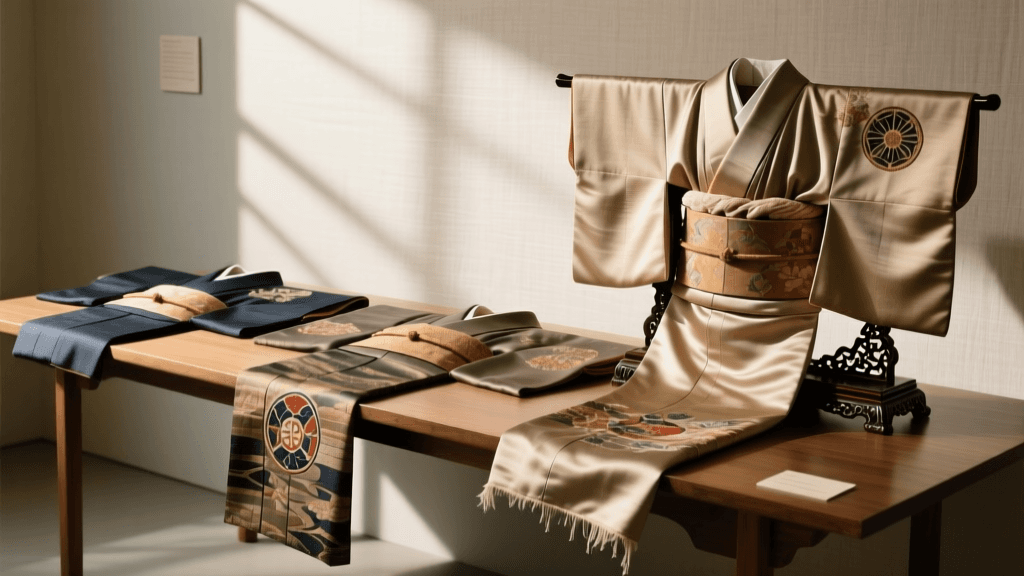
The presence, number, and application of kamon (family crests) are immediate indicators of a kimono's formality and, consequently, its baseline auction value. Crests are typically applied using resist-dyeing or meticulous hand-painting. Appraisers look for the crispness of the crest lines; blurred or bleeding crests indicate poor maintenance or inferior craftsmanship.
| Number of Crests | Placement | Formality Level | 2026 Auction Market Impact |
|---|---|---|---|
| Five (Itsutsu-mon) | Center back, both chests, both outer sleeves | Highest (Ceremonial) | Highest premium for formal silk; essential for museum-grade kurotomesode. |
| Three (Mittsu-mon) | Center back, both outer sleeves | High (Semi-Formal) | Strong collector interest; versatile for display and formal wear. |
| One (Hitotsu-mon) | Center back only | Moderate (Standard Formal) | Common; value relies heavily on the underlying silk and dye work. |
| Zero | None | Informal / Everyday | Lower baseline value unless featuring exceptional Yuzen or rare antique weave. |
Dyeing Techniques: Hand-Painted vs. Stencil
When evaluating the visual artistry of a kimono, distinguishing between hand-painted and mass-produced stencil dyeing is critical for accurate appraisal. Collectors referencing the Metropolitan Museum of Art Asian Art Collection often note that the fluidity and color blending in historical garments are hallmarks of master artisans.
Spotting Authentic Yuzen
Yuzen is a traditional resist-dyeing technique that allows for painterly, multi-colored designs. To authenticate hand-painted Yuzen at an auction viewing or via high-resolution digital catalog images, look for the following:
- The Ito-me (Thread Line): Authentic hand-painted Yuzen features a tiny, undyed white outline around the design elements where the rice paste resist was applied. If the colors bleed into one another without this crisp boundary, it is likely a modern stencil or digital print.
- Color Gradients (Bokashi): Master dyers achieve seamless color gradients by hand-brushing the dye. Stencil work often shows subtle, repetitive stippling or hard edges where the gradient begins.
- Embroidery and Foil Accents: High-end Yuzen kimono are frequently embellished with hand-embroidered silk threads or applied gold leaf (surihaku). The integration of these elements should feel organic to the design, not merely glued on top.
Measurements, Alterations, and Structural Integrity
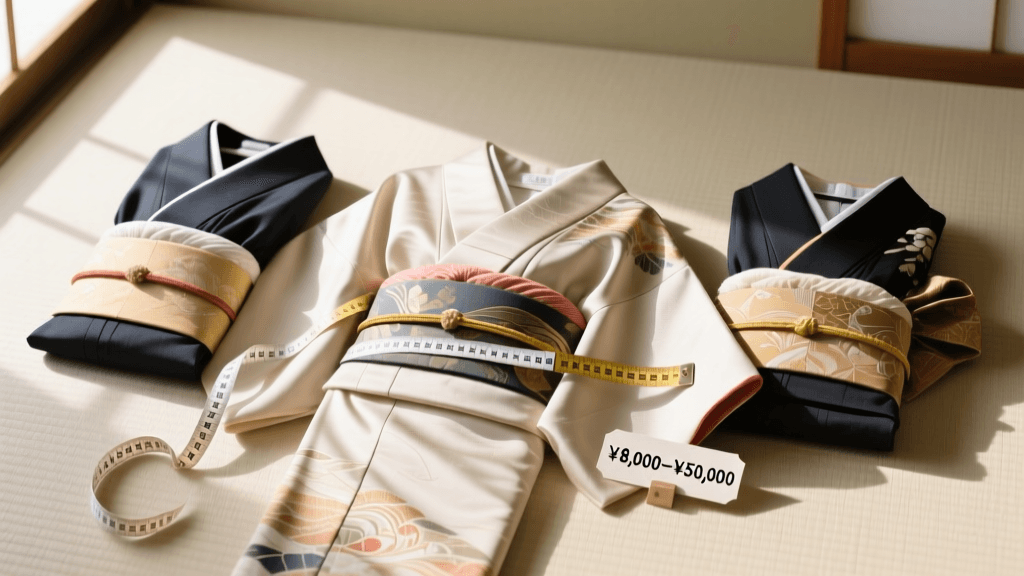
A common pitfall for novice bidders is ignoring the structural measurements of the garment. Kimono are constructed from straight bolts of fabric (tanmono), and traditional appraisal heavily penalizes garments that have been cut, narrowed, or structurally altered to fit Western tailoring preferences.
To appraise structural integrity, verify the following standard measurements:
- Panel Width (Haba): Standard vintage kimono panels are approximately 36 centimeters (14 inches) wide. If the front or back panels are significantly narrower, the fabric has been cut, destroying its value for traditional collectors who may wish to unpick and reuse the silk.
- Sleeve Drop (Furisode vs. Tomesode): Unmarried women's formal kimono (furisode) feature deep, swinging sleeves that can exceed 100 centimeters in drop length. Married women's formal kimono (tomesode) have shorter sleeves, typically around 50 centimeters. Ensure the sleeves have not been artificially shortened, which ruins the silhouette and historical accuracy.
- Inner Lining (Hakkake): Examine the lower hem lining. In formal garments, this should feature a continuation of the exterior design or a rich, contrasting pure silk. Replaced synthetic linings severely depress the auction value.
Condition Grading and Flaw Identification
Silk is a protein fiber highly susceptible to environmental damage. In 2026, reputable auction houses use a standardized condition grading system. Knowing the Japanese terminology for common flaws will help you read catalog descriptions accurately and avoid overbidding on damaged goods.
| Flaw Terminology | Description | Impact on Appraisal Value |
|---|---|---|
| Shiroyake (White Fading) | Whitish streaks or patches caused by prolonged exposure to sunlight or harsh display lighting. | Severe. Often irreversible; drastically reduces collector value. |
| Ase-yake (Sweat Staining) | Yellowish or brownish discoloration, usually found around the collar, underarms, and lower back. | Moderate to Severe. Can sometimes be treated by specialist cleaners, but risky on antique dyes. |
| Kabi (Mold/Mildew) | Small black or white spots resulting from improper storage in humid environments. | Moderate. Surface mold can be cleaned, but deep-set spores weaken the silk fibers. |
| Suji (Crease Lines) | Permanent fading or weakening along the fold lines where the kimono was stored. | Minor to Moderate. Common in vintage pieces; acceptable if the fabric is not brittle. |
Navigating Global and Domestic Auction Platforms
The 2026 auction ecosystem is bifurcated into domestic Japanese platforms and international heritage houses. Each requires a different strategy.
Domestic Japanese Platforms
Sites like Yahoo Auctions Japan and specialized local recycle shop networks offer the highest volume and the lowest baseline prices. However, they require the use of proxy bidding services. When using proxies, always request additional photos of the collar edge, the hem lining, and close-ups of the family crests. Sellers on domestic platforms often use broad terms like 'vintage' without specifying the exact era or silk type, so your own appraisal skills must be sharp.
International Heritage Auction Houses
Major houses in London, New York, and Paris hold dedicated Japanese art and textile sales. These garments are professionally cataloged, condition-reported, and authenticated. While the buyer's premium in 2026 can range from 20% to 28%, the assurance of authenticity and the presence of rare, museum-quality Taisho-era (1912-1926) and Meiji-era (1868-1912) pieces make these auctions essential for serious investors.
Actionable Bidding Strategies for 2026
To succeed in the current market, adopt a disciplined approach to bidding. First, establish a strict maximum bid based on your independent appraisal of the silk quality and condition, factoring in the auction house premium and shipping costs. Second, beware of 'franken-kimono'—garments assembled from multiple damaged pieces to create one seemingly intact item. Always check the alignment of the patterns across the center back seam and the sleeve attachments; mismatched patterns indicate the garment has been reconstructed.
Finally, leverage the growing community of digital textile archivists. In 2026, many collectors use specialized forums and AI-assisted image databases to cross-reference rare Yuzen motifs and identify specific regional dyeing schools, such as Kaga Yuzen from Kanazawa or Kyo Yuzen from Kyoto. By combining traditional tactile appraisal knowledge with modern digital research tools, you can confidently navigate the vintage kimono market, uncovering hidden masterpieces and securing valuable additions to any textile collection.