Authentic Banarasi & Kanjeevaram Sarees Online 2026 Guide
The Evolution of Heritage Silk Shopping in 2026
The landscape of purchasing traditional Asian garments has undergone a massive transformation over the last few years. As we navigate 2026, buying authentic heritage textiles like the Banarasi and Kanjeevaram silk sarees online is no longer a gamble, provided you know exactly where to look and how to verify authenticity. The rise of direct-to-consumer weaver cooperatives and government-backed digital emporiums has bridged the gap between remote artisan villages in India and global buyers. However, the proliferation of powerloom counterfeits on massive, uncurated e-commerce platforms means that shoppers must be more vigilant than ever.
For collectors, brides, and lovers of South Asian traditions, understanding the digital marketplace is crucial. This comprehensive guide will walk you through the precise steps to source genuine, handwoven Banarasi and Kanjeevaram silk sarees online in 2026, ensuring your investment supports traditional artisans and brings a genuine piece of Asian heritage into your wardrobe.
Decoding Certifications: GI Tags and the Silk Mark
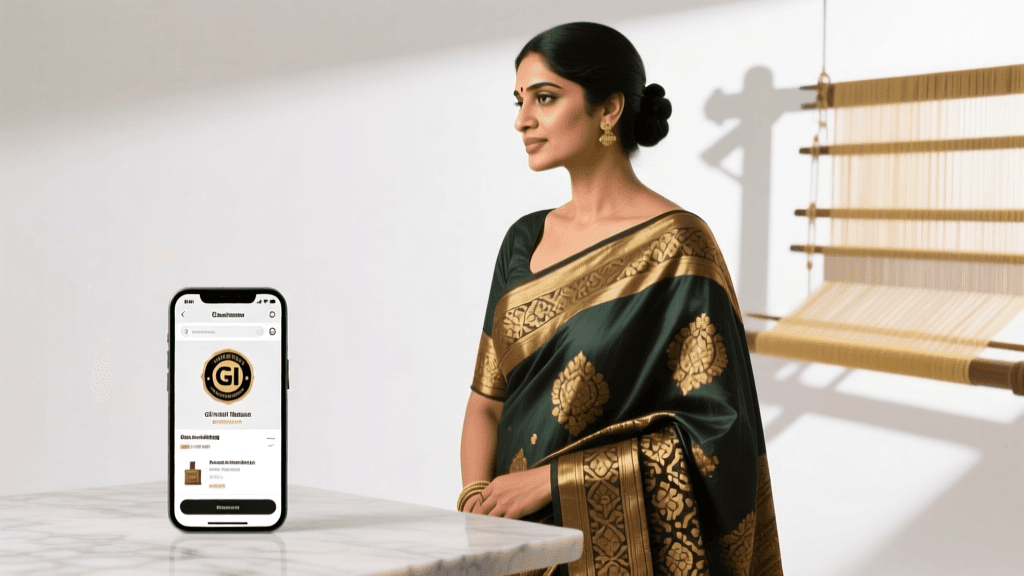
Before adding any heritage silk to your digital cart, you must understand the two pillars of textile authentication in India: the Geographical Indication (GI) tag and the Silk Mark. According to the Geographical Indications Registry, a GI tag certifies that a product possesses specific qualities or a reputation attributable to its geographic origin. For sarees, this means a genuine Kanjeevaram must be woven in the Kanchipuram region of Tamil Nadu, and a true Banarasi must originate from the Varanasi region of Uttar Pradesh.
While the GI tag protects the origin and technique, the Silk Mark protects the fiber. Administered by the Silk Mark Organisation of India (SMOI), this certification guarantees that the textile is made of 100% pure silk. In 2026, the SMOI has upgraded its labeling system to include secure, encrypted QR codes. When shopping online, reputable sellers will provide high-resolution images of the Silk Mark label. Upon delivery, you can scan this QR code using your smartphone to instantly verify the authenticity of the silk and the registered vendor's credentials.
Trusted Online Marketplaces and Digital Emporiums
To avoid the sea of synthetic blends masquerading as pure silk, you must shop on platforms that enforce strict vendor vetting. Here are the most reliable avenues for purchasing authentic traditional sarees online in 2026.
1. State Emporiums and Government-Backed Cooperatives
State-run emporiums remain the safest bet for authenticity. Poompuhar (the Tamil Nadu state emporium) and U.P. Handloom have robust online portals that ship globally. Because these platforms are overseen by the Ministry of Textiles, Government of India, every saree listed is guaranteed to be handwoven by registered artisans, complete with GI documentation. While their website interfaces may sometimes lack the polish of private tech giants, the guarantee of authenticity is absolute.
2. Curated Heritage Platforms
For a more modern user experience, several curated platforms have built their 2026 business models around weaver empowerment and strict quality control:
- Tilfi: Specializing in Banarasi weaves, Tilfi works directly with master weavers in Varanasi. They provide exhaustive details on the weaving technique, such as whether a piece utilizes the intricate Kadwa (brocade) method or the Fekua technique.
- Nalli: A legacy brand that has successfully transitioned into the digital space. Nalli is highly trusted for Kanjeevaram silks, offering everything from lightweight daily-wear silks to heavy, pure-zari bridal pieces with the traditional Korvai (interlocking border) technique.
- Jaypore: Known for curating high-end, artisanal crafts, Jaypore is an excellent destination for contemporary adaptations of traditional weaves, ensuring that ancient techniques remain relevant in modern 2026 fashion.
2026 Price Guide: What Should Authentic Silk Cost?
One of the most common pitfalls for online shoppers is falling for prices that are simply too good to be true. The cost of raw mulberry silk and precious metals used in zari (gold and silver threads) has steadily risen. Below is a realistic pricing matrix for authentic handwoven silk sarees in 2026.
| Saree Type | Weaving Technique / Zari Quality | Estimated Price Range (USD) | Estimated Price Range (INR) |
|---|---|---|---|
| Banarasi Katan Silk | Pure Silk / Tested (Copper) Zari | $250 - $450 | ₹20,000 - ₹35,000 |
| Banarasi Katan Silk | Pure Silk / Real Gold-Silver Zari | $600 - $1,200+ | ₹50,000 - ₹1,00,000+ |
| Kanjeevaram Pure Silk | Pure Silk / Tested Zari | $200 - $400 | ₹15,000 - ₹30,000 |
| Kanjeevaram Pure Silk | Pure Silk / Pure Zari (Korvai border) | $500 - $1,500+ | ₹40,000 - ₹1,20,000+ |
| Banarasi Organza | Kora Silk with Meenakari / Kadwa | $300 - $600 | ₹25,000 - ₹50,000 |
Note: Prices fluctuate based on the complexity of the motif, the weight of the silk, and the percentage of real silver/gold in the zari thread.
Red Flags: Spotting Fakes on General E-Commerce Sites
When browsing massive, uncurated global marketplaces, buyers must be wary of deceptive marketing terminology designed to mimic heritage garments. If you are looking for a genuine traditional piece, avoid listings that feature the following red flags:
- "Art Silk" or "Artificial Silk": This is a euphemism for polyester or rayon blends. While these may look shiny and drape easily, they lack the breathability, longevity, and cultural value of pure mulberry silk.
- "Soft Silk" without a Silk Mark: In 2026, many powerloom manufacturers use the term "soft silk" to describe chemically treated synthetic blends meant to mimic the drape of genuine handwoven silk. If the Silk Mark is absent, assume it is a blend.
- Uniform Perfection: Handwoven Banarasi and Kanjeevaram sarees possess slight, beautiful irregularities. If the online photos show mathematically perfect, laser-like uniformity in the motifs, the piece was likely produced on a computerized Jacquard powerloom.
- The Reverse Side Test: Authentic handwoven Banarasi brocades (especially Kadwa weaves) have a clean reverse side with no loose threads hanging between motifs. Powerloom fakes often feature a messy underside with long, floating threads connecting the patterns. Reputable online sellers in 2026 will always include a photograph of the reverse side of the pallu and body.
Verifying Your Purchase Upon Delivery
Once your package arrives, the verification process begins. First, locate the Silk Mark tag and scan the 2026 encrypted QR code. Next, inspect the zari. Genuine pure zari contains a core of red silk thread wrapped in flattened silver wire, which is then electroplated in gold. If you gently pull a single zari thread from the tassel or fringe and burn it, pure silk will smell like burnt hair and leave a crushable, powdery ash. Synthetic threads will melt into a hard, plastic-like bead and emit a chemical odor.
Furthermore, examine the border of a Kanjeevaram saree. The hallmark of a traditional piece is the Korvai technique, where the border and the body are woven separately and interlocked by hand. Run your fingers along the border joint; you should feel a distinct, slightly raised ridge where the two sections meet. Powerloom sarees weave the body and border simultaneously, resulting in a flat, seamless transition.
Caring for Your Heritage Investment
Purchasing an authentic silk saree is an investment in wearable art. To maintain the structural integrity of the silk and the luster of the zari, never wash these garments at home. In 2026, specialized heritage dry-cleaning services are widely available and utilize organic, pH-neutral solvents that protect the delicate gold plating on pure zari threads. Always store your Banarasi and Kanjeevaram sarees wrapped in unbleached muslin cloth to allow the natural fibers to breathe, and refold them every three months to prevent permanent creasing and fiber degradation along the fold lines.
Conclusion
The digital age has made it easier than ever to access the magnificent textile traditions of Asia, but it requires an educated buyer to separate heritage artistry from mass-produced imitation. By relying on GI certifications, the Silk Mark, and trusted weaver cooperatives, you can confidently shop for authentic Banarasi and Kanjeevaram silk sarees online in 2026. In doing so, you not only acquire a breathtaking, timeless garment but also play a vital role in sustaining the livelihoods of the master weavers who keep these ancient Asian traditions alive.