Hanfu Secondhand Market 2026: Vintage Collecting & Resale Guide
The Evolution of the Hanfu Secondhand Market in 2026
The Hanfu movement has transformed from a niche cultural revival into a multi-billion-dollar global fashion industry. As we navigate 2026, the primary retail market is saturated with fast-fashion iterations and mass-produced historical replicas. Consequently, serious enthusiasts, textile archivists, and cultural historians have turned their attention to the Hanfu secondhand market. Collecting vintage and early-revival Hanfu is no longer just about finding a bargain; it is about preserving the textile heritage of the 2010s renaissance. According to cultural analysts documenting the roots of the Hanfu movement, the desire to reconnect with pre-Qing dynasty aesthetics sparked a grassroots revolution that has now matured into a sophisticated secondary economy.
In 2026, the secondary market is defined by archival collecting. Early pieces from pioneering brands are now treated as museum-grade artifacts. The slight inaccuracies in early 2010s patterns, once criticized by historians, are now celebrated as vital historical markers of the movement's evolution. Whether you are looking to acquire a rare Minghuatang Mamianqun (horse-face skirt) or safely sell your own archive on platforms like Xianyu, understanding the nuances of the 2026 vintage Hanfu market is essential.
Defining 'Vintage' in the Hanfu Space
Unlike Western fashion, where 'vintage' typically refers to garments over 20 years old, the Hanfu community operates on a much compressed timeline. Because the modern Hanfu revival only began gaining significant traction in the late 2000s and early 2010s, 'vintage' in this context generally refers to pieces produced between 2012 and 2019. These early-revival garments are highly sought after for several reasons:
- Pioneering Silhouettes: Early brands like Chong Hui Han Tang and Zhongjing Hanfu experimented with silhouettes that laid the groundwork for modern historical accuracy.
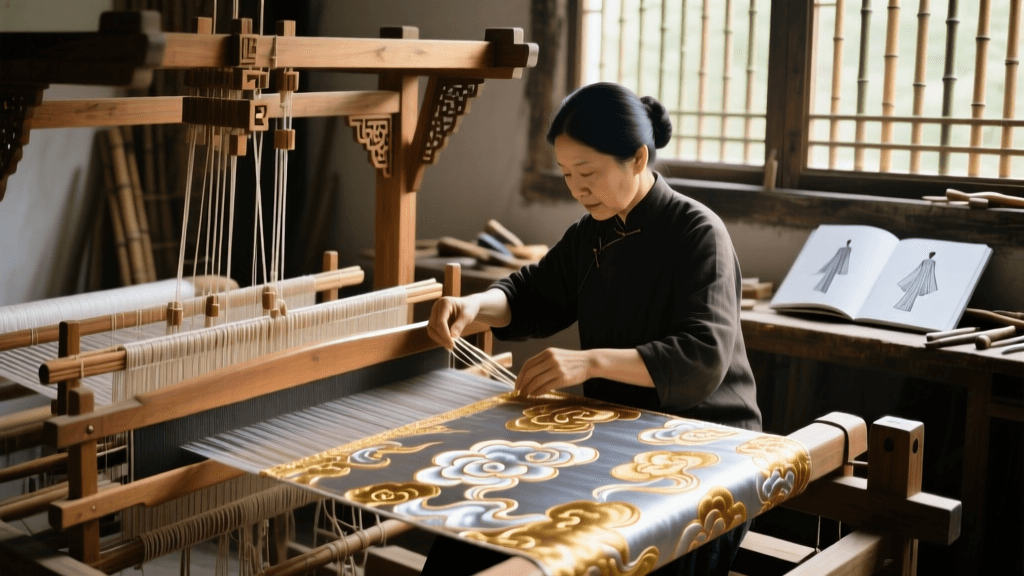
- Discontinued Textiles: Many early pieces utilized custom-woven jacquards and natural dye lots (such as early iterations of Xiangyunsha silk) that are no longer in production.
- Brand Prestige: First-generation drops from top-tier brands like Minghuatang and Tingyue Pavilion have achieved legendary status, often appreciating in value far beyond their original retail price.
Navigating Xianyu and Global Resale Platforms
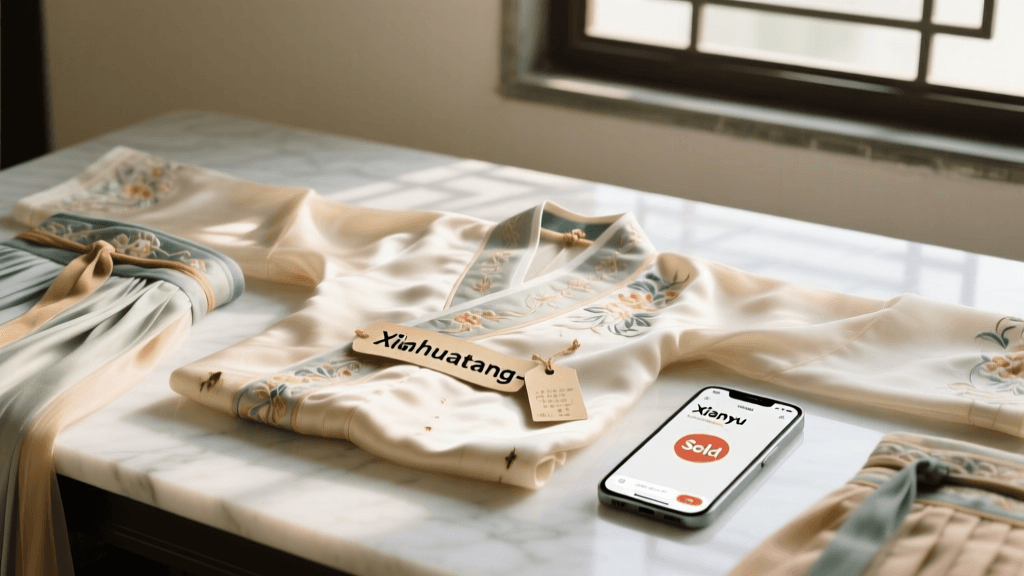
The undisputed king of the domestic Chinese secondhand market remains Alibaba’s Xianyu (Idle Fish) app. In 2026, Xianyu has integrated advanced AI authentication tools specifically trained to recognize counterfeit Hanfu (known in the community as Shan Zhai). However, international collectors often rely on specialized WeChat mini-programs, Depop, and eBay, where early-revival Hanfu is frequently mislabeled as generic 'Chinese vintage clothing,' presenting a goldmine for knowledgeable buyers.
Collecting early revival Hanfu is akin to archiving the first editions of a cultural renaissance. The textiles tell the story of a generation reclaiming its sartorial identity.
When searching on Xianyu, utilizing precise Chinese terminology is crucial for uncovering hidden gems. Searching for Hui Xue (回血 - literally 'recovering blood,' meaning a seller looking to quickly recoup funds) or Wei Xia Shui (未下水 - unwashed/brand new without tags) will yield the best results for serious collectors.
Condition Grading and Authentication
The condition of vintage Hanfu drastically affects its 2026 market value. Because traditional garments utilize complex pleating, delicate silk brocades, and metallic yarns, wear and tear must be meticulously documented. The community generally adheres to the following grading scale:
The 2026 Hanfu Condition Scale
- Archive/NWT (Quan Xin): Unworn, original tags attached, original packaging included. Commands a 150% to 300% premium for rare brands.
- NWOT (Jin Xin): 'Near new.' Worn once for a photoshoot or event, professionally dry-cleaned, no snags or makeup stains.
- Used-Excellent (Wei Xia Shui/Minor Wear): Washed and worn, but pleats remain sharp. Minor pilling on inner linings is acceptable.
- Used-Good (Daily Wear): Visible fading on natural dyes (like indigo), softened Xiangyunsha crackle-glaze, or minor metallic thread tarnishing. Valued primarily for its textile rarity rather than wearability.
Authentication Tip: Counterfeiters in 2026 have become adept at replicating brand tags. Always request high-resolution macro photos of the fabric weave. Authentic Song brocade (Song Jin) and Zhuanghua weaves will show a distinct, continuous thread structure on the reverse side, whereas cheap digital prints or low-tier jacquards will show messy, floating threads or a fused synthetic backing.
2026 Pricing Trends and Archival Investments
As noted by Reuters during the initial explosion of the Hanfu craze, the market's rapid expansion laid the groundwork for what is now a highly regulated and lucrative vintage textile sector. Below is a comparative look at how iconic archival pieces have performed in the 2026 resale market.
| Brand & Archival Piece | Original Retail (RMB) | 2026 Resale Value (RMB) | Collector Demand |
|---|---|---|---|
| Minghuatang 'Cloud & Crane' Mamianqun (2018 Drop) | ¥899 | ¥4,500 - ¥6,200 | Extremely High (Museum Grade) |
| Chong Hui Han Tang Early Tang Dynasty Banbi Set (2015) | ¥450 | ¥1,800 - ¥2,500 | High (Historical Significance) |
| Shisanyu 'Spring Swallow' Song Dynasty Beizi (2019) | ¥320 | ¥600 - ¥950 | Moderate (Entry-Level Vintage) |
| Tingyue Pavilion Authentic Xiangyunsha Aoqun (2017) | ¥2,400 | ¥5,500 - ¥8,000 | Very High (Textile Rarity) |
Best Practices for Sellers: Maximizing Resale Value
If you are looking to sell your own Hanfu archive in 2026, presentation and transparency are paramount. The secondary market is highly educated, and buyers will scrutinize every detail.
Photography and Lighting
Never use heavy filters. Natural, indirect sunlight is best for showcasing the subtle sheen of silk and the intricate details of metallic embroidery. For Xiangyunsha (gambiered Canton gauze), photograph the garment against a dark background to highlight the distinctive 'crackle' effect of the mud-silk dyeing process. Always include a flat-lay photo with a standard measuring tape visible.
Accurate Flat-Lay Measurements
Historical garments do not follow modern Western sizing charts. Sellers must provide flat-lay measurements in centimeters:
- Mamianqun (Horse-face skirt): Measure the flat waist width, the total length from waistband to hem, and the width of the central 'horse face' panel.
- Ao (Jacket): Measure the pit-to-pit width, the sleeve length from the center back collar (traditional drop-shoulder measurement), and the front overlap width.
Caring for Secondhand Archival Hanfu
Acquiring a vintage piece is only the first step; preserving it requires specialized knowledge. Early revival Hanfu often utilized experimental dyeing techniques that may not be as colorfast as modern chemical dyes.
- Storage: Never hang heavy silk Mamianqun for long periods, as the weight will distort the waistband and stretch the pleats. Fold them using acid-free tissue paper to buffer the sharp pleat lines, and store them flat in archival cotton boxes.
- Moth Prevention: Avoid chemical mothballs, which will permanently taint the silk fibers and degrade metallic threads. Instead, use natural camphor wood blocks or dried mugwort sachets, replacing them every six months.
- Cleaning: Never machine wash vintage Hanfu. For spot cleaning, use distilled water and a pH-neutral silk detergent. For full cleaning, seek out a dry cleaner who specializes in traditional theatrical costumes or heritage textiles.
The Future of Hanfu Archiving
As we move through 2026, the line between fashion collecting and cultural preservation continues to blur. Universities and textile museums are increasingly acquiring early-revival Hanfu from private collectors to study the sociological and sartorial shifts of the 21st century. By participating in the secondhand market, you are not merely buying and selling clothes; you are acting as a custodian of living history. Whether you are hunting for a grail piece on Xianyu or carefully cataloging your own collection, the vintage Hanfu market offers a profound connection to the artisans and pioneers who brought these ancient silhouettes back to life.