2026 Vintage Hanfu Resale & Secondhand Collecting Guide
The Evolution of the Hanfu Resale Market in 2026
The Hanfu movement has undergone a massive transformation over the last decade. What began as a niche cultural revival in the early 2010s has blossomed into a mainstream global fashion phenomenon by 2026. As the market has matured, a distinct and highly lucrative secondary market has emerged: vintage and archive Hanfu collecting. For serious enthusiasts, traditional Chinese garment collectors, and fashion historians, the secondhand market is no longer just a place to find discounted clothing; it is a treasure hunt for rare, discontinued, and historically significant pieces that define the early eras of the modern Hanfu revival.
According to cultural analysts covering the revival of traditional dress, the desire to reconnect with historical aesthetics has driven massive economic growth in this sector. As noted by BBC News in their extensive coverage of the Hanfu movement, the blending of historical identity with modern commerce has created a fiercely dedicated consumer base. Today, in 2026, early pieces from foundational brands are treated with the same reverence as archive haute couture in Western fashion circles.
What Qualifies as 'Vintage' or 'Archive' Hanfu?
In the context of the 2026 market, 'vintage' Hanfu generally refers to garments produced between 2012 and 2019. These pieces were created by pioneer brands that established the modern silhouettes, fabric standards, and historical accuracy benchmarks that the industry relies on today. Brands like Minghuatang (明华堂), Shishi (十三余 - early collections), and Zhongling (钟灵记) hold legendary status.
Collectors specifically seek out 'archive' pieces for several reasons:
- Superior Natural Materials: Early high-end brands frequently used pure silk brocades, heavy raw silks, and natural linen blends before the market was flooded with cheaper synthetic alternatives in the early 2020s.
- Historical Accuracy Milestones: Garments that represent the first time a specific dynasty's silhouette (such as the Ming Dynasty Mamianqun or Song Dynasty Beizi) was accurately reconstructed for the modern commercial market.
- Discontinued Colorways: Small-batch, hand-dyed, or limited-run embroidery designs that a brand has never reproduced.
Navigating Xianyu: The Epicenter of Secondhand Hanfu
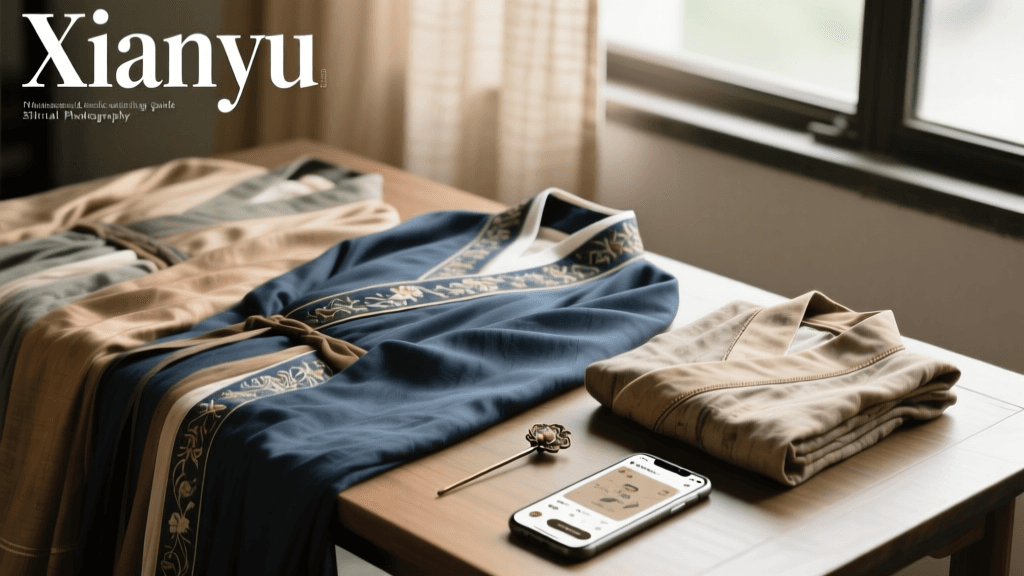
Xianyu (闲鱼), Alibaba’s secondhand marketplace app, remains the undisputed king of the Hanfu resale market in 2026. While international platforms like Etsy or specialized Discord trading servers exist, the vast majority of rare archive pieces circulate on Xianyu. For international collectors, navigating Xianyu requires the use of proxy shopping agents (such as CSSBuy or Superbuy) that offer specialized Xianyu purchasing services, handling the complex domestic shipping and international freight forwarding.
Essential Chinese Search Terms for 2026
To find the best pieces, you must use the correct terminology. English keywords will yield poor results. Use these specific search terms on Xianyu:
- 绝版 (Juébǎn): Out of print / Discontinued. This is the most critical keyword for collectors.
- 古早 (Gǔzǎo): Vintage / Early era. Often used to describe pieces from the 2010-2016 era.
- 萌物 (Méngwù): Highly coveted / 'Holy grail' item. Indicates a piece with high demand and low supply.
- 退坑 (Tuì kēng): Leaving the hobby. Sellers using this term are often liquidating entire collections, which can yield incredible bundle deals on rare items.
- 手作 (Shǒuzuò): Handmade. Used for independent, artisan-crafted pieces that are not from commercial brands.
Condition Grading and Authentication
When buying secondhand Hanfu, especially delicate silk garments, understanding the condition grading system used by Chinese sellers is vital. In 2026, Xianyu has integrated AI-driven image recognition to help flag obvious counterfeits of high-end brands like Minghuatang, but manual inspection of seller photos remains essential.
| Grade (English) | Chinese Term | Description & Collector Value | Expected Discount from Retail |
|---|---|---|---|
| Mint / Unworn | 全新仅试穿 (Tried on only) | Tags may be removed, but garment shows zero signs of wear, washing, or sun fading. Highly sought after for archive collectors. | -10% to +50% (Premium for rare items) |
| Excellent | 99新 (99% New) | Worn once or twice for photoshoots. No stains, pulls, or odors. Original packaging might be missing. | -15% to -25% |
| Good | 95新 (95% New) | Minor signs of wear, slight pilling on cuffs, or faint wrinkling. Structurally sound and perfectly wearable. | -30% to -45% |
| Fair / Study Piece | 微瑕 (Slight flaws) | Visible stains, small tears, or missing embroidery threads. Bought primarily for textile study, upcycling, or pattern drafting. | -60% to -80% |
2026 Archive Brand Pricing Guide
The pricing of vintage Hanfu is highly volatile and depends heavily on the brand's historical significance and the rarity of the specific SKU. Below is a general pricing guide for 2026, reflecting current market averages on Xianyu and international proxy forums.
| Brand | Era / Focus | Standard Piece (e.g., Skirt) | Rare / 'Holy Grail' Piece (e.g., Full Set) |
|---|---|---|---|
| Minghuatang (明华堂) | Ming Dynasty / Luxury Silk | $800 - $1,500 USD | $3,500 - $8,000+ USD |
| Shanyou (山有) | Song/Ming / Embroidery | $250 - $450 USD | $800 - $1,200 USD |
| Zhongling (钟灵记) | Multi-Dynasty / Early Revival | $120 - $250 USD | $400 - $700 USD |
| Independent Artisans (Pre-2018) | Custom / Handwoven | $300 - $600 USD | $1,000 - $2,500 USD |
'The 2026 market has shifted from simply buying 'pretty dresses' to acquiring tangible pieces of cultural history. A 2015 Minghuatang woven-gold Mamianqun is no longer just clothing; it is an investment-grade textile artifact that documents the early technological achievements of modern Jacquard loom revival in China.' — Dr. Lin Wei, Textile Historian and Archive Consultant, 2026.
Preservation: Storing Your Vintage Collection
Acquiring a rare piece of archive Hanfu is only half the battle; preserving it is the other. Many early revival garments were constructed using experimental natural dyes and early-generation metallic threads that are highly susceptible to environmental degradation. Proper storage is non-negotiable for serious collectors.
Archival Storage Best Practices
According to guidelines established by leading textile conservation departments, such as those outlined by the Metropolitan Museum of Art's Textile Conservation team, historic garments require strict climate and material controls to prevent irreversible damage.
- Acid-Free Tissue Paper: Never fold vintage Hanfu directly against itself. Stuff the sleeves, bodice, and skirt pleats with unbuffered, acid-free tissue paper to prevent hard creases that can snap aged silk fibers over time.
- Unbleached Cotton Bags: Avoid plastic dry-cleaning bags entirely. Plastic traps moisture and off-gasses chemicals that will yellow pure silk. Store garments in breathable, washed, unbleached muslin or cotton garment bags.
- Climate Control: Maintain a storage environment with a relative humidity (RH) of 45-55% and a stable temperature around 65°F (18°C). Fluctuations in humidity will cause metallic threads (especially early imitation gold and silver foils) to tarnish and flake.
- Pest Prevention: Use natural cedar blocks or lavender sachets placed outside the cotton bag (never directly touching the fabric) to deter silverfish and carpet moths, which are highly attracted to the natural proteins in silk and wool.
- The 'Resting' Protocol: If you wear an archive piece for a photoshoot or event, allow it to 'rest' in a well-ventilated, shaded room for 48 hours before returning it to long-term storage. This allows natural body oils and moisture to dissipate, preventing localized staining and mold growth.
The Future of Hanfu Collecting
As we move deeper into 2026, the line between fashion collecting and historical preservation continues to blur. The secondhand Hanfu market is a testament to the dedication of the early revivalists who fought to bring traditional Chinese garment construction back into the public eye. For new collectors entering the space, patience, meticulous research, and a deep respect for textile conservation are the keys to building a meaningful and historically significant archive. Whether you are hunting for a discontinued Song Dynasty Beizi on Xianyu or carefully preserving a 2014 Ming Dynasty Aoqun, you are actively participating in the ongoing story of Asian sartorial heritage.