Top Hanfu Styles for Qigong and Meditation in 2026
The Intersection of Hanfu and Somatic Wellness
In 2026, the global wellness industry has fully embraced the profound connection between mindfulness, somatic movement, and the garments we wear. As practitioners seek deeper authenticity in their healing arts, traditional Chinese clothing—specifically Hanfu—has emerged as the preferred attire for Qigong, Tai Chi, and deep meditation. Unlike modern synthetic activewear, which often compresses the body and restricts energetic flow, Hanfu is engineered around the principles of Traditional Chinese Medicine (TCM) and the unobstructed circulation of Qi (vital energy).
Wellness retreats across Yunnan, Hangzhou, and global holistic centers are now mandating or highly recommending natural-fiber Hanfu for their morning movement sessions. The loose, flat-cut construction of these garments allows for a full range of motion while maintaining a grounded, dignified posture. This guide explores the best Hanfu styles, fabrics, and eco-friendly dyeing methods to elevate your Qigong and meditation practice this year.
The Philosophy of Qi and Garment Construction
To understand why Hanfu is superior for energy work, one must look at its structural design. Modern clothing relies on darts, tight seams, and elastic bands that can inadvertently press against vital acupressure points and meridians. According to the National Center for Complementary and Integrative Health (NCCIH), practices like Qigong and Tai Chi rely on gentle, flowing movements to stimulate the body's meridian system and improve overall vitality.
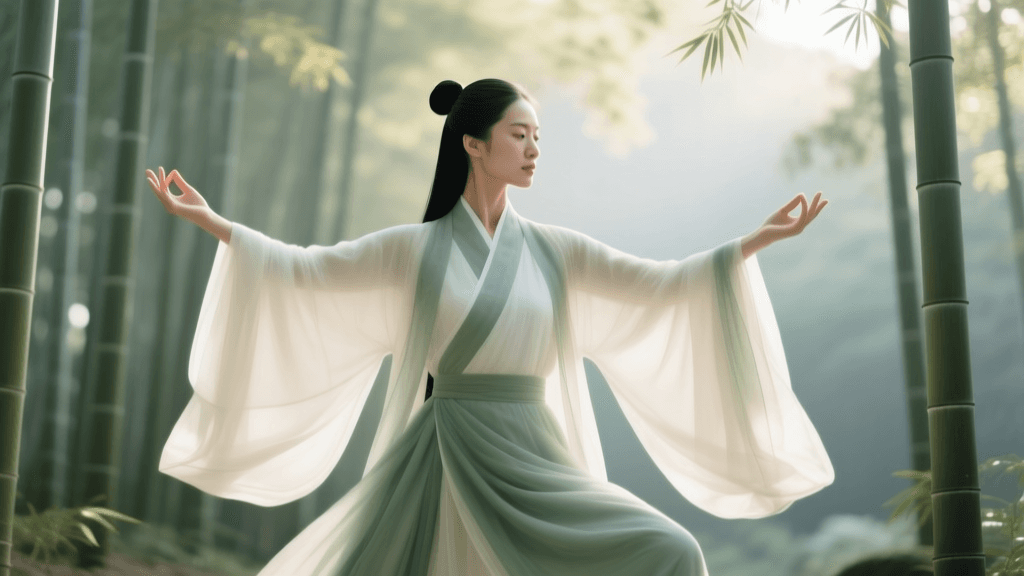
Hanfu utilizes a 'flat-cutting' technique. The fabric is woven in narrow looms and cut in straight lines, minimizing curved seams. The iconic cross-collar (jiaoling) naturally rests over the chest without constricting the lungs or the heart meridian. Furthermore, the wide sleeves and deep gussets under the arms ensure that when a practitioner raises their arms for the 'Two Hands Hold up the Heavens' movement in the Ba Duan Jin (Eight Brocades), the fabric moves with the body rather than pulling against the shoulders.
Fabric Guide: Breathability and Energetic Resonance
The material of your Hanfu dictates how well your body regulates temperature during the internal heat generation of Qigong. In 2026, the market has seen a massive shift toward heritage textiles that offer both physical comfort and energetic grounding.
| Fabric Type | Heritage Name | Breathability | Best Wellness Practice | Maintenance |
|---|---|---|---|---|
| Ramie Linen | Xia Bu (Summer Cloth) | Very High | Active Qigong, Tai Chi | Machine wash cold, line dry |
| Mulberry Silk | Silk Crepe | Medium | Zhan Zhuang (Standing Meditation) | Hand wash with pH-neutral soap |
| Gambiered Silk | Xiangyun Sha | High | Outdoor Morning Meditation | Hand wash, shade dry only |
| Organic Cotton | Heavy Twill | Medium | Seated Zen Meditation | Machine wash warm |
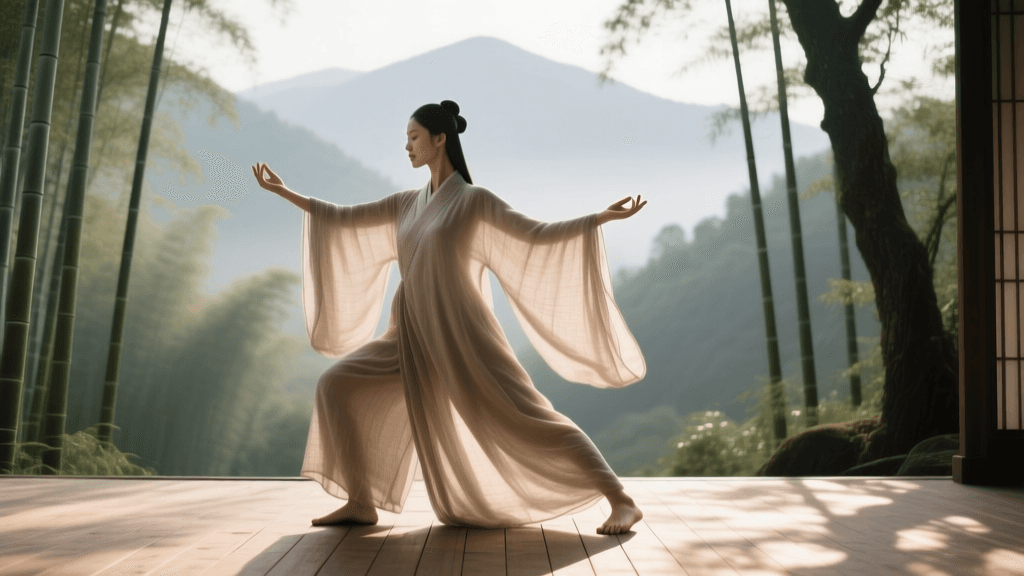
As noted by The Metropolitan Museum of Art, Chinese silk has been cultivated for millennia not just for its beauty, but for its unique thermoregulatory properties. For stationary practices like Zhan Zhuang (standing like a tree), a lightweight mulberry silk Hanfu provides a gentle, warming embrace that keeps the joints supple without causing overheating.
Top 3 Hanfu Silhouettes for Movement and Stillness
1. The Daopao (Taoist Robe) for Deep Meditation
The Daopao is a wide-sleeved, cross-collar robe that drapes elegantly to the floor. It is the quintessential garment for seated meditation and deep breathing exercises. The sheer volume of the fabric creates a 'tent' effect when seated in a lotus or half-lotus position, trapping a microclimate of warm air around the legs and lower Dantian (the body's energetic center). In 2026, modern wellness brands have adapted the Daopao using weighted organic hemp at the hem to prevent the robe from shifting during long meditation sessions.
2. The Song Dynasty Beizi for Active Qigong
For practitioners who engage in dynamic forms like the 24-style Tai Chi or the Five Animals Qigong, the Song Dynasty Beizi is ideal. It is an open-front, knee-length or calf-length jacket with side slits that reach up to the waist. Worn over a simple linen tunic and loose trousers, the Beizi provides a layered, dignified look while the deep side slits allow for unrestricted lunges, kicks, and deep stances. The straight, narrow sleeves of the Beizi also ensure that your hands and wrists remain visible to your instructor, which is crucial for correcting meridian alignment in the arms.
3. The Jiaoling Ruqun for Flowing Movement
The Jiaoling Ruqun (cross-collar top and wrap skirt) is highly favored by female practitioners for its graceful aesthetic and fluid movement. The wrap skirt, when tailored with adequate width, allows for sweeping, circular steps. According to Harvard Medical School, the flowing, continuous movements of Tai Chi and Qigong help reduce stress and improve balance. The visual feedback of the skirt swaying in harmony with your body's momentum provides an excellent focal point for moving meditation, reinforcing the mind-body connection.
The Role of Natural Eco-Friendly Dyeing
In 2026, the wellness community is hyper-aware of the toxins present in fast-fashion dyes, which can be absorbed through the skin during heavy sweating or deep relaxation. Authentic Hanfu for wellness is now almost exclusively dyed using traditional, eco-friendly botanical methods. These natural dyes not only protect the environment but are believed to carry the healing properties of the plants themselves.
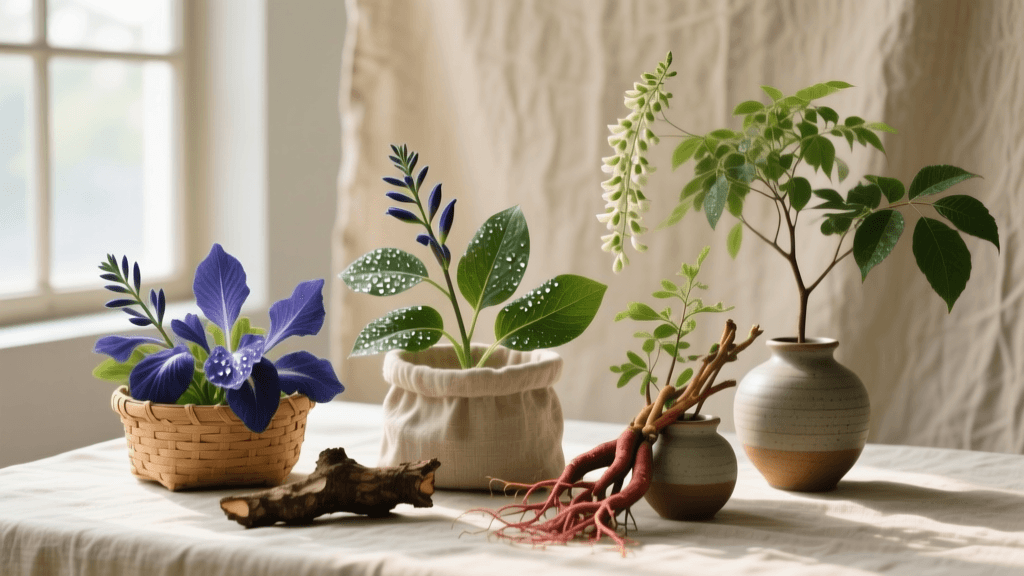
- Indigo (Lan Cao): Known in TCM for its cooling and detoxifying properties. Indigo-dyed linen is highly recommended for summer Qigong practice, as it naturally repels insects and provides a psychological cooling effect.
- Madder Root (Qian Cao): Produces a deep, earthy red. In TCM, madder is associated with blood circulation. Wearing madder-dyed silk during winter meditation is thought to support cardiovascular warmth and energy flow.
- Lotus Stem and Tea Leaves: These yield soft, muted browns and greys. They are rich in tannins, which give the fabric a natural antibacterial quality, keeping the garment fresh even after rigorous sweating during martial Qigong forms.
The Ritual of Dressing: Preparing for Practice
Integrating Hanfu into your wellness routine is not merely about changing clothes; it is a transitional ritual that signals to the nervous system that it is time to enter a state of mindfulness. The act of tying the sash (xi) is a grounding exercise in itself.
Begin by standing in a relaxed posture. As you wrap the left side of the collar over the right (the traditional Hanfu method, symbolizing life and positive energy), take a deep, diaphragmatic breath. Tie the sash at the waist or hips with a firm, secure knot, applying gentle pressure to the Mingmen (Gate of Life) acupoint on the lower back. This physical cue helps stabilize the core and align the spine, preparing you for the physical demands of Qigong or the stillness of seated meditation.
2026 Buyer’s Guide: Sourcing Authentic Wellness Hanfu
When shopping for Hanfu specifically for wellness practices this year, prioritize transparency in the supply chain. Look for certifications like the Global Organic Textile Standard (GOTS) for cotton and linen, and seek out artisans who practice heritage weaving. Avoid garments with synthetic linings; a 100% natural fiber garment ensures that your skin can breathe and your body's electrical field remains ungrounded by plastics.
Investing in a high-quality, naturally dyed Hanfu is an investment in your holistic health. By aligning your outer garments with the ancient principles of energy flow, you create a seamless bridge between the physical body and the mindful spirit, allowing your Qigong and meditation practices to reach new depths in 2026 and beyond.