Top Chinese Natural Dye Plants For Eco Fashion 2026
The Renaissance of Cao Mu Ran in 2026
The global textile industry is undergoing a massive ecological awakening in 2026, driven by stringent new international environmental regulations and a surging consumer demand for supply chain traceability. As the fashion sector pivots away from petrochemical-based synthetic dyes—which the UN Environment Programme (UNEP) notes are responsible for roughly 20% of global industrial water pollution—designers and artisans are looking to the past for future-proof solutions. Traditional Chinese botanical dyeing, historically known as Cao Mu Ran (grass and wood dyeing), is experiencing a renaissance. By leveraging ancient botanical knowledge alongside modern organic farming certifications, today's eco-fashion brands are utilizing Chinese natural dye plants to create vibrant, colorfast, and entirely biodegradable textiles.
Unlike synthetic alternatives that require heavy metal fixatives and release toxic effluents, traditional Chinese dye plants rely on renewable agricultural byproducts, natural fermentation, and plant-based mordants. This guide explores the three most vital Chinese natural dye plants dominating the sustainable fashion landscape in 2026, their ecological metrics, and a practical guide to eco-friendly application.
The Big Three: Essential Chinese Botanical Dyes
1. Indigo (Lan Cao) - The Blue of the East
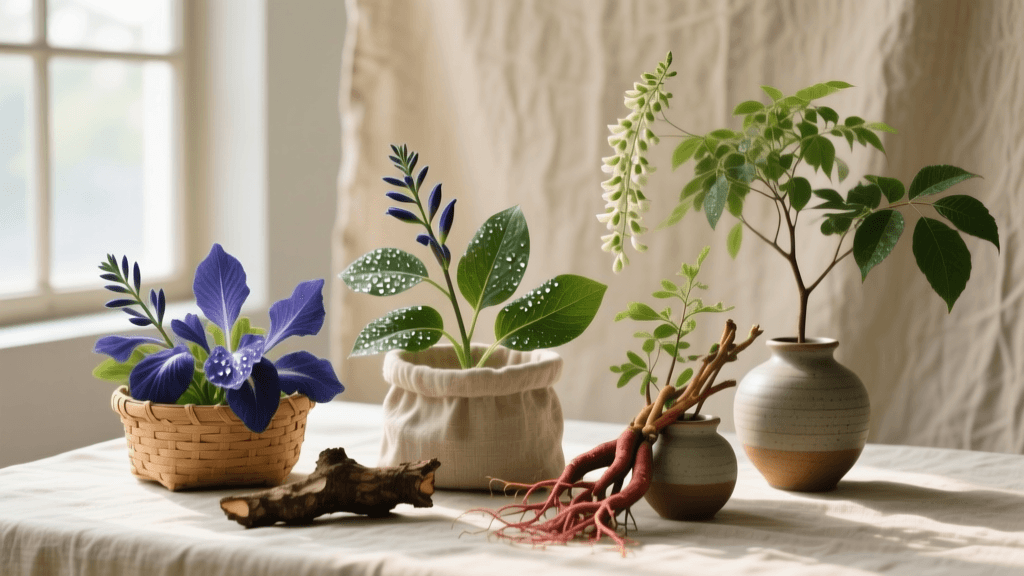
Chinese indigo primarily utilizes Strobilanthes cusia (Acanthaceae family) or Polygonum tinctorium. Unlike the synthetic indigo used in mass-market denim, which relies on aniline and formaldehyde, natural Lan Cao is cultivated in the mountainous regions of Guizhou and Yunnan. The leaves are harvested, soaked in water, and fermented to extract the precursor molecule, indican. Through oxidation, this transforms into the iconic, deep blue indigotin pigment. In 2026, organic-certified Chinese indigo is prized not just for its color, but for its inherent antibacterial properties, making it a top choice for sustainable activewear and intimate apparel.
2. Madder (Qian Cao) - The Crimson Root
Rubia cordifolia, known in traditional Chinese medicine and textile arts as Qian Cao, yields a spectacular spectrum of reds, terracottas, and soft pinks. The dye is concentrated in the roots, which are typically harvested after three years of growth. The primary coloring agent, alizarin, requires a mordant to bind to the fiber. Historically, Chinese dyers utilized mineral-rich muds or alum. Today, eco-conscious studios in 2026 pair madder with bio-mordants like pomegranate rind tannins or soy milk to achieve brilliant crimson hues without introducing heavy metals into the water table. The Metropolitan Museum of Art highlights madder as one of the most historically significant and colorfast red dyes in global textile history.
3. Pagoda Tree (Huai Hua) - The Imperial Yellow
The flower buds of the Pagoda Tree (Styphnolobium japonicum, formerly Sophora japonica) produce a brilliant, lightfast yellow. Rich in the flavonoid rutin, Huai Hua was historically reserved for imperial garments due to its vibrant, sunlit hue. The buds are harvested just before they bloom, dried, and boiled to extract the pigment. Because yellow dyes are notoriously prone to fading, modern sustainable labs have perfected the use of rhubarb root as a natural, eco-friendly auxiliary mordant to lock in the Pagoda Tree's brilliant yellow, ensuring it meets the rigorous colorfastness standards of the 2026 global textile market.
2026 Sustainability Metrics: Natural vs. Synthetic Dyes
To understand the ecological imperative of shifting to Chinese natural dye plants, we must look at the comparative data. The table below outlines the environmental footprint of traditional botanical dyes versus their synthetic counterparts, based on 2026 lifecycle assessment (LCA) standards for mid-sized textile production.
| Dye Source | Water Footprint (L/kg of dyed fabric) | Carbon Emissions (kg CO2e/kg) | Effluent Toxicity | Biodegradability Rate |
|---|---|---|---|---|
| Synthetic Indigo (Petrochemical) | 1,800 - 2,500 L | 14.5 kg | High (Aniline, Formaldehyde) | < 15% |
| Natural Indigo (Strobilanthes cusia) | 300 - 450 L | 2.1 kg | None (Organic matter) | 100% |
| Synthetic Azo Red | 1,500 - 2,000 L | 12.8 kg | High (Carcinogenic amines) | < 10% |
| Natural Madder (Rubia cordifolia) | 400 - 600 L | 3.4 kg | None (Plant biomass) | 100% |
| Synthetic Yellow (Disperse Dyes) | 1,200 - 1,600 L | 11.2 kg | Moderate (Heavy metals) | < 20% |
| Natural Pagoda Tree (Huai Hua) | 250 - 400 L | 1.8 kg | None (Flavonoids) | 100% |
As the data illustrates, botanical dyes drastically reduce both water consumption and carbon emissions. Furthermore, the spent plant matter from natural dye baths can be composted and returned to the soil, closing the loop in a circular agricultural economy.
Step-by-Step Guide: Building an Eco-Friendly Indigo Vat
Creating a natural indigo vat using traditional Chinese methods adapted for modern home and studio use is a rewarding process. In 2026, the 'fructose vat' method is the gold standard for eco-friendly reduction, entirely avoiding the use of toxic sodium hydrosulfite (thiox).
Materials and Measurements
- Organic Indigo Powder: 100g (Sourced from certified organic farms in Guizhou; approx. cost $15-$20 USD for 100g in 2026).
- Calcium Hydroxide (Slaked Lime): 200g (Raises the pH to create an alkaline environment).
- Organic Fructose Powder: 150g (Acts as the natural reducing agent, stripping oxygen from the indigo).
- Water: 20 Liters (Rainwater or filtered, dechlorinated water is best).
- Equipment: 25L stainless steel or food-grade plastic vat, thermometer, stirring rod.
The Process
- Prepare the Water: Heat 20 liters of water to exactly 50°C (122°F). Maintaining this temperature is critical for the fructose to effectively reduce the indigo.
- Disperse the Indigo: In a separate small bowl, mix the 100g of indigo powder with a small amount of warm water to form a smooth paste. This prevents clumping. Add the paste to the main vat.
- Add the Alkali: Sprinkle the 200g of calcium hydroxide into the vat and stir gently. The pH should reach between 11 and 12.
- Add the Reducing Agent: Stir in the 150g of organic fructose. Cover the vat tightly to prevent oxygen from entering.
- Rest and Reduce: Let the vat sit undisturbed for 12 to 24 hours. The liquid will turn from dark blue to a clear, yellowish-green, with a coppery, flower-like bloom on the surface. This indicates the indigo has been successfully reduced and is ready to dye.
- Dyeing: Submerge pre-scoured, wet fabric into the vat for 3 to 5 minutes. Gently massage the fabric under the surface to avoid introducing air bubbles. When you pull the fabric out, it will be yellow-green. As it is exposed to the air, it will magically oxidize and turn deep blue.
Eco-Friendly Mordanting: The Soy Milk Technique
While indigo is a vat dye and requires no mordant, plants like Madder and Pagoda Tree require a mordant to bind to cellulose fibers like cotton and linen. Historically, metallic salts like alum or chrome were used. In 2026, the traditional Chinese technique of soy milk mordanting has become the premier eco-friendly alternative.
Soybeans are rich in proteins. By submerging cellulose fibers in a diluted soy milk bath (1 part organic soy milk to 5 parts water), the plant proteins adhere to the cotton. Because natural dyes bond easily to protein, this creates a bridge between the plant fiber and the botanical dye. To execute this, soak your scoured fabric in the soy milk solution for 2 hours, wring it out gently, and air dry. Repeat this process three times. The result is a fabric that absorbs madder and pagoda tree dyes with incredible vibrancy, utilizing a 100% plant-based, edible, and non-toxic fixative.
Sourcing Authentic Botanicals in the Modern Market
As the demand for natural dyes scales, ethical sourcing is paramount. When purchasing Chinese natural dye plants in 2026, look for suppliers who provide transparent agricultural practices. Certifications such as the Global Organic Textile Standard (GOTS) for processed dyes, or local organic farming certifications from the Ministry of Agriculture and Rural Affairs (MARA) in China, ensure that the plants were grown without synthetic pesticides or herbicides. Furthermore, ethical suppliers will provide batch-specific dye yields and harvest dates, as the potency of botanical dyes like Huai Hua degrades if stored improperly for over a year.
By embracing the ancient wisdom of Cao Mu Ran, designers and artisans are not merely creating beautiful garments; they are participating in a vital ecological restoration. The integration of Chinese natural dye plants into modern fashion workflows proves that sustainability and vibrant, luxurious aesthetics can seamlessly coexist in 2026 and beyond.