Top Hanfu Styles for Qigong and Meditation in 2026
The Intersection of Traditional Garments and Somatic Wellness
As we navigate the wellness landscape of 2026, the integration of cultural heritage and somatic healing has reached new heights. Practitioners of Qigong, Tai Chi, and mindfulness meditation are increasingly turning to traditional garments to deepen their mind-body connection. Hanfu, the historical clothing system of the Han Chinese, is no longer reserved solely for festivals or historical reenactments. Today, it is recognized as highly functional wellness wear. The fundamental philosophy of Hanfu aligns perfectly with Daoist principles of energy flow, emphasizing loose silhouettes, natural fibers, and unrestricted movement. According to the National Center for Complementary and Integrative Health, practices like Qigong and Tai Chi rely on coordinated posture, breathing, and meditation to cultivate and balance vital energy, or 'qi'. The clothing you wear during these practices plays a critical role in facilitating this energy flow, regulating body temperature, and allowing for deep, unencumbered diaphragmatic breathing.
Unlike modern activewear, which often relies on synthetic compression fabrics that can restrict lymphatic drainage and superficial energy pathways, traditional Hanfu utilizes gravity, drape, and natural textiles to create a microclimate around the body. This guide explores the most effective Hanfu silhouettes, fabric technologies, and styling techniques for optimizing your meditation and Qigong practice in 2026.
Optimal Hanfu Silhouettes for Energy Work
Choosing the right silhouette depends heavily on the specific type of wellness practice you are undertaking. Seated meditation requires different sartorial considerations than the dynamic, sweeping movements of the Eight Brocades (Baduanjin) or the deep stances of martial Qigong.
The Daopao (Daoist Robe)
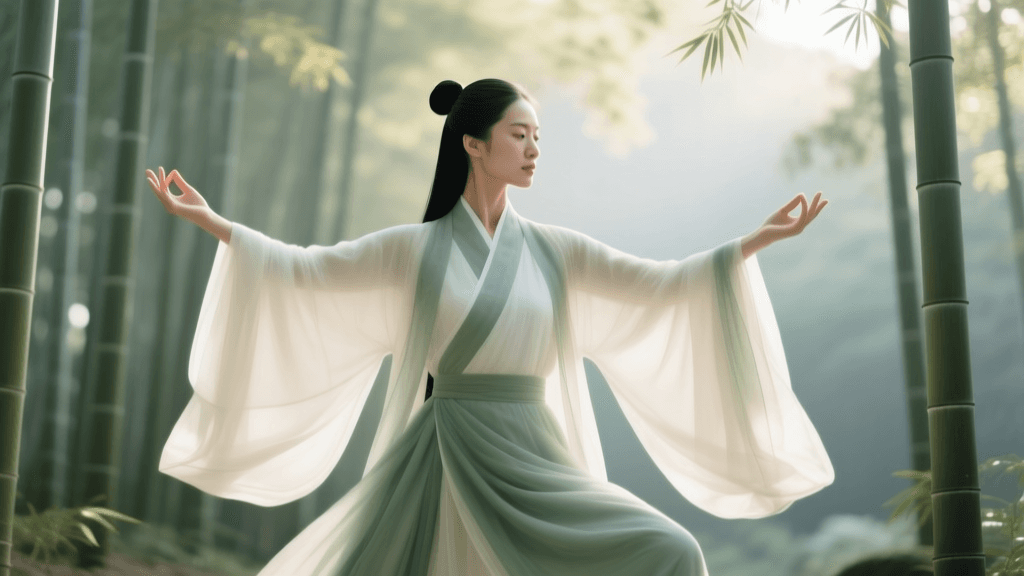
The Daopao is the quintessential garment for spiritual and meditative practices. Characterized by its cross-collar (jiaoling youren), wide sleeves, and side slits, this robe allows for maximum airflow and unrestricted hip mobility. The side slits are particularly crucial for standing meditation (Zhan Zhuang) and deep horse stances (Ma Bu), as they prevent the fabric from pulling taut across the thighs. In 2026, many wellness-focused Hanfu makers have introduced 'modified Daopao' designs with slightly tapered inner sleeves to prevent the fabric from dipping into incense burners or tea setups during seated mindfulness sessions.
The Duan Da (Short Garment) for Active Qigong
For more vigorous practices, such as Tai Chi sword forms or dynamic Qigong, the Duan Da is the superior choice. This style features a shorter, more fitted top with narrow sleeves and bound cuffs. The snug cuffs ensure that your hands and wrists remain entirely visible and unencumbered, which is essential for precise meridian stimulation and joint-rotational exercises. Paired with loose trousers, the Duan Da offers a traditional aesthetic without the tripping hazards associated with floor-length robes.
The Songku (Wide-Leg Trousers)
Often worn beneath skirts or robes, Songku are wide-leg, pleated trousers that have become a staple in the modern wellness wardrobe. The generous cut through the hips and thighs allows for deep, grounded stances without any resistance from the fabric. When practicing outdoor Qigong in the early morning, the volume of the Songku traps a layer of insulating air around the legs, keeping the joints warm—a critical factor in preventing stiffness during slow, deliberate movements.
The 2026 Fabric Matrix: Natural Fibers for Breathability
The material of your Hanfu is just as important as the cut. Synthetic blends trap heat and moisture, disrupting the body's natural thermoregulation during the subtle exertion of Qigong. The 2026 market has seen a resurgence in heritage textiles engineered for modern comfort. The World Health Organization frequently highlights the importance of holistic, traditional approaches to health, which extends to the natural, non-toxic materials we wrap our bodies in during healing practices.
| Fabric Type | Moisture Wicking | Drape & Weight | Best Suited Practice |
|---|---|---|---|
| Xiangyunsha (Gambiered Silk) | Excellent | Crisp, lightweight, cooling | Summer outdoor Tai Chi, active Qigong |
| Raw Ramie Linen | High | Structured, breathable, textured | Standing meditation, morning breathwork |
| Organic Bamboo-Cotton | Superior | Soft, heavy drape, insulating | Seated indoor meditation, Yin Yoga |
| Mulberry Silk Crepe | Moderate | Fluid, ultra-light, skin-soothing | Restorative Qigong, evening wind-down |
Xiangyunsha, a heritage silk dyed with river mud and yam juice, has become the gold standard for summer wellness wear. Its unique coating makes it naturally antibacterial and incredibly cool against the skin, preventing the sluggishness that comes from overheating during midday practice. For cooler months, organic bamboo-cotton blends offer a heavy, grounding drape that helps practitioners feel physically anchored during deep visualization meditations.
Dressing the Dantian: Sash Placement and Breathwork
In traditional Chinese medicine and Qigong, the lower Dantian (located roughly two inches below the navel) is the body's primary energy reservoir. Deep diaphragmatic breathing requires the abdomen to expand fully and naturally. A common mistake among beginners in 2026 is tying their Hanfu sash (Taiban) too tightly or directly across the navel, which compresses the Dantian and forces shallow, chest-level breathing.
To optimize your practice, the sash should be tied either securely above the waistline or loosely resting on the hip bones, entirely bypassing the lower abdomen. This allows the belly to inflate like a balloon during inhalation, massaging the internal organs and facilitating the smooth circulation of qi. Many contemporary Hanfu wellness brands now include dual-layer sashes with subtle elastic cores, providing enough tension to keep the heavy robes secure during wide stances without acting as a restrictive tourniquet around the midsection.
Footwear and Grounding: The Role of Bu Xie
Wellness practices emphasize 'rooting' or grounding—the physical and energetic connection between the soles of the feet and the earth. Modern rubber-soled sneakers act as insulators, severing this connection. In 2026, there has been a massive revival of traditional Bu Xie (cloth shoes) featuring 'thousand-layer' cotton soles. These shoes are crafted by stitching dozens of layers of cotton cloth together, creating a firm yet slightly yielding base. They provide excellent proprioceptive feedback, allowing practitioners to feel the subtle shifts in weight distribution during Tai Chi forms. Furthermore, the natural cotton soles absorb sweat while allowing the feet to breathe, maintaining the crucial temperature balance required for prolonged standing meditation.
Seasonal Layering for Outdoor Morning Practices
Outdoor Qigong at dawn exposes the body to cool, damp air, which traditional medicine advises guarding against to prevent 'wind-cold' invasion. The Hanfu layering system is inherently designed for this. A base layer of thin, raw silk acts as a thermal regulator, wicking moisture away from the skin. Over this, a lined Banbi (half-sleeve vest) provides core warmth without restricting arm movements. Finally, the outer robe traps the warm air. As the sun rises and the body generates internal heat through movement, the outer layers can be easily removed and draped over the shoulders, allowing for seamless thermoregulation without breaking the meditative state.
Integrating Tradition into Modern Wellness
As Harvard Medical School notes, the slow, deliberate movements of Tai Chi and Qigong offer profound benefits for balance, stress reduction, and cardiovascular health. By pairing these ancient practices with the equally ancient, thoughtfully engineered garments of the Hanfu tradition, practitioners in 2026 are unlocking a more profound, immersive wellness experience. The rustle of raw silk, the grounding feel of cotton-soled shoes, and the unrestricted flow of a well-cut sleeve all serve to pull the mind out of the digital world and anchor it firmly in the present, breathing body.