Hakama and Keikogi Guide for Martial Arts and Tea Ceremony
The Philosophy of the Uniform: Budo and Chado
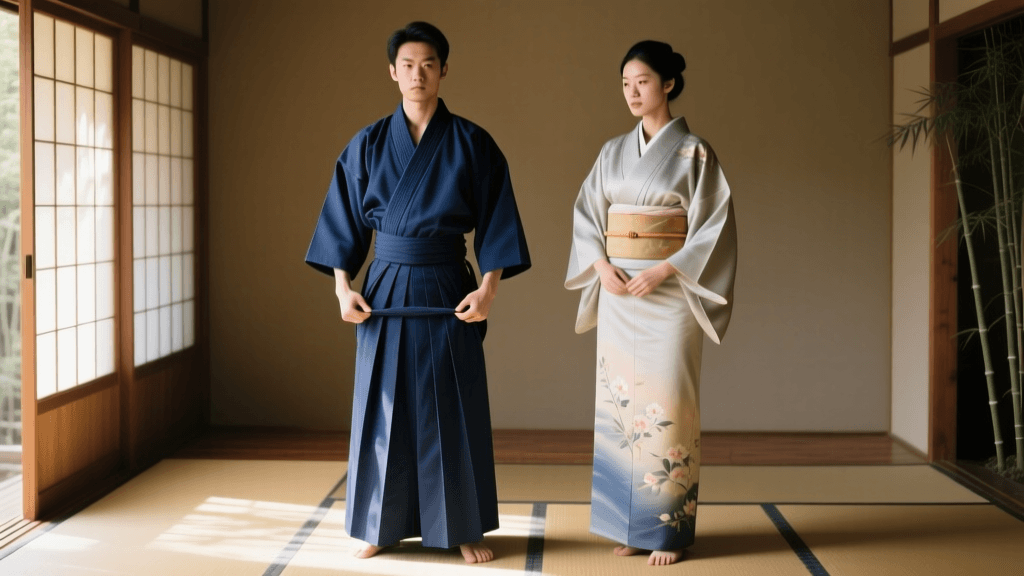
In Japanese culture, the garments worn during disciplined practices are never mere afterthoughts; they are physical manifestations of the practitioner’s mindset. Whether stepping onto the tatami mats for martial arts (Budo) or entering the tranquil tearoom for the tea ceremony (Chado), the traditional uniform—comprising the keikogi (training jacket) and hakama (pleated trousers)—serves as a bridge between the physical body and the spiritual discipline of the art. While both traditions share a common sartorial ancestry rooted in samurai and courtly attire, the functional requirements of dynamic combat versus the static, meditative grace of tea preparation have led to distinct evolutionary paths in their modern uniforms.
Understanding these nuances is critical for practitioners, collectors, and cultural enthusiasts. Selecting the correct uniform impacts not only your range of motion and comfort but also your adherence to the strict etiquette (reigi) demanded by both disciplines. This comprehensive guide explores the structural differences, fabric technologies, sizing metrics, and maintenance rituals of martial arts and tea ceremony uniforms.
The Keikogi: Weaving Discipline into Fabric
Martial Arts Keikogi: Built for Impact and Grappling
In martial arts such as Kendo, Aikido, and Judo, the keikogi (often referred to as gi or dogi) must withstand immense physical stress. According to the All Japan Kendo Federation, the uniform must allow for unrestricted movement while providing enough durability to endure grabbing, throwing, and the friction of bamboo armor (bogu). To achieve this, martial arts jackets are typically woven using traditional Japanese textile techniques like sashiko (rice-grain stitching) and hishisashi (diamond stitching). These double-weave cotton fabrics can weigh upwards of 750 grams per square meter, offering a thick, protective barrier that absorbs impact and resists tearing. The collars are heavily reinforced with multiple layers of cotton and core materials to prevent choking hazards and maintain structural integrity during grappling.
Tea Ceremony Keikogi: The Aesthetics of Wabi-Sabi
Conversely, the chadogi (tea ceremony jacket) prioritizes subtlety, breathability, and quiet elegance. The Urasenke Foundation, one of the most prominent schools of Japanese tea ceremony, emphasizes that a practitioner's attire should never distract from the tea, the utensils, or the guests. Therefore, tea ceremony jackets are crafted from lightweight, finely woven cotton, linen (asa), or silk blends. The weaving is smooth rather than textured, ensuring that the fabric does not snag on delicate ceramic tea bowls (chawan) or silk tea pouches (shifuku). The sleeves are often tailored slightly narrower than martial arts jackets to prevent them from dipping into hot water or matcha powder during the precise, choreographed movements of tea preparation.
Decoding the Hakama: Structure, Pleats, and Purpose
The hakama is perhaps the most iconic garment in Japanese traditional dress. Originally worn by Heian-period nobility and later adopted by Edo-period samurai as a symbol of status and protection, the hakama has been preserved in modern times primarily through Budo and Chado. As noted by Encyclopædia Britannica, the evolution of the hakama transformed it from a restrictive court garment into a functional piece of athletic and ceremonial wear, though its core symbolic elements remain intact.
The Seven Virtues of the Pleats
A standard formal hakama features five pleats in the front and two in the back, totaling seven. In martial arts philosophy, these seven pleats are widely taught to represent the seven virtues of the samurai (Bushido):
- Jin (Benevolence): Compassion and empathy for others.
- Gi (Justice): Moral integrity and righteous decision-making.
- Rei (Etiquette): Respect, courtesy, and proper conduct.
- Chi (Wisdom): Intelligence and the pursuit of knowledge.
- Shin (Sincerity): Honesty and keeping one's word.
- Chu (Loyalty): Devotion to one's teacher, art, and community.
- Ko (Filial Piety): Respect and care for one's ancestors and elders.
While both martial artists and tea masters wear the seven-pleated hakama, the physical construction of the pleats and the koshi-ita (the rigid back plate) differ drastically to accommodate the physical demands of each practice.
Comparative Analysis: Martial Arts vs. Tea Ceremony Hakama
The following table outlines the critical structural and material differences between the two styles of hakama.
| Feature | Martial Arts Hakama (Budo) | Tea Ceremony Hakama (Chado) |
|---|---|---|
| Primary Fabric | Tetron (65% Polyester / 35% Rayon) or Heavyweight Cotton | Silk (Tsumugi), Linen, or Fine Cotton |
| Koshita (Back Plate) | Stiff, reinforced with plastic or leather core to support armor and posture | Soft, flexible, or entirely absent to allow comfortable seiza (kneeling) |
| Hem Length | Ends just above the ankle bone to prevent tripping during footwork | Touches the instep/floor for an elegant, unbroken vertical drape |
| Pleat Retention | Heat-set and highly rigid to withstand dynamic movement and washing | Soft, natural drape; pleats are less pronounced for quiet kneeling |
| Common Colors | Navy Blue, Black, White (specific to Kendo/Aikido ranks) | Rikyu-nezumi (Tea Gray), Charcoal, Deep Indigo, Hemp |
| Estimated Cost (USD) | $40 - $120 (Tetron to Heavy Cotton) | $150 - $600+ (Fine Cotton to Silk Tsumugi) |
Sizing and Measurements: Achieving the Perfect Silhouette
Sizing a hakama is fundamentally different from Western trousers, as the garment is held up by himo (long fabric ties) rather than a fitted waistband. The measurement is taken from the navel (where the front knot is tied) down to the desired hemline.
For Martial Arts: The standard measurement is from the navel to approximately one inch above the lateral malleolus (the outer ankle bone). This shorter length is a critical safety feature. In arts like Aikido and Kendo, practitioners perform rapid sliding footwork (surikomi) and breakfalls (ukemi). A hem that touches the floor poses a severe tripping hazard. Martial arts hakama are typically sold in standardized sizes ranging from Size 22 (approx. 91 cm) to Size 30 (approx. 105 cm).
For Tea Ceremony: The measurement is taken from the navel to the floor, covering the top of the foot (instep). When the practitioner stands, the fabric should graze the floor, creating a seamless pillar-like silhouette. When kneeling in seiza, the excess fabric pools gracefully around the legs, hiding the feet entirely, which is considered a mark of deep respect and humility in the tearoom. Tea ceremony hakama are often custom-tailored or sized using traditional Japanese units (shaku and sun) to ensure this precise floor-length drape.
Fabric Care, Washing, and the Art of Folding
The maintenance of these garments reflects the discipline of the arts themselves. A martial artist’s Tetron hakama is designed for rigorous, frequent washing. Tetron can be machine-washed in cold water and tumble-dried on low heat. However, the true test of a martial artist's discipline is the folding process. The hakama no tatami-kata (hakama folding method) requires aligning all seven pleats perfectly, smoothing the fabric with the palms, and tying the himo in a specific, respectful pattern. Folding the hakama is often the final meditative act of a training session.
Silk and fine cotton tea ceremony hakama demand entirely different care. They should never be machine-washed. Silk tsumugi hakama require professional dry cleaning or highly specialized hand-washing with pH-neutral detergents. Because the koshi-ita is soft or absent, folding a tea hakama relies on the natural memory of the silk fibers rather than heat-set synthetic pleats. Practitioners often use specialized wooden boards or heavy paper inserts to maintain the garment's shape when stored in a tatou (traditional paper garment bag) with natural camphor to deter insects.
Conclusion
While the untrained eye might view a martial arts hakama and a tea ceremony hakama as identical, the practitioner knows that every thread, pleat, and measurement is dictated by the unique philosophy of their discipline. The martial artist requires a uniform that acts as resilient armor, facilitating explosive movement and enduring physical hardship. The tea master requires a garment that whispers rather than shouts, offering silent comfort and elegant drape during hours of meticulous, meditative preparation. By understanding these profound differences in fabric, structure, and etiquette, practitioners can honor the deep cultural heritage woven into the very fabric of Japanese tradition.