The Hanfu Revival: A Practical Guide to Buying Your First Outfit
The Roots of the Hanfu Revival Movement
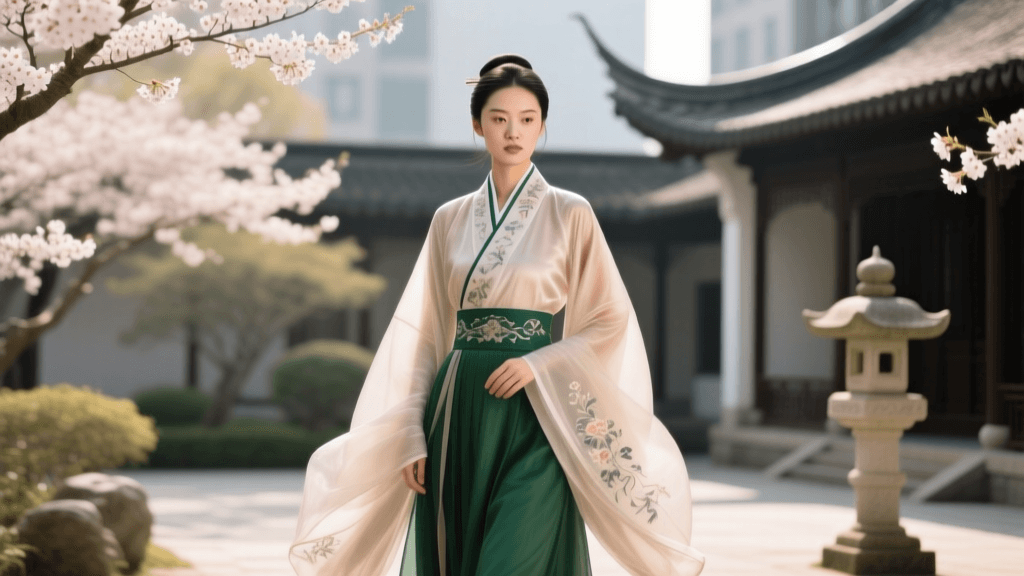
The Hanfu revival movement is one of the most fascinating cultural phenomena of the 21st century, transforming traditional Chinese clothing from museum relics into vibrant, everyday streetwear. What began in the early 2000s as a niche internet forum discussion has blossomed into a multi-billion-dollar industry driven by Gen Z and Millennial consumers. According to the Hanfu movement Wikipedia archive, the modern catalyst is widely attributed to Wang Letian, who in 2003 walked the streets of Zhengzhou wearing a self-made traditional Han Chinese garment. This singular act of cultural reclamation sparked a grassroots movement that has since evolved into a mainstream fashion staple.
Today, the movement is no longer just about historical reenactment; it is about cultural identity, aesthetic expression, and modern integration. As noted by cultural journalists at Sixth Tone, young Chinese consumers are actively weaving traditional silhouettes into their modern wardrobes, pairing ancient skirts with contemporary blouses and sneakers. For international enthusiasts and first-time buyers, navigating the vast landscape of Hanfu styles, sizing systems, and overseas purchasing channels can be daunting. This guide provides actionable, practical advice to help you purchase, size, and style your first authentic Hanfu outfit.
Choosing Your First Hanfu Style
Hanfu encompasses thousands of years of sartorial evolution, but the modern revival primarily focuses on three historical epochs: the Tang, Song, and Ming dynasties. Each offers a distinct silhouette, fabric requirement, and level of daily wearability.
Ming Dynasty: The Mamianqun (Horse-Face Skirt)
The Mamianqun is arguably the most popular garment in the modern Hanfu revival. Characterized by its flat front and back panels with intricate pleated sides, it is incredibly versatile. The waist is secured with ties rather than zippers, making it highly adjustable. For a modern wardrobe, a Ming-style Mamianqun paired with a simple white button-down shirt or a thin turtleneck creates a stunning fusion look suitable for the office or a night out.
Song Dynasty: The Beizi (Slip Dress and Outerwear)
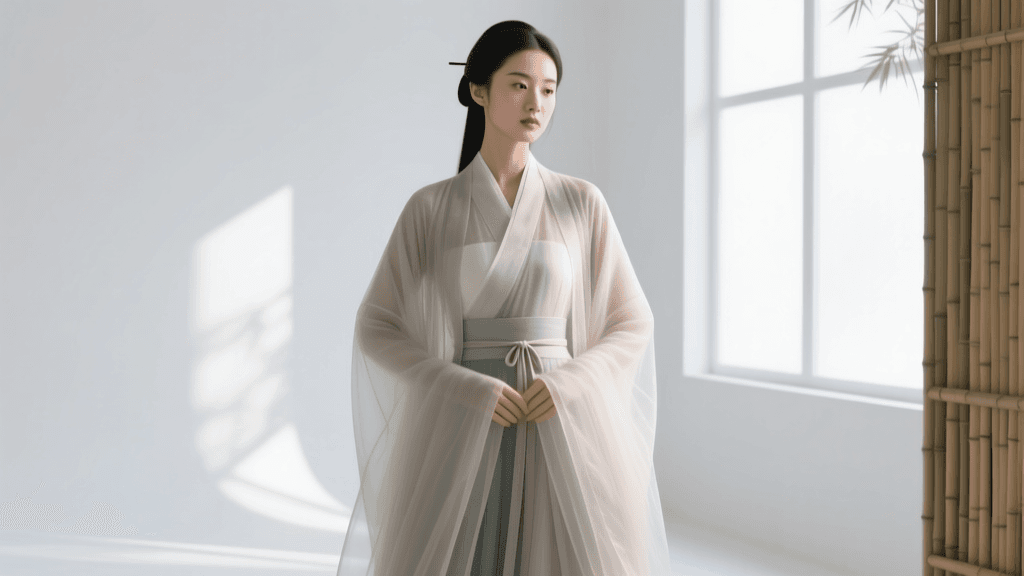
Song Dynasty clothing is prized for its minimalism, elegance, and lightweight construction. The Beizi is a long, open-front coat worn over a camisole (Moxiong) and a pleated skirt. Because the layers are thin and often made of breathable cotton, linen, or chiffon, Song-style Hanfu is the ultimate choice for summer wear and hot climates.
Tang Dynasty: The Qixiong Ruqun (Chest-High Skirt)
Known for its opulence and vibrant colors, Tang-style Hanfu features a skirt tied high above the bust, often paired with a sheer, wide-sleeved outer robe (Daxiushan). While breathtaking for festivals, photography, and formal events, the chest-high tie can be challenging to secure for long periods of active wear, making it less practical for daily commuting.
Sizing and Measurements: A Practical Guide
Unlike Western fashion, which relies on standardized numerical sizes (e.g., US 6, UK 10), traditional Hanfu is largely based on height, weight, and specific flat-lay measurements. Because the garments wrap and tie, they are inherently more forgiving, but precise measurements are crucial for skirt lengths and jacket proportions.
- Bust and Waist: Most tops (Ru or Ao) are one-size-fits-most, designed to accommodate a bust of 85-95cm. For the Mamianqun, you must measure the flat width of the skirt waistband. A flat width of 68cm translates to a 136cm circumference, which comfortably wraps around a natural waist of 70-82cm.
- Skirt Length Calculation: To find your ideal Mamianqun length, subtract roughly 60cm from your total height. If you are 165cm tall, a 105cm skirt will fall perfectly at your ankles. If you are 155cm, opt for a 95cm length to avoid tripping.
- Sleeve Length: Traditional Ming jackets often feature extended sleeves that cover the knuckles. Ensure your arm length (measured from the base of the neck to the wrist) aligns with the vendor's size chart, typically ranging from 65cm to 75cm.
Hanfu Style Comparison Chart
Use the table below to determine which Hanfu style best fits your lifestyle, climate, and budget.
| Style Name | Dynasty Era | Best Season | Avg Cost (USD) | Daily Wear Difficulty |
|---|---|---|---|---|
| Mamianqun Set | Ming | Autumn / Winter | $60 - $150 | Low (Very Practical) |
| Beizi Set | Song | Spring / Summer | $40 - $90 | Low (Lightweight) |
| Qixiong Ruqun | Tang | Summer / Indoor | $50 - $120 | High (Requires Securing) |
| Yuanlingpao | Tang / Ming | Autumn / Winter | $80 - $200 | Medium (Belt Tying) |
Navigating the Market: Costs, Taobao, and Shipping
The epicenter of the Hanfu trade is Taobao, China's largest e-commerce platform. While international sites like AliExpress or Amazon carry some stock, Taobao offers the most authentic, high-quality designs directly from original brands like Shisanyu, Zhongzheng, and Han Shang Hua Tang. BBC News has highlighted how these domestic brands are driving a massive surge in cultural consumption, often selling out limited batches within minutes.
Understanding Taobao Terminology
When browsing for Hanfu, you will encounter two critical terms regarding availability and timing:
- Xianhuo (现货): This means 'in stock.' These items will ship within 48 hours and are ideal if you need an outfit for an upcoming event.
- Yushou (预售): This means 'pre-sale.' Many top-tier Hanfu brands operate on a made-to-order model to reduce waste. Pre-sales can take anywhere from 30 to 60 days to manufacture and ship. Always check the estimated shipping date in the product description.
Budgeting and International Shipping
A complete, high-quality Hanfu outfit (skirt, top, and outer layer) typically costs between $80 and $180 USD. To purchase from Taobao outside of China, you will need to use a shopping agent like Superbuy, CSSBuy, or Sugargoo. These platforms allow you to paste the Taobao product link, pay the agent in your local currency, and have the item shipped to a domestic Chinese warehouse. From there, the agent will consolidate your packages and ship them internationally via DHL, EMS, or specialized air lines, usually adding $20-$40 in international shipping fees depending on the weight (Hanfu sets typically weigh between 800g and 1.5kg).
Fabric Selection and Garment Care
The fabric of your Hanfu dictates both its aesthetic drape and its maintenance requirements. Budget sets (under $50) are predominantly made from polyester jacquard. While durable and machine-washable, polyester can trap heat and feel stiff. Mid-range brands utilize cotton-linen blends, which offer excellent breathability and a matte, historical texture, though they are prone to wrinkling and require steaming. High-end Ming dynasty replication sets often feature silk brocade, mulberry silk linings, and intricate metallic thread weaving. These luxurious garments must be dry-cleaned or hand-washed in cold water with a pH-neutral detergent to prevent the metallic threads from tarnishing or the silk from warping.
Styling, Accessories, and Modern Integration
Completing your Hanfu look requires attention to accessories. Traditional hair sticks (Zan) and step-shake pins (Buyao) are widely available on Taobao for $5 to $20. For modern integration, you do not need to commit to elaborate historical updos; a simple half-up hairstyle secured with a velvet ribbon or a minimalist wooden hair stick bridges the gap between ancient and contemporary aesthetics.
Footwear is another area where the revival movement encourages experimentation. While traditional cloud-toe shoes (Yuntou Xie) are beautiful, they offer little arch support for modern city walking. Many enthusiasts pair their Mamianqun with Chelsea boots, Mary Janes, or clean white sneakers. This pragmatic approach to styling ensures that Hanfu remains a living, breathing fashion tradition rather than a rigid costume.
'Hanfu is not about stepping backward into the past; it is about carrying the elegance and philosophy of our ancestors into the modern world, proving that tradition and contemporary life can coexist beautifully.' — Cultural Commentary from the Hanfu Revival Community.
Embarking on your Hanfu journey is an investment in wearable art. By understanding the historical silhouettes, mastering the unique sizing metrics, and navigating the direct-from-source purchasing channels, you can build a wardrobe that honors the profound legacy of Asian traditions while expressing your unique personal style.