Hanfu Vintage Resale & Collecting Market Guide 2026
The Evolution of the Hanfu Secondhand Market in 2026
The landscape of traditional Asian fashion has undergone a monumental transformation over the last decade, culminating in the robust, highly sophisticated secondhand market we see in 2026. What began as a grassroots cultural revival has matured into a global fashion phenomenon, and with this maturity comes a thriving ecosystem of vintage collecting and resale. For enthusiasts and newcomers alike, the Hanfu secondhand market in 2026 offers a unique opportunity to acquire discontinued, rare, and historically significant pieces from the early days of the modern revival movement. Navigating this space requires a keen eye for textile construction, an understanding of brand histories, and familiarity with the digital platforms where these garments change hands.
Defining 'Vintage' in the Hanfu Community
In the context of the 2026 market, the term 'vintage' Hanfu does not refer to ancient artifacts excavated from tombs, but rather to the pioneering commercial pieces produced during the first wave of the modern revival between 2012 and 2019. During this era, foundational brands and early independent Taobao ateliers were experimenting with historical patterns, translating museum artifacts into wearable daily garments. Because the supply chain for specialized traditional textiles—such as authentic Song brocade or Xiangyunsha silk—was not yet fully developed for mass commercial use, these early garments often feature unique, heavy poly-blend brocades and experimental flat-felling techniques. Today, collectors prize these pieces not just for their aesthetic beauty, but as wearable artifacts of the movement's foundational years.
Navigating 2026 Resale Platforms
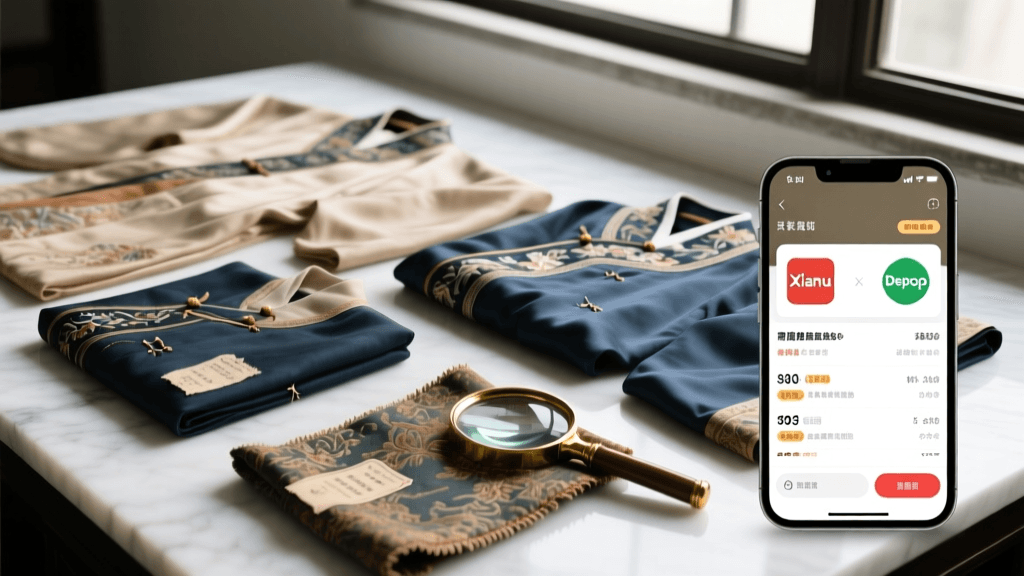
Finding these archival pieces requires knowing where to look. In 2026, Xianyu (Idle Fish) remains the undisputed titan of the domestic Chinese secondhand market. The platform's recently upgraded AI-driven image recognition tool, specifically trained on historical Hanfu brand tags and stitching patterns, has drastically reduced the prevalence of counterfeit 'vintage' listings. For international collectors, Depop and Mercari have become vital hubs. Depop's dedicated 'Traditional Asian Garments' taxonomy, introduced in late 2025, has made it significantly easier for global buyers to filter for authentic Hanfu rather than generic costume wear. Additionally, specialized Discord servers and Reddit communities dedicated to Hanfu trading operate as private, high-trust networks where the most coveted, mint-condition archival sets are exchanged before they ever reach public marketplaces.
Authentication: Spotting True Revival-Era Pieces
Authenticating a vintage Hanfu piece requires looking beyond the brand tag and examining the garment's structural integrity. Early revivalist garments often feature specific construction hallmarks that modern fast-fashion Hanfu manufacturers skip to cut costs. First, examine the seams. Authentic vintage pieces will typically feature hand-finished or meticulously flat-felled seams, a technique that encloses the raw edge to prevent fraying and adds structural weight to the drape. Modern mass-produced replicas often use overlocked or serged edges, which are a major red flag for garments claiming to be from the 2010s revival era.
Second, check the collar overlap. Traditional Hanfu strictly adheres to the 'jiaoling youren' rule, where the left side of the collar crosses over the right. Furthermore, when examining pleated garments like the Mamianqun (horse-face skirt), count the pleats and examine the waistband. Early high-end vintage skirts utilized heavy, stiffened interfacing in the waistband to support the weight of the dense brocade, whereas modern cheap replicas use flimsy cotton that buckles under the fabric's weight. Early metal buttons and clasps were often cast from heavy brass or copper alloys, developing a natural patina over the years, whereas modern replicas use lightweight, shiny zinc alloys that lack the authentic weight and aging. For deeper historical context on traditional garment structures, the Smithsonian National Museum of Asian Art provides extensive digital archives that collectors use as reference points for authentic silhouette proportions.
2026 Hanfu Secondhand Valuation Guide
The valuation of secondhand Hanfu in 2026 is driven by brand rarity, fabric composition, and the garment's condition. Unlike modern fast-fashion Hanfu, which depreciates the moment it is worn, archival pieces from defunct or highly respected indie brands often appreciate in value. Below is a comprehensive valuation guide reflecting the current 2026 market averages for vintage and secondhand Hanfu.
| Garment Type | Era / Brand Tier | Condition | 2026 Average Resale Price (USD) |
|---|---|---|---|
| Mamianqun (Horse-face Skirt) | Early Revival (2015-2019) | Excellent | $180 - $350 |
| Ruqun (Top and Skirt Set) | Mid-Tier Commercial | Good (Minor wear) | $60 - $120 |
| Beizi (Long Outer Jacket) | Defunct Indie Brand | Mint / Unworn | $250 - $500+ |
| Yuanlingpao (Round Collar Robe) | Custom / Bespoke Vintage | Good | $400 - $800 |
Conservation and Care for Secondhand Textiles
Once you have acquired a vintage Hanfu piece, proper conservation is paramount to preserving its value and structural integrity. Many early revival garments were dyed using experimental batch-dyeing methods that are highly susceptible to water spotting and UV fading. When cleaning these pieces, avoid modern enzymatic detergents, which can break down the delicate protein fibers of early silk blends or strip the metallic threads from woven brocades. Instead, follow the textile conservation guidelines recommended by institutions like the Victoria and Albert Museum's Conservation Department, which advocate for gentle, pH-neutral soap flakes and cold-water immersion for delicate historical textiles.
Furthermore, be highly cautious of moth damage when storing vintage silk and wool blend garments. Utilize natural cedar blocks rather than chemical mothballs, as the harsh naphthalene fumes can permanently alter the chemical structure of delicate traditional dyes and leave an irreversible odor on the porous fibers. For storage, never hang heavy vintage Mamianqun skirts by their waistbands, as the gravitational stress will eventually distort the pleats and tear the antique interfacing. Instead, fold them using acid-free tissue paper to buffer the creases, and store them in breathable cotton garment bags in a climate-controlled environment.
The Future of Hanfu Collecting
As we move through 2026, the Hanfu secondhand market continues to professionalize. The line between historical artifact and contemporary fashion is beautifully blurred, allowing collectors to wear living history. Whether you are hunting for a rare 2015 Ming-style Aoqun on Xianyu or trading a bespoke Yuanlingpao on Depop, understanding the nuances of vintage authentication, proper valuation, and textile conservation ensures that these magnificent garments will continue to be cherished for generations to come. For those interested in the deeper historical roots of the textiles that inspire these vintage cuts, the Metropolitan Museum of Art's Asian Art Department offers an unparalleled digital collection of ancient weaving techniques that continue to inform modern Hanfu design and resale valuation.