Mastering Kimono Storage and Seasonal Wardrobe Rotation
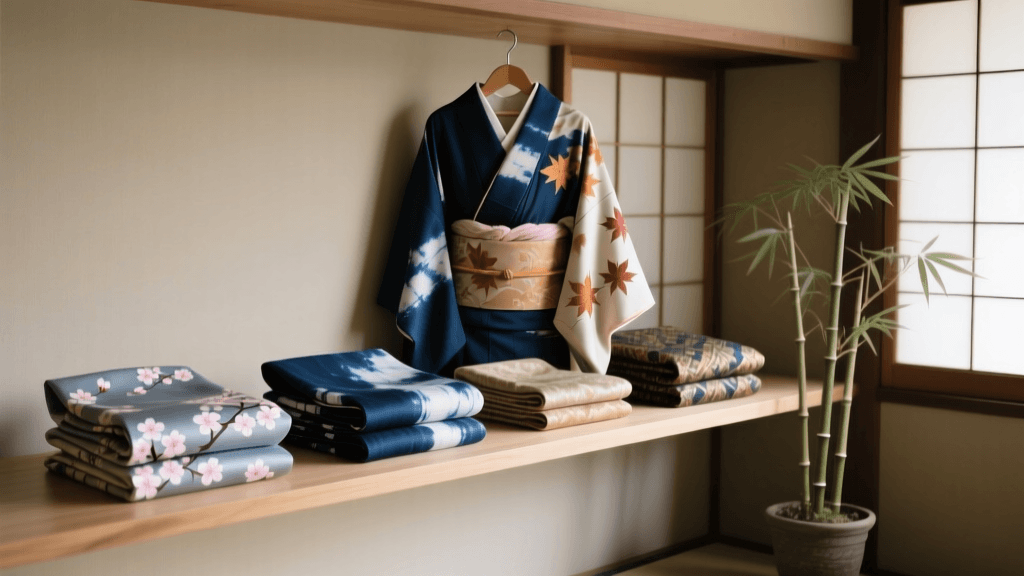
The Art of Koromogae: Understanding Seasonal Rotation
In Japanese culture, the transition of seasons is not merely a meteorological event; it is a deeply ingrained aesthetic and practical rhythm known as koromogae, or the seasonal changing of clothes. For kimono collectors and practitioners, mastering wardrobe organization begins with understanding these strict seasonal delineations. Unlike Western fashion, where layering dictates seasonal transitions, traditional Japanese garments are structurally categorized by their lining and weave.
The kimono year is generally divided into three main sartorial seasons:
- Awase (Lined Kimono): Worn from October through May. These garments feature a silk lining and are designed for cooler weather.
- Hitoe (Unlined Kimono): Worn in the transitional months of June and September. They lack a lining, offering breathability as the humidity rises or falls.
- Natsugi (Summer Garments): Worn during the peak heat of July and August. This category includes ro (silk gauze with twisted threads) and sha (leno-weave silk), which are highly translucent and airy.
Seasonal Rotation and Storage Chart
| Garment Type | Months Worn | Fabric Characteristics | Storage Focus During Off-Season |
|---|---|---|---|
| Awase (Lined) | October - May | Crepe silk (chirimen), habutai, linings | Protect from summer humidity; air out in crisp autumn. |
| Hitoe (Unlined) | June, September | Lightweight silk, tsumugi (pongee) | Store flat; highly susceptible to creasing at the shoulders. |
| Natsugi (Ro/Sha) | July - August | Sheer gauze, leno-weave, linen | Extremely fragile; store separately to avoid snagging on heavier silks. |
| Obi (Sashes) | Year-round (Seasonal motifs) | Brocade (nishiki), hakata, silk satin | Roll or fold with thick paper inserts to prevent permanent creases. |
Essential Tools for Kimono Wardrobe Organization
Proper storage is the frontline defense against the deterioration of silk and metallic threads. According to conservation guidelines established by institutions like the Canadian Conservation Institute, textiles are highly vulnerable to fluctuating relative humidity, light exposure, and acidic materials. To combat this, traditional Japanese organization relies on specific, time-tested tools.
The Paulownia Tansu (Kiri-Tansu)
The gold standard for kimono storage is the kiri-tansu, a chest crafted from paulownia wood. Paulownia is uniquely suited for textile preservation because its cellular structure naturally expands during high humidity to seal the drawers shut, and contracts during dry spells to allow the wood to breathe. Furthermore, it is naturally resistant to pests and fire. While antique or custom-made tansu can cost anywhere from $800 to over $3,000, they are a vital investment for serious collectors preserving vintage Japanese textiles.
Tatou-shi and Acid-Free Barriers
Never store a silk kimono bare. Tatou-shi are traditional, breathable, acid-free paper wrappers used to enclose folded garments. Standard dimensions are approximately 33 cm by 70 cm. When wrapping a kimono, the paper prevents the silk from rubbing against other fabrics, which can cause friction damage or color transfer. Avoid using standard tissue paper or plastic dry-cleaning bags, as plastics off-gas and trap moisture, leading to irreversible mildew and yellowing.
Handling and Preparation Before Storage
Before a kimono is folded and placed into its seasonal hibernation, it must be properly evaluated and cleaned. Unlike everyday cotton clothing, silk kimono cannot be tossed into a washing machine. They require specialized dry cleaning by artisans who understand the water-soluble nature of traditional dyes and the delicate metallic threads used in embroidery.
After wearing a kimono, it is customary to hang it on a specialized wide-shouldered kimono hanger, known as an emono-kake, for 24 to 48 hours. This allows the natural tension of the silk to release and any ambient moisture or odors to dissipate. Inspect the collar and hem closely for makeup stains or street dirt. Spot cleaning should only be done with a specialized benzene-based solvent or by a professional. Storing a garment with even microscopic organic stains will inevitably lead to oxidation, resulting in permanent brown spots that are nearly impossible to remove from vintage silk.
Step-by-Step Folding and Storage Techniques
The structural integrity of a kimono relies on its seams. Improper folding places stress on the silk, leading to micro-tears and permanent creases that are nearly impossible to steam out without professional intervention.
The Hon-Tatami (Standard Fold)
The hon-tatami is the universally accepted folding method that aligns perfectly with the kimono straight-line construction.
- Lay the kimono face down on a clean, dry surface.
- Fold the right side of the body panel inward, aligning the seams.
- Fold the left side over the right, creating a long, narrow rectangle.
- Fold the sleeves back so they do not overlap the body panels.
- Fold the garment in half lengthwise, and then in half or thirds again, depending on the drawer depth.
Pro Tip: Place a small roll of acid-free paper or a soft cotton cloth inside the folds at the hem and shoulder areas. This creates a gentle curve rather than a hard crease, preventing the silk fibers from breaking over time.
Stacking Hierarchy
When organizing your drawers, weight distribution is crucial. Heavy, stiff garments like brocade obi and lined winter kimono must be placed at the bottom of the stack. Delicate summer ro and sha garments should always rest at the top. Never stack more than three to four kimono on top of one another; the weight will compress the lower garments, crushing the three-dimensional texture of fabrics like chirimen (silk crepe).
Climate Control and Pest Prevention (Mushiboshi)
Silk is a protein fiber, making it an attractive target for pests like clothes moths and carpet beetles. However, chemical mothballs (naphthalene or paradichlorobenzene) are strictly forbidden for use with silk and metallic threads. These chemicals react with the proteins and metallic foils, causing severe yellowing, staining, and the dissolution of gold leaf.
The Tradition of Mushiboshi
Instead of chemicals, Japanese tradition relies on mushiboshi (literally bug drying or airing out). This is the practice of removing kimono from their chests and airing them in a shaded, well-ventilated room to dispel accumulated moisture and deter pests. The ideal time for mushiboshi is during the dry, crisp days of late autumn or mid-winter. Avoid airing out garments during the rainy season (tsuyu) or humid summer days, as the silk will absorb ambient moisture.
For modern apartment dwellers without the space to hang dozens of kimono, simply opening the drawers in a climate-controlled room (maintained at around 50% relative humidity and 18-20 degrees Celsius) for 24 hours twice a year is sufficient. The National Trust also emphasizes that keeping storage areas clean, dark, and at a stable temperature is the most effective preventive conservation strategy for vintage textiles.
Organizing Obi, Obijime, and Small Accessories
A complete kimono ensemble requires much more than the main garment. The accessories present their own unique organizational challenges.
- Obi (Sashes): Heavy brocade obi should be rolled. However, softer, unlined summer obi (like hakata weave) can be folded using acid-free paper inserts to maintain their shape without snapping the threads.
- Obijime (Decorative Cords): These braided silk cords should be loosely coiled and stored in small, breathable cotton bags. Tying them tightly or hanging them will stretch the braiding and ruin their structural integrity.
- Kanzashi (Hair Ornaments): Vintage tortoiseshell, lacquer, and metal hairpins are sensitive to fluctuating humidity. Store them in padded wooden boxes lined with silk or acid-free tissue, and keep them away from direct sunlight to prevent the lacquer from peeling or the tortoiseshell from drying out and cracking.
Modern Alternatives for Small Spaces
Not everyone has the square footage for a sprawling paulownia tansu. For those living in modern apartments or outside of Japan, adapting traditional methods is necessary.
- Plastic Storage Bins: If you must use plastic, choose archival-quality polypropylene (PP) bins. Line the bottom and sides with washed, unbleached cotton muslin. Add silica gel desiccant packets (ensure they do not directly touch the silk) and monitor the humidity with a digital hygrometer.
- Hanging vs. Folding: While specialized kimono hangers exist for airing out garments, never store a kimono on a hanger long-term. The weight of the silk will distort the shoulder seams and stretch the neckline irreparably.
Conclusion
Organizing and rotating a kimono wardrobe is an exercise in mindfulness and respect for the artisan craft. By honoring the rhythm of koromogae, utilizing breathable materials like tatou-shi, and practicing the annual ritual of mushiboshi, you ensure that these magnificent garments survive not just for the next season, but for generations to come. Whether housed in an heirloom paulownia chest or a carefully prepared modern bin, a well-organized kimono collection is a living archive of Asian textile heritage.